
The Ahl-e-Sunnat wa Jama’at has reached consensus (Ijma’) that after the Prophets (Alaihim as-Salam) the best of creation are the four rightly guided Khalifas (Khulafa-e-Arba’a i.e. Hadrat Abu Bakr, Hadrat Umar, Hadrat Uthman and Hadrat Ali Radi Allahu Ta’ala Anhum Ajma’een).

Their sequence of excellence is that Sayyiduna Abu Bakr as-Siddique is the most excellent, then Sayyiduna Umar, thereafter followed by the excellence of Sayyiduna Uthman and Sayyiduna Ali (Ridwanullahi Ta’ala Alaihim Ajma’een). Here I present few proclamations of the Classical Scholars and Jurists in this regard.

Proclamations of the Classical Scholars and Jurists

1. Imam al-Aazam Abu Hanifa gave one of the pithiest definitions of Sunnism in Islam:

“The doctrine of Ahl al-Sunna wal-Jama’a consists in preferring the Two Shaykhs (tafdil al-shaykhayn) [i.e. Abu Bakr and ‘Umar over the rest], loving the Two Sons-in-law (hubb al-khatanayn) [i.e. ‘Ali and ‘Uthman], and wiping on leather socks (al-mas-h ‘alal-khuffayn) [i.e. all three contrary to Shi’is].” [Khulasat al-Fatawa, Vol. 2, Page 381]

Narrated by Ibn ‘Abd al-Barr in al-Intiqa’ bi-Manaqib al-A’immat al-Thalathati al-Fuqaha’ through several different chains. The same is also related from Sufyan al-Thawri by al-La’laka’i in his I’tiqad Ahl al-Sunna, Vol. 1, Page 152.

2. Imam al-Aazam Abu Hanifah in Fiqh Al-Akbar:

“The most superior and the best of all men after prophets – blessings and peace upon them – is Abu Bakr as-Siddiq. And then, Umar ibn al-Khattab al-Faruq. And then Uthman ibn Affan Dhu’n Nurayn. And then ali ibn Abu talib al-Murtada. May Allah be well pleased with them all; they were worshippers and steadfast on Truth and sided with Truth. We love all of them.” [Fiqh Al-Akbar]

3. Imam al-Nawawi said in his Fatawa:

“Know that each of Abu Bakr and ‘Umar is better than ‘Ali according to the Consensus (ijma’) of Ahl al-Sunna. The proofs for this in well-known sound hadiths are too famous and countless to be listed.” [Fatawa Imam Nawawi, Page 264]

4. Imam al-Haytami said in his Fatawa Hadithiyya:

“The preferability of Abu Bakr over the other three and that of ‘Umar over the  ther two is agreed upon by Consensus (mujma’ ‘alayh) of Ahl al-Sunna and there is no disagreement among them concerning this.” [Fatawa Hadithiyya, Page 155]

5. Ali al-Qari in MinaH ar-Rawd al-Az’har, SharH Fiqh al-Akbar:

“The best of humans after prophets is Abu Bakr Radi Allahu Ta’ala Anhu”… “The superiority of Abu Bakr and Umar is an unanimous agreement in the Ahl as-Sunnah.” [Sharh Fiqh al-Akbar]

6. Mulla ‘Ali al-Qari said in Sharh al-Fiqh al-Akbar:

“It is patent that to prefer ‘Ali to the Two Shaykhs contravenes the doctrine of Ahl al-Sunna wal-Jama’a according to what the totality of the Salaf follow.” [Sharh al-Fiqh al-Akbar, Page 140]

7. Imam al-Daraqutni was once asked to arbitrate between two groups in Baghdad who differed whether ‘Uthman was preferable to ‘Ali or vice-versa. He relates:

“At first I withheld from taking any position and considered reserve best. But then I reached the conclusion that Religion dictated other than silence. So I said: ‘Uthman is better than ‘Ali with the agreement of the assembly of the Companions. This is the position of Ahl al-Sunnah, and it is the first knot of the Rafida one cuts loose.” [Siyar A’lam al-Nubala’, Dar al-Fikr Edition. Vol. 12, Page 483]

8. Al-Dhahabi quotes the above in his chapter on al-Daraqutni in Siyar A’lam al-Nubala’ then comments:

“…Both ‘Uthman and ‘Ali possess great merits and precedence and are among the foremost shuhada’. However, the vast majority of the Community agree to give precedence to ‘Uthman, and this is our position also; and better than both of them without doubt are Abu Bakr and ‘Umar. Whoever differs with this is a hardened Shi’i.” [Siyar A’lam al-Nubala’, Dar al-Fikr Edition. Vol. 12, Page 483-492]

9. Imam Abu Jaafar Al-taHawi in Al-aqidah at-taHawiyyah:

“We affirm the succession after RasulAllah SallAllahu Alaihi wa Sallam first for Abu Bakr Radi Allahu Ta’ala Anhu – on account of his superiority upon the entire ummah and being paramount among them. Then, Umar ibn al-Khattab Radi Allahu Ta’ala Anhu. Then, Uthman ibn affan Radi Allahu Ta’ala Anhu. Then, ali ibn Abu talib Radi Allahu Ta’ala Anhu. For they are the Rightly Guided Successors [khulafa ar-rashidun] and The Guiding Leaders [ayimmah al-muhtadun – in another version ayimmah al-mahdiyyun].” [al-Aqida at-Tahawiyyah]

10. Saad ad-Din Taftazani in his SharH al-MaqaSid, In the Fifth Discussion:

“The Imam (leader of Muslims) after RasulAllah SallAllahu Alaihi wa Sallam is Abu Bakr Radi Allahu Ta’ala Anhu. The Shiah say: ali. And we say: There is a unanimous agreement (ijmaa) of every person of importance (the ahl al-Hill wa’l aqd – from the council, prominent ones, nobles etc.) on this matter.” [SharH al-MaqaSid]

 
11. In the Sixth Discussion, Saad ad-Din Taftazani says:

“Superiority, according to us [ahl as-sunnah] is according to the order of succession (of Khalifahs).” [SharH al-MaqaSid]

12. Ali al-ushi in Bad-yi’l Amali and ali al-Qari in its commentary: daw al-Maali

وللصديق رجحان جلي … على الصحاب من غير احتمال
And Siddiq has a prominence and superiority
Upon all companions without any doubt

وللفاروق رجحان وفضل … على عثمان ذي النورين عالي
And Faruq has prominence and superiority
Upon Uthman – he of the two lights, the lofty

وذو النورين حقا كان خيرا …. من الكرار في صف القتال
And Dhu’n Nurayn has the right, that he is superior to
al-Karrar, the brave and unflinching in the face of battle

وللكرار فضل بعد هذا …. على الأغيار طرا لا تبال
And superiority is due to ali the brave, after this
Upon everybody else without any hesitation

13. Jawharah at-TawHid, Ibrahim al-Laqqani and its commentary TuHfatu’l Murid, Ibrahim al-Bajuri.

وخيرهم من ولي الخلافة …. وأمرهم في الفضلك الخلافة
And the best of them are the successors to khilafah
And the order of their superiority is like the khilafah.

14. Ibn al-Jawzi in Manaqib Ahmad relatedly said:

“Whoever prefers ‘Ali to Abu Bakr maligns the Prophet; whoever gives ‘Ali preference over ‘Umar maligns the Prophet and Abu Bakr; and whoever gives ‘Ali preference over ‘Uthman maligns the Prophet, Abu Bakr, ‘Umar, and the Emigrants. Nor do I believe that the deeds of such a person are accepted.” [Manaqib Ahmad, Page. 162]

15. In the very beginning of his Kashf Mushkil Hadith al-Sahihayn in four volumes, in print, Ibn al-Jawzi mentions the anecdote of a Rafidi asking a Sunni:

“Who is nobler than five under a cloak, the sixth of whom is Gibril?” (in reference to the established hadith wherein the Prophet, upon him blessings and peace, gathered Sayyida Fatima, her two sons and her husband under his cloak) whereupon the Sunni replied: “Two in the cave, the third of whom is Allah” (in reference to the verse of Qur’an and hadith of the Prophet and Abu Bakr in the cave on the way to Madina).

16. In Nazm al-Mutanathir min al-Hadith al-Mutawatir, al-Alim al-Rabbani, al-Sayyid Muhammad Jafar al-Idrisi al-Kattani (d. 1927) mentioned:

“The Ahadith on the Afdhaliyya of Abu Bakr over the Sahaba are mutawatir by meaning.” [Nazm al-Mutanathir min al-Hadith al-Mutawatir Page 202]

He quotes Qastallani’s Irshad al-Saari Baab Tafadhul Ahl al-Iman fi al-A’man from the Book of Imaan who quotes Ijma’ of Ahl al-Sunnah on this. He also quotes Ibn Hajar from al-Sawa’i al-Muhriqa and Ibn Taymiyya from al-Wassiyyat al-Kubra who mention that it the reports are mutawatir.

17. al-Sayyid Yusuf al-Nabhani quotes Fatawa Ibn Hajar, in his al-Sharaf al-Mu’abbad, who says in its khatima:

“It has been soundly narrated from Ali himself: the best of people after the Prophet is Abu Bakr then Umar and then someone else… it is from this that the Ahl al-Sunnah from the Sahabah and Tabiun and those after them agree (ijma) that Abu Bakr is absolutely excellent among all Sahabah and then Umar (may Allah be pleased with them both).” [al-Sharaf al-Mu’abbad, Page 207]

18. Imam Yusuf bin Ismail an-Nabhani mentions that Ibn Hajar was questioned on another occasion whether the excellence of one over the other among the four was qat’iyya or Ijtihadiyya to which he replied that

“The excellence of Abu Bakr over all is Mujma’ alayh among Ahl al-Sunnah and there is no dispute in this, and consensus implies qata’.” [al-Sharaf al-Mu’abbad, Page 208]

19. Imam Sha’rani quotes Abu Bakr al-Ayyash in his Minan who said:

“If Abu Bakr, Umar and Ali ever came to me for something, I would attend Ali first for his close relation with the Messenger of Allah, and I would prefer falling from the sky to the earth over giving Ali preference (in fadhila) over the two”. [al-Sharaf al-Mu’abbad, Page 209]

20. Shaykh Nabhani quotes a hadith from Musnad al-Bazzar from Usayd bin Safwan in which the demise of Sayyiduna Abu Bakr may Allah be pleased with him and Ali’s words in his manaqib are narrated. Sayyiduna Ali directly speaking to the former on his deathbed after his demise calls him

“most excellent of the Sahabah in his Manaqib”,
“greatest of them in his rank”,
“most noble of them in his station”, and
“most honoured among them in the Messenger’s court”!! [al-Sharaf al-Mu’abbad, Page 193]

21. It is written in renowned Islamic Fiqh books, Fatawa Khulasa and Khazanat al-Musannifin, that:

“Anyone, who claims that Hadrat Mawla Ali (Karam Allahu wajh al-Karim) is superior to all companions, is a heretic, and a wrongdoer.”

a. Fatawa Khulasa, in ‘Kitab al-Salat’ (chapter of Salah) Section: 15
b. Khazanat al-Musannifeen, in the chapter of ‘Kitab al-Salat’ (Book of Salah) in the section ‘To follow a Rafidhi in Salat, is it right or wrong’?

22. It is stated in Fateh al-Qadeer, Sharah “Hidaya” and Hashiyyah on “Tabi’een al-Salamah” that:

“Anyone, who prefers Mawla Ali above the other three rightly guided Caliphs, is a misled.”

a. Fateh al-Qadeer, Sharah (a commentary) on the most renowned and reliable Fiqh book “Hidaya”, Printed in Egypt, Vol 1, Page 248
b. Hashiyyah (a commentary) on the Fiqh book “Tabi’een al-Salamah”, by Allama Ahmad as-Salabi, Printed in Egypt, Vol 1, Page 135

23. It is also written in the following Fiqh books “Bada’eh”, “Bazaziyyah”, “Asabah”, “Fan al-Sa’ani”, “al-Haf al-Abrar wal-Basair”, “Fatawa Qurwiyyah” and “Waqiat al-Muftiyyin”, and all these books have quoted references from another most authentic and renowned Fiqh book “Fatawa Khulasa”, that:

“Anyone, who prefers Hadrat Mawla Ali (Karam Allahu wajh al-Karim) over them (Shaykhain) is a misled and heretic.”

a. Bada’eh, Vol 3, Page 264
b. Bazaziyyah, Vol 3, Page 319
c. Asabah – Printed in Egypt, Page 187
d. Fatawa Qurwiyyah – Printed in Egypt, Vol 1, Page 25
e. Waqiat al-Muftiyyin – Printed in Egypt, Page 13

24. It is mentioned in another authentic and most renowned Fiqh book “Majma al-Anhar”, Sharah (a commentary) on the book “Multaqi al-Abhar”, that:

“Tafdhili, those who prefer Hadrat Mawla Ali Radi Allahu Anhu above the other three Caliphs are misled. [Majma’ al Anhar – Printed in Istanbul, Vol 1, Page 105]

25. Sayyiduna Meer Abdul Wahid Hussayni Zaidi Wasti Bilgraami has written in his ‘Sabaa Sanabil Sharif’:

After Hadrat Abu Bakr comes the excellence of Hadrat Umar, then Hadrat Uthman and then Hadrat Ali. He who does not accept Hadrat Ali as the Khalifa is from the Kharijees and he who regards him (Hadrat Ali) to be more excellent than Hadrat Abu Bakr and Umar is from the Raafdhis. [Sab’a Sanabil, Page 10]

Conclusion

There is an Ijma’ of the Ahl al-Sunnah wa al-Jama’ah on the fact that Sayyiduna Abu Bak Al-Siddiq is the most superior amongst the companions of our beloved Prophet (Peace be upon Him and Allah is pleased with them all). After him comes the excellence of Hadrat Umar, then Hadrat Uthman and then Hadrat Ali Ridwanullahi Ta’ala Alaihim Ajma’een. They all were pious worshippers and steadfast on Truth and sided with Truth and we love all of them.

He, who believes that Sayyiduna Ali or any other companion is more superior above Sayyiduna Abu Bakr, is misguided from the Ahl al-Sunnah wa al-Jama’ah. The true Love for Sayyiduna Ali Radi Allahu Ta’ala Anhu will only and only be valid and beneficial when his teachings, Aqida and Iman is also followed. The Ahl al-Bayt should themselves talk more often about the tafhdil of Sayyiduna Abu Bakr  as-Siddiq Radi Allahu Ta’ala Anhu as this is mass-narrated from Sayyiduna Ali Karram Allahu Wajh al-Kareem himslef, and a sunnah of his.


And Allah Most high alone gives guidance!!
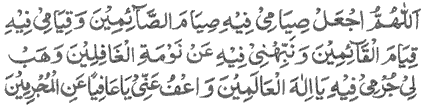
علمائے اہلسنت کا اس امر پر اجماع اور اتفاق ہے کہ رسول اﷲ صلی اللہ علیہ وآلہ وسلم کے بعد حضرت ابوبکر رضی اللہ تعالی عنہ ، انکے بعد حضرت عمر رضی اللہ تعالی عنہ ، پھر حضرت عثمان رضی اللہ تعالی عنہ اور اسکے بعد حضرت علی رضی اللہ تعالی عنہ ، انکے بعد عشرہ مبشرہ کے دیگر حضرات رضوان اللہ تعالی علیہم اجمعین، پھر اصحابِ بدر رضوان اللہ تعالی علیہم اجمعین، پھر باقی اصحابِ اُحد رضوان اللہ تعالی علیہم اجمعین انکے بعد بیعتِ رضوان والے اصحاب رضوان اللہ تعالی علیہم اجمعین اور انکے بعد دیگر اصحابِ رسول صلی اللہ علیہ وآلہ وسلم تمام لوگوں سے افضل ہیں۔ (تاریخ الخلفاء: ١٠٨)

حضرت ابوبکر رضی اللہ تعالی عنہ کو سب سے پہلے اسلام لانے کا شرف حاصل ہے۔ بعض کے نزدیک حضرت علی رضی اللہ تعالی عنہ سب سے پہلے ایمان لائے ہیں۔ امام اعظم ابوحنیفہ رضی اللہ تعالی عنہ نے اس طرح کے مختلف اقوال میں یوں تطبیق کی ہے کہ مردوں میں سیدنا ابوبکر صدیق رضی اللہ تعالی عنہ ، عورتوں میں حضرت خدیجہ رضی اللہ عنہا اور بچوں میں سیدنا علی رضی اللہ تعالی عنہ کو سب سے پہلے ایمان لانے کا اعزاز حاصل ہے۔

تمام علماء کا اس پر اتفاق ہے کہ سیدنا ابوبکر صدیق رضی اللہ تعالی عنہ قبولِ اسلام کے بعد سے آقا و مولیٰ صلی اللہ علیہ وآلہ وسلم کے وصال مبارک تک ہمیشہ سفر وحضر میں آپ کے رفیق رہے بجز اس کے کہ نبی کریم صلی اللہ علیہ وآلہ وسلم کے حکم یا اجازت سے آپ کے ساتھ نہ رہ سکے ہوں۔

آپ تمام صحابہ کرام میں سب سے زیادہ سخی تھے۔آپ نے کثیر مال خرچ کر کے کئی مسلمان غلام آزاد کرائے۔ ایک موقع پر سرکارِ دوعالم صلی اللہ علیہ وآلہ وسلم نے فرمایا، ابوبکر کے مال نے مجھے جتنا نفع دیا اتنا کسی کے مال نے نہیں دیا۔ اس پر حضرت ابوبکر رضی اللہ تعالی عنہ نے روتے ہوئے عرض کی، ”میرے آقا! میں اور میرا مال سب آپ ہی کا ہے”۔

تمام صحابہ کرام میں آپ ہی سب سے زیادہ عالم تھے۔ آپ سے ایک سوبیالیس احادیث مروی ہیں حالانکہ آپ کو بکثرت احادیث یاد تھیں۔ قلتِ روایت کا سبب یہ ہے کہ احتیاط کے پیشِ نظر آپ نبی کریم صلی اللہ علیہ وآلہ وسلم کا عمل یا اس سے حاصل شدہ مسئلہ بیان فرمایا کرتے۔ آپ سب سے زیادہ قرآن اوردینی احکام جاننے والے تھے،اسی لیے رسول کریم صلی اللہ علیہ وآلہ وسلم نے آپ کو نمازوں کا امام بنایا تھا۔آپ اُن خاص صحابہ میں سے تھے جنہوں نے قرآن کریم حفظ کیا تھا۔

حضرت علی رضی اللہ تعالی عنہ فرماتے ہیں کہ قرآن مجید کے سلسلے میں سب سے زیادہ اجروثواب حضرت ابوبکر رضی اللہ تعالی عنہ کو ملے گا کیونکہ سب سے پہلے قرآن کریم کتاب کی صورت میں آپ ہی نے جمع کیا۔

حضرت ابن مسیب رضی اللہ تعالی عنہ فرماتے ہیں، حضرت ابوبکر رضی اللہ تعالی عنہ رسول کریم صلی اللہ علیہ وآلہ وسلم کے وزیرِ خاص تھے چنانچہ حضور صلی اللہ علیہ وآلہ وسلم آپ سے تمام امور میں مشورہ فرمایا کرتے تھے۔ آپ اسلام میں ثانی، غار میں ثانی، یومِ بدر میں سائبان میں ثانی اور مدفن میں بھی حضور صلی اللہ علیہ وسلم کے ساتھ ثانی ہیں۔ رسول کریم صلی اللہ علیہ وآلہ وسلم نے آپ پر کسی کو فضیلت نہیں دی۔

آپ کا سب سے بڑا کارنامہ مرتدوں سے جہاد اور ان کے فتنے کا مکمل انسداد ہے۔ یمامہ، بحرین اور عمان وغیرہ کے مرتدین کی سرکوبی کے بعد اسلامی افواج نے ایلہ، مدائن اور اجنادین کے معرکوں میں فتح حاصل کی۔آپ کی خلافت کی مدت دو سال سات ماہ ہے۔

سیدنا ابوبکر رضی اللہ تعالی عنہ نے وصال کے وقت اپنی صاحبزادی حضرت عائشہ رضی اللہ عنہا سے فرمایا، یہ اونٹنی جس کا ہم دودھ پیتے ہیں اور یہ بڑا پیالہ جس میں ہم کھاتے پیتے ہیں اور یہ چادر جو میں اوڑھے ہوئے ہوں، ان تین چیزوں کے سوا میرے پاس بیتُ المال کی کوئی چیزنہیں۔ ان چیزوں سے ہم اسوقت تک نفع لے سکتے تھے جب تک میں امورِ خلافت انجام دیتا تھا۔ میرے انتقال کے بعد تم ان چیزوں کو حضرت عمر کے پاس بھیج دینا۔ آپ کے وصال کے بعد جب یہ چیزیں سیدنا عمر رضی اللہ تعالی عنہ کو واپس کی گئیں تو انہوں نے فرمایا، اللہ تعالیٰ ابوبکر پر رحم فرمائے۔ انہوں نے اپنے جانشین کو مشقت میں ڈال دیا۔

امام شعبی رحمہ اللہ نے روایت کیاہے کہ حضرت ابو بکر صدیق رضی اللہ تعالی عنہ کو اﷲ تعالیٰ نے چار ایسی خصوصیات سے متصف فرمایا جن سے کسی اور کو سرفراز نہیں فرمایا۔

اوّل: آپ کا نام صدیق رکھا۔
دوم : آپ غار ثور میں محبوبِ خدا اکے ساتھی رہے۔
سوم: آپ ہجرت میں حضور صلی اللہ علیہ وآلہ وسلم کے رفیقِ سفر رہے۔
چہارم: حضور صلی اللہ علیہ وآلہ وسلم نے اپنی حیات مبارکہ میں ہی آپ کو صحابہ کی نمازوں کا امام بنا دیا۔

آپ کی ایک اورخصوصیت یہ ہے کہ آپ کی چار نسلوں نے صحابی ہونے کا شرف پایا۔ آپ صحابی، آپ کے والد ابو قحافہ صحابی ، آپ کے بیٹے عبدالرحمٰن صحابی اور انکے بیٹے ابو عتیق محمد بھی صحابی رضوان اللہ تعالی علیہم اجمعین۔   (ماخوذ از تاریخ الخلفاء)

فضائلِ سیدنا ابوبکر رضی اللہ تعالی عنہ ، قرآن میں


ثَانِیَ اثْنَیْنِ اِذْ ہُمَا فِی الْغَارِ اِذْ یَقُوْلُ لِصَاحِبِہ لاَ تَحْزَنْ اِنَّ اللّٰہَ مَعَنَا فَاَنْزَلَ اللّٰہُ سَکِیْنَتَہ، عَلَیْہِ۔ (التوبۃ:٤٠)
” آپ دو میں سے دوسرے تھے ، جب وہ دونوں (یعنی حضور صلی اللہ علیہ وآلہ وسلم اور حضرت ابوبکر رضی اللہ تعالی عنہ)غار میں تھے ، جب (حضور صلی اللہ علیہ وآلہ وسلم) اپنے ےار سے فرماتے تھے ، غم نہ کر ، بیشک اﷲ ہمارے ساتھ ہے تو اﷲ نے اس پر اپنی تسکین نازل فرمائی”۔ (کنزالایمان)

صدرُالافاضل مولانا سید محمد نعیم الدین مرادآبادی رحمہ اللہ لکھتے ہیں ،

”حضرت ابو بکر صدیق رضی اللہ تعالی عنہ کی صحابیت اس آیت سے ثابت ہے۔ حسن بن فضل نے فرمایا، جو شخص حضرت صدیق اکبر رضی اللہ تعالی عنہ کی صحابیت کا انکار کرے وہ نص قرآنی کا منکر ہو کر کافر ہوا”۔ (تفسیربغوی، تفسیر مظہری، تفسیر خزائن العرفان)

مرزا مظہر جانِ جاناں رحمہ اللہ ” اِنَّ اللّٰہَ مَعَنَا” کی تفسیر میں فرماتے ہیں،

” حضرت صدیق اکبر رضی اللہ تعالی عنہ کے لیے ےہی فضیلت کافی ہے کہ حضور صلی اللہ علیہ وآلہ وسلم نے ان کے لیے بغیر کسی فرق کے، اﷲ تعالیٰ کی اس معیت کو ثابت کیا جو انہیں خود حاصل تھی ۔ جس نے سیدنا ابوبکر رضی اللہ تعالی عنہ کی فضیلت کا انکار کیا اس نے اس آیت کریمہ کا انکار کیا اور کفر کا ارتکاب کیا”۔(تفسیر مظہری)

”سَکِیْنَتَہ، عَلَیْہِ” کی تفسیر میں حضرت عبداﷲبن عباس رضی اللہ تعالی عنہ فرماتے ہیں کہ،

” یہ تسکین حضرت ابوبکر رضی اللہ تعالی عنہ پر نازل ہوئی کیونکہ نبی کریم صلی اللہ علیہ وآلہ وسلم کے ساتھ تو سکینت ہمیشہ ہی رہی تھی”۔(ازالۃالخفاء ج ٢:١٠٧، تاریخ الخلفاء : ١١١)

2۔ ابن عساکررحمہ اللہ نے روایت کیا ہے کہ اﷲ تعالیٰ نے رسول کریم صلی اللہ علیہ وآلہ وسلم کے سلسلے میں حضرت ابوبکر رضی اللہ تعالی عنہ کے سوا تمام مسلمانوں پر عتاب فرمایا ہے جیسا کہ مذکورہ بالا آیت کریمہ کے آغاز میں ہے۔

اِلَّا تَنْصُرُوْہُ فَقَدْ نَصَرَہُ اللّٰہُ اِذْ اَخْرَجَہُ الَّذِیْنَ کَفَرُوْا۔ ( التوبۃ: ٤٠)
” اگر تم محبوب صلی اللہ علیہ وآلہ وسلم کی مدد نہ کرو تو بیشک اﷲ نے انکی مدد فرمائی، جب کافروں کی شرارت سے انہیں باہر تشریف لے جانا ہوا(ہجرت کے لیے)”۔(کنزالایمان)

امام سیوطی رحمہ اللہ فرماتے ہیں، یہ آیت اس دعوے کی دلیل ہے کہ رب تعالیٰ نے سیدنا ابوبکر رضی اللہ تعالی عنہ کو اس عتاب سے مستثنیٰ فرمایا ہے۔ (تاریخ الخلفاء: ١١٣)

3۔ حضرت انس رضی اللہ تعالی عنہ سے روایت ہے کہ جب آیت اِنَّ اللّٰہَ وَ مَلٰئِکَتَہ، یُصَلُّوْنَ عَلَی النَّبِیِّ نازل ہوئی تو حضرت ابوبکر صدیق رضی اللہ تعالی عنہ نے عرض کی ، یا رسول اﷲا! اﷲ تعالیٰ جو فضل وشرف بھی آپ کو عطا فرماتا ہے تو ہم نیازمندوں کو بھی آپ کے طفیل میں نوازتاہے۔ اسی وقت اﷲتعالیٰ نے یہ آیت نازل فرمائی۔ (تفسیر خزائن العرفان، تفسیر مظہری، تاریخ الخلفاء: ١١٢)

ہُوَ الَّذِیْ یُصَلِّیْ عَلَیْکُمْ وَ مَلٰئِکَتُہ، لِیُخْرِجَکُمْ مِنَ الظّلُمٰتِ اِلَی النُّوْرِ وَکَانَ بِالْمُؤْمِنِیْنَ رَحِیْمًا (الاحزاب: ٤٣)
”وہی ہے کہ درود بھیجتاہے تم پر وہ اور اسکے فرشتے کہ تمہیں اندھیریوں سے اجالے کی طرف نکالے اور وہ مسلمانوں پر مہربان ہے”۔ (کنزالایمان)

وَالَّذِیْ جَاءَ بِالصِّدْقِ وَصَدَّقَ بِہ اُولٰئِکَ ہُمُ الْمُتَّقُوْنَ۔ (الزمر:٣٣)
” اور وہ جو یہ سچ لے کر تشریف لائے اور وہ جنہوں نے انکی تصدیق کی، یہی ڈر والے ہیں”۔(کنزالایمان از اعلیٰ حضرت محدث بریلوی رحمۃ اللہ علیہ)

بزاروابن عساکررحمہما اللہ نے اس آیت کے شان نزول کے متعلق روایت کی ہے کہ ایک مرتبہ حضرت علی رضی اللہ تعالی عنہ نے اس طرح ارشادفرمایا، ”قسم ہے اُس رب کی جس نے حضرت محمد صلی اللہ علیہ وآلہ وسلم کو رسول بناکر بھیجا اور حضرت ابوبکر رضی اللہ تعالی عنہ سے اس رسالت کی تصدیق کرائی”۔ اس پر یہ آیت نازل ہوئی۔ (تاریخ الخلفاء:١١٢)

حضرت علی رضی اللہ تعالی عنہ سے مروی ہے کہ حق لیکر آنے والے سے مراد رسول کریم صلی اللہ علیہ وآلہ وسلم اور تصدیق کرنے والے سے مراد حضرت ابوبکر رضی اللہ تعالی عنہ دیق رضی اللہ تعالی عنہ ہیں۔ حضرت ابوہریرہص سے بھی یہی مروی ہے۔ (تفسیرکبیر، تفسیر مظہری، ازالۃ الخفاء ج٢:٢٢٥)

شیعہ مذہب کی مستند تفسیر مجمع البیان میں بھی یہی تفسیر منقول ہے۔ (ج٨:٤٩٨)

وَلِمَنْ خَافَ مَقَامَ رَبّہ جَنَّتٰنِ (الرحمٰن:٤٦)
”اور جو اپنے رب کے حضور کھڑے ہونے سے ڈرے،اسکے لیے دو جنتیں ہیں”۔ (کنزالایمان از اعلیٰ حضرت امام احمد رضا محدث بریلوی رحمۃ اللہ علیہ)

ابن ابی حاتم رحمہ اللہ نے روایت کی ہے کہ یہ آیت حضرت ابوبکر صدیق رضی اللہ تعالی عنہ کے حق میں نازل ہوئی۔ (تفسیرمظہری، تفسیر درمنثور)


وَلاَ یَاْتَلِ اُولُوا الْفَضْلِ مِنْکُمْ وَالسَّعَۃِ اَنْ یُّؤْتُوْا اُولِی الْقُرْبٰی وَالْمَسٰکِیْنَ وَالْمُہٰجِرِیْنَ فِیْ سَبِیْلِ اللّٰہِ وَلْیَعْفُوْا وَلْیَصْفَحُوْا۔
” اور قسم نہ کھائےں وہ جو تم میں فضیلت والے اور گنجائش والے ہیں قرابت والوں اور مسکینوں اور اﷲ کی راہ میں ہجرت کرنے والوں کو دینے کی ، اور چاہیے کہ معاف کریں اور درگزرکریں۔ (النور:٢٢،کنزالایمان)

یہ آیت حضرت صدیق اکبر رضی اللہ تعالی عنہ کے حق میں نازل ہوئی جب آپ نے ام المومنین سیدہ عائشہ رضی اللہ عنہا پر تہمت لگانے والوں کے ساتھ موافقت کرنے پر اپنے خالہ زاد بھائی مسطح کی مالی مدد نہ کرنے کی قسم کھائی جو بہت نادار و مسکین بدری صحابی تھے۔ آپ نے اس آیت کے نزول پر اپنی قسم کا کفارہ دیا اور انکی مالی مدد جاری فرمائی۔ صدرُالافاضل رقمطراز ہیں ،” اس آیت سے حضرت صدیق اکبر رضی اللہ تعالی عنہ کی فضیلت ثابت ہوئی، اس سے آپ کی علوشان ومرتبت ظاہر ہوئی کہ اﷲتعالیٰ نے آپکو ابوالفضل (فضیلت والا)فرمایا”۔(تفسیر خزائن العرفان،تفسیر مظہری)

7۔ ایک مرتبہ یہودی عالم فخاص نے سیدنا ابوبکر رضی اللہ تعالی عنہ سے کہا اے ابوبکر! کیا تم یہ گمان کرتے ہو کہ ہمارا رب ہمارے مالوں میں سے قرض مانگتا ہے، مالدار سے قرض وہی مانگتاہے جو فقیر ہو، اگر تم سچ کہتے ہو تو پھر اﷲتعالیٰ فقیر ہے اور ہم غنی ہیں۔ حضرت ابوبکر رضی اللہ تعالی عنہ اسکی گستاخانہ گفتگو سن کر غضبناک ہوئے اور اسکے منہ پر زوردار تھپڑ مارا اور فرمایا ، اگر ہمارے اورتمہارے درمیان صلح کا معا ہدہ نہ ہوتا تو میں تیری گردن اڑا دیتا۔ فخاص نے بارگاہ نبوی صلی اللہ علیہ وآلہ وسلم میں جا کر سیدنا ابوبکر رضی اللہ تعالی عنہ کی شکایت کی۔ آپ نے اسکی گستاخانہ گفتگو بیان کردی ۔ فخاص نے اس کا انکار کردیا تو اﷲتعالیٰ نے سیدنا ابوبکر رضی اللہ تعالی عنہ کی تصدیق کرتے ہوئے یہ آیت نازل فرمائی۔

لَقَدْ سَمِعَ اللّٰہُ قَوْلَ الَّذِیْنَ قَالُوْا اِنَّ اللّٰہَ فَقِیْر” وَّ نَحْنُ اَغْنِیَاءَ۔ (اٰلِ عمران: ١٨١)
”بیشک اﷲنے سنا جنہوں نے کہا کہ اﷲمحتاج ہے اور ہم غنی”۔ (کنزالایمان)

وَاتَّبِعْ سَبِیْلَ مِنْ اَنَابَ اِلَیَّ ۔
” اور اسکی راہ چل جو میر ی طرف رجوع لایا”۔ (لقمٰن: ١٥)

حضرت ابن عباس رضی اللہ تعالی عنہ کا ارشاد ہے کہ یہ آیت سیدناابوبکر صدیق رضی اللہ تعالی عنہ کے حق میں نازل ہوئی کیونکہ جب وہ اسلام لائے تو حضرت عثمان، طلحہ، زبیر ، سعد بن ابی وقاص، عبدالرحمٰن بن عوف ثنے انکی رہنمائی کے سبب اسلام قبول کیا۔ (تفسیر مظہری)

لَا یَسْتَوِیْ مِنْکُمْ مَنْ اَنْفَقَ مِنْ قَبْلِ الْفَتْحِ وَقَاتَلَ اُولٰئِکَ اَعْظَمُ دَرَجَۃً مِّنَ الَّذِیْنَ اَنْفَقُوْا مِنْم بَعْدُ وَقَاتَلُوْا وَکُلًّا وَّعَدَ اللّٰہُ الْحُسْنٰی وَاللّٰہُ بِمَا تَعْمَلُوْنَ خَبِیْر (الحدید:١٠)
تم میں برابر نہیں وہ جنہوں نے فتح مکہ سے قبل خرچ اور جہاد کیا، وہ مرتبہ میں ان سے بڑے ہیں جنہوں نے بعد فتح کے خرچ اور جہاد کیا اور ان سب سے اللہ جنت کا وعدہ فرما چکا ، اور اللہ کو تمہارے کاموں کی خبر ہے۔ (کنزالایمان)

یہ آیت حضرت ابوبکر رضی اللہ تعالی عنہ دیق رضی اللہ تعالی عنہ کے حق میں نازل ہوئی کیونکہ آپ سب سے پہلے ایمان لائے اور سب سے پہلے اﷲ کی راہ میں مال خرچ کیا۔ (تفسیر بغوی)

قاضی ثناء اﷲرحمہ اﷲ فرماتے ہیں ، یہ آیت اس بات کی دلیل ہے کہ حضرت ابوبکر رضی اللہ تعالی عنہ تمام صحابہ سے افضل اور صحابہ کرام تمام لوگوں سے افضل ہیں کیونکہ فضیلت کا دارومداراسلام قبول کرنے میں سبقت لے جانے ، مال خرچ کرنے اورجہاد کرنے میں ہے۔ جس طرح آقا و مولیٰ صلی اللہ علیہ وآلہ وسلم کا یہ ارشاد گرامی ہے کہ جس نے اچھا طریقہ شروع کیا تو اسے اسکا اجر اور اس پر عمل کرنے والوں کا اجربھی ملے گا جبکہ عمل کرنے والوں کے اجر میں بھی کوئی کمی نہیں کی جائے گی۔ (صحیح مسلم)

علماء کا اس پر اجماع ہے کہ حضرت ابوبکر سب سے پہلے اسلام لائے اور آپکے ہاتھ پر قریش کے معززین مسلمان ہوئے۔ راہ خدا میں مال خرچ کرنے والوں میں بھی سب سے آگے ہیں۔ کفار سے مصائب برداشت کرنے والوں میں بھی آپ سب سے پہلے ہیں۔ (تفسیر مظہری)

10۔ وَسَیُجَنَّبُہَا الْاَتْقَی O الَّذِیْ یُؤْتِیْ مَالَہ، یَتَزَکّٰیO وَمَا لِاَحَدٍ عِنْدَہ، مِنْ نِّعْمَۃٍ تُجْزٰیO اِلاَّ ابْتِغَاءَ وَجْہِ رَبّہِ الْاَعْلٰیO وَلَسَوْفَ یَرْضٰی O
”اور اس (جہنم )سے بہت دور رکھا جائے گا جو سب سے بڑا پرہےزگار جو اپنا مال دےتا ہے کہ ستھرا ہو اور کسی کا اس پر کچھ احسان نہےں جس کا بدلہ دیا جائے ، صرف اپنے رب کی رضا چاہتا ہے جو سب سے بلند ہے اور بے شک قریب ہے کہ وہ (اپنے رب سے)راضی ہو گا”۔ (والیل:١٧ تا ٢١،کنزالایمان )

اکثر مفسرین کا اتفاق ہے یہ آیات مبارکہ حضرت ابو بکر صدیق رضی اللہ تعالی عنہ کی شان میں نازل ہوئیں۔ (تفسیرقرطبی ،تفسیر کبیر ،تفسیرابن کثیر ،تفسیرمظہری)

ابن ابی حاتم رحمہ اللہ نے حضرت عروہ رضی اللہ تعالی عنہ سے روایت کی ہے کہ حضرت ابوبکر رضی اللہ تعالی عنہ نے سات غلاموں کو اسلام کی خاطر آزاد کیا۔اس پر یہ آیات نازل ہوئیں۔ (تفسیر مظہری،تفسیرروح المعانی)

صدرُالافاضل رحمہ اللہ رقمطراز ہیں کہ جب حضرت صدیق اکبر رضی اللہ تعالی عنہ نے حضرت بلال رضی اللہ تعالی عنہ کو بہت گراں قیمت پر خرید کر آزاد کیا تو کفار کو حیرت ہوئی اور انہوں نے کہا ،بلا ل کا ان پر کوئی احسان ہو گا جو انہوں نے اتنی قیمت دے کر خریدا اور آزاد کیا ۔اس پر یہ آیت نازل ہوئی اور ظاہر فرما دیا گیا کہ حضرت صد یق اکبر کا یہ فعل محض اﷲ تعالیٰ کی رضا کے لیے ہے، کسی کے احسان کا بدلہ نہیں۔ (خزائن العرفان)

قاضی ثناء اﷲ پانی پتی رحمہ اللہ آخری آےت کی تفسیر میں لکھتے ہیں ،”یہ آیت حضرت ابوبکر صدیق رضی اللہ تعالی عنہ کے حق میں اس طرح ہے جس طرح حضور کے حق میں یہ آیت ہے،

وَلَسَوْفَ یُعْطِیْکَ رَبُّکَ فَتَرْضٰی O (تفسیر مظہری )
”اور بےشک قریب ہے کہ تمہارا رب تمہیں اتنا دے گا کہ تم راضی ہو جاؤ گے”۔

فضائلِ سیدنا ابوبکر رضی اللہ تعالی عنہ ، احادیث میں

1۔ حضرت ابو سعید خدری رضی اللہ تعالی عنہ سے روایت ہے کہ نبی کریم صلی اللہ علیہ وآلہ وسلم نے فرمایا،بیشک اپنی صحبت اورمال کے ساتھ سب لوگوں سے بڑھ کر مجھ پر احسان کرنے والا ابوبکر ہے۔ اگر میں اپنے رب کے سوا کسی کو خلیل بناتا تو ابوبکر کو بناتا لیکن اسلامی اخوت و موّدت تو موجود ہے ۔آئندہ مسجد میں ابوبکر کے دروازے کے سوا کسی کا دروازہ کھلا نہ رکھا جائے۔ (بخاری کتابُ المناقب)

2۔ دوسری روایت میں یہ ہے کہ ابوبکر کی کھڑکی کے علاوہ (مسجد کی طرف کھلنے والی) سب کھڑکیاں بند کر دی جائیں۔ ( صحیح مسلم کتاب فضائل الصحابۃ)

سرکارِ دوعالم انے اپنے وصال سے دو تین دن قبل یہ بات ارشاد فرمائی۔ اس بناء پر شارحین فرماتے ہیں کہ اس حدیث میں سیدنا ابوبکر رضی اللہ تعالی عنہ کی خلافت کی طرف اشارہ ہے اور دوسروں کی گفتگو کا دروازہ بند کر دیا گیا ہے۔ (اشعۃ اللمعات)

3۔ حضرت عبدﷲبن مسعود رضی اللہ تعالی عنہ سے روایت ہے کہ نبی کریم صلی اللہ علیہ وآلہ وسلم نے فرمایا،اگر میں کسی کو خلیل بناتا تو ابوبکر کو خلیل بناتا لیکن وہ میرے بھائی اور میرے ساتھی ہیں اور تمھارے اِس صاحب کو اﷲ تعالیٰ نے خلیل بنایا ہے۔(مسلم کتاب فضائل الصحابۃ)

خلیل سے مراد ایسا دِلی دوست ہے جس کی محبت رگ وپے میں سرایت کر جائے اور وہ ہر راز پر آگاہ ہو، حضور صلی اللہ علیہ وآلہ وسلم کرم صلی اللہ علیہ وآلہ وسلم نے ایسا محبوب صرف اللہ تعالیٰ کو بنایا۔رب تعالیٰ نے بھی آپ کو اپنا ایسا محبوب وخلیل بنایا ہے کہ آپ کی خلّت سیدنا ابراہیم ں کی خلّت سے زیادہ کامل اور اکمل ہے۔ (اشعۃ اللمعات، ملخصاً)

4۔ حضرت انس بن مالک رضی اللہ تعالی عنہ سے روایت ہے کہ سیدنا ابوبکر رضی اللہ تعالی عنہ نے فرمایا، جس وقت ہم غار میں تھے۔ میں نے اپنے سروں کی جانب مشرکوں کے قدم دیکھے تو عرض کی، یارسول اللہ صلی اللہ علیہ وآلہ وسلم ! اگر ان میں سے کسی نے اپنے پیروں کی طرف دیکھا تو وہ ہمیں دیکھ لے گا۔ نبی کریم صلی اللہ علیہ وآلہ وسلم نے فرمایا،اے ابوبکر! تمہارا ان دو کے متعلق کیا خیال ہے جن میں کا تیسرا اللہ تعالیٰ ہے۔ (مسلم کتاب فضائل الصحابۃ)

5۔ حضرت عمرو بن العاص رضی اللہ تعالی عنہ سے روایت ہے کہ نبی کریم صلی اللہ علیہ وآلہ وسلم نے انھیں لشکرِ ذاتِ السلاسل پر امیر بنا کر بھیجا۔ ان کا بیان ہے کہ جب حاضرِ بارگاہ ہوا تو میں نے عرض کی،یا رسول اللہ صلی اللہ علیہ وآلہ وسلم ! آپ کو لوگوں میں سب سے زیادہ پیارا کون ہے؟، فرمایا، عائشہ۔ میں عرض گزار ہوا ، مردوں میں سے؟ فرمایا ، اس کے والدِ محترم یعنی ابوبکر۔ میں عرض گزار ہوا کہ پھر کون؟ فرمایا ، عمر۔ پس میں اس ڈر سے خاموش ہو گیا کہ مبادا مجھے سب سے آخر میں رکھیں۔ (بخاری، مسلم)

6۔ حضرت محمد بن حنیفہ رضی اللہ تعالی عنہ کا بیان ہے کہ میں نے اپنے والدِ محترم (حضرت علی رضی اللہ تعالی عنہ ) کی خدمت میںعرض کی،نبی کریم صلی اللہ علیہ وآلہ وسلم کے بعد سب سے بہتر آدمی کون ہے؟ فرمایا ، ابوبکر رضی اللہ تعالی عنہ ۔ میں عرض گزار ہوا کہ پھر کون ہے ؟ فرمایا ، عمر رضی اللہ تعالی عنہ ۔ تیسری بارمیں ڈرا کہ کہیں یہ نہ فرمائیں کہ عثمان رضی اللہ تعالی عنہ ، اس لیے میں نے عرض کی کہ پھر آپ ہیں؟ فرمایا ، میں تو مسلمانوں میں سے ایک فرد ہوں۔ (بخاری کتابُ المناقب)

7۔ حضرت ابوہریرہ رضی اللہ تعالی عنہ سے روایت ہے کہ آقا ومولیٰ صلی اللہ علیہ وآلہ وسلم نے فرمایا، تم میں سے آج کون روزہ دار ہے؟ سیدنا ابوبکر رضی اللہ تعالی عنہ نے عرض کی، میں ہوں۔ پھر حضور صلی اللہ علیہ وآلہ وسلم نے فرمایا، تم میں سے آج کس شخص نے مسکین کو کھانا کھلایا ہے؟ سیدنا ابوبکر رضی اللہ تعالی عنہ نے عرض کی، میں نے۔ پھر ارشاد ہوا،تم میں سے آج کس شخص نے مریض کی عیادت کی؟ آپ ہی نے عرض کی، میں نے۔ آقا کریم انے فرمایا، جس شخص میں (ایک ہی دن میں)یہ اوصاف جمع ہونگے وہ جنتی ہو گا۔ (مسلم باب فضائل ابی بکر)

8۔ حضرت ابنِ عمررضی اللہ تعالی عنہ سے روایت ہے کہ نبی کریم صلی اللہ علیہ وآلہ وسلم کے زمانہ میں ہم کسی کو ابوبکر رضی اللہ تعالی عنہ کے برابر شمار نہیں کیا کرتے تھے، پھر حضرت عمر رضی اللہ تعالی عنہ کو، پھر حضرت عثمان رضی اللہ تعالی عنہ کو دیگر صحابہ پر فضیلت دیتے اور پھر نبی کریم صلی اللہ علیہ وآلہ وسلم کے اصحاب میں سے کسی کو دوسرے پر فضیلت نہ دیتے۔ (بخاری کتابُ المناقب)

9۔ انہی سے مروی ہے کہ رحمتِ دوعالم صلی اللہ علیہ وآلہ وسلم کی حیاتِ ظاہری میں ہم کہا کرتے کہ نبی کریم صلی اللہ علیہ وآلہ وسلم کی امت میں آپ اکے بعد افضل ترین حضرت ابوبکر ہیں، پھرحضرت عمر، پھر حضرت عثمان ث۔ (ترمذی، ابوداؤد)

10۔ حضرت ابوہریرہ رضی اللہ تعالی عنہ سے ایک طویل روایت کے آخر میں ہے کہ سیدنا ابوبکر رضی اللہ تعالی عنہ نے بارگاہِ رسالت میں عرض کی، یا رسول اللہ صلی اللہ علیہ وسلم ! کیا کوئی ایسا شخص بھی ہے جس کو جنت کے تمام دروازوں سے جنت میں جانے کے لیے بلایا جائے گا؟ آقا ومولیٰ صلی اللہ علیہ وآلہ وسلم نے فرمایا، ہاں اے ابوبکر! مجھے امید ہے کہ تم ایسے ہی لوگوں میں سے ہو۔ (بخاری کتابُ المناقب)

11۔ حضرت عمر رضی اللہ تعالی عنہ نے فرمایا کہ حضرت ابو بکر رضی اللہ تعالی عنہ ہمارے سردار، ہمارے بہترین فرد اور رسول اﷲا کو ہم سب سے زیادہ محبوب تھے۔ (ترمذی)

12۔ حضرت ابنِ عمر رضی اللہ تعالی عنہ سے روایت ہے کہ رسول اﷲ صلی اللہ علیہ وآلہ وسلم نے حضرت ابوبکر رضی اللہ تعالی عنہ سے فرمایا،تم غار میں میرے ساتھی تھے اور حوض پر میرے ساتھی ہوگے۔ (ترمذی)

13۔ حضرت عائشہ رضی اﷲ عنہا سے روایت ہے کہ حضور صلی اللہ علیہ وآلہ وسلم نے فرمایا، کسی قوم کے لئے مناسب نہیں کہ ان میں ابوبکر ہو اور ان کی امامت کوئی دوسرا کرے۔ (ترمذی)

14۔ حضرت عمر رضی اللہ تعالی عنہ سے روایت ہے کہ رسول اﷲا نے ہمیں صدقہ کا حکم فرمایا۔ اس وقت میرے پاس کافی مال تھا ، میں نے کہا کہ اگر کسی روز میں حضرت ابو بکر رضی اللہ تعالی عنہ سے سبقت لے جاسکا تو آج کا دن ہوگا۔ پس میں نصف مال لے کر حاضر ہوگیا۔ رسول اﷲ صلی اللہ علیہ وآلہ وسلم نے فرمایا کہ گھر والوں کے لئے کتنا چھوڑا ہے؟عرض گزار ہوا کہ اس کے برابر۔ حضرت ابوبکر رضی اللہ تعالی عنہ اپنا سارا مال لے آئے تو فرمایا ، اے ابو بکر اپنے گھر والوں کے لئے کیا چھوڑا ہے؟ عرض گزار ہوئے ، ان کے لئے اﷲ اور اس کے رسول کو چھوڑ آیا ہوں ۔ میں نے کہا ، میں ان سے کبھی نہیں بڑھ سکتا۔ (ترمذی،ابو داؤد)

15۔ حضرت عائشہ صدیقہ رضی اﷲ عنہا سے روایت ہے کہ حضرت ابو بکر رضی اللہ تعالی عنہ رسول اﷲا کی بارگاہ میں حاضرہوئے تو آپ نے فرمایا ،تمہیں اﷲ تعالیٰ نے آگ سے آزاد کردیا ہے۔ اس دن سے ان کا نام عتیق مشہور ہو گیا۔ (ترمذی،حاکم)

16۔ حضرت ابنِ عمر رضی اللہ تعالی عنہ سے روایت ہے کہ رسول اﷲ انے فرمایا،میں وہ ہوں کہ زمین سب سے پہلے میرے اوپر سے شق ہو گی ، پھر ابوبکر سے، پھر عمر سے، پھر بقیع والوں کے پاس آؤں گا تو وہ میرے ساتھ اٹھائے جائیں گے۔ پھر میں اہلِ مکہ کا انتظار کروں گا ، یہاں تک کہ حرمین کے درمیان حشر کیا جائے گا۔ (ترمذی)

17۔ حضرت ابو ہریرہ رضی اللہ تعالی عنہ سے روایت ہے کہ حضورِاکرم صلی اللہ علیہ وآلہ وسلم نے فرمایا،میرے پاس جبریل آئے تو میرا ہاتھ پکڑا تاکہ مجھے جنت کا وہ دروازہ دکھائیں جس سے میری امت داخل ہوگی۔ حضرت ابوبکر رضی اللہ تعالی عنہ نے عرض کی، یا رسول اﷲا! میں چاہتا ہوں کہ میں آپ کے ساتھ ہوتا ، تاکہ اس دروازے کو دیکھتا۔ رسول اﷲا نے فرمایا، اے ابوبکر! تم میری امت میں سب سے پہلے جنت میں داخل ہوگے۔ (ابوداؤد)

18۔حضرت ابو الدرداء رضی اللہ تعالی عنہ سے روایت ہے کہ سرکارِ دوعالم نورِ مجسم انے فرمایا، انبیاء کے علاوہ سورج کبھی کسی ایسے شخص پر طلوع نہیں ہوا جو ابوبکر سے افضل ہو۔ (الصواعق المحرقۃ:١٠٣، ابونعیم)

19 ۔ حضرت سلیمان بن یسار رضی اللہ تعالی عنہ سے روایت ہے کہ رسول کریم صلی اللہ علیہ وآلہ وسلم نے فرمایا، اچھے خصائل تین سو ساٹھ ہیں۔ سیدنا ابوبکر رضی اللہ تعالی عنہ نے عرض کی، یا رسول اللہ صلی اللہ علیہ وسلم ! ان میں سے مجھ میں کوئی خصلت موجود ہے؟ فرمایا، اے ابوبکر ! مبارک ہو۔ تم میں وہ سب اچھی خصلتیں موجود ہیں۔ (الصواعق المحرقۃ:١١٢، ابن عساکر)

20۔ حضرت انس رضی اللہ تعالی عنہ سے روایت ہے کہ آقا ومولیٰ صلی اللہ علیہ وآلہ وسلم نے فرمایا، میری امت پر واجب ہے کہ وہ ابوبکر کا شکریہ ادا کرے اور ان سے محبت کرتی رہے۔ (تاریخ الخلفاء:١٢١،الصواعق المحرقۃ:١١٢، ابن عساکر)

21۔ حضرت عباس سے روایت ہے کہ رسول کریم صلی اللہ علیہ وآلہ وسلم نے فرمایا، میں نے جس کو بھی اسلام کی دعوت دی اُس نے پہلے انکار کیا سوائے ابوبکر کے کہ انہوں نے میرے دعوتِ اسلام دینے پر فوراً ہی اسلام قبول کر لیا اور پھر اس پر ثابت قدم رہے۔ (تاریخ الخلفاء:٩٨، ابن عساکر)

22۔ حضرت معاذ بن جبلص سے روایت ہے کہ سیدِ عالم صلی اللہ علیہ وآلہ وسلم نے ایک مسئلہ میں میری رائے دریافت فرمائی تو میں نے عرض کی، میری رائے وہی ہے جو ابوبکر کی رائے ہے۔ اس پر آقا کریم انے فرمایا، اللہ تعالیٰ کو یہ پسند نہیں کہ ابوبکر غلطی کریں۔ (تاریخ الخلفاء:١٠٧، ابونعیم، طبرانی)

23۔ حضرت حفصہ رضی اللہ عنہا سے روایت کیا ہے کہ میں نے آقا و مولیٰ صلی اللہ علیہ وآلہ وسلم سے عرض کی، آپ نے اپنی علالت کے ایام میں حضرت ابوبکر رضی اللہ تعالی عنہ کو امام بنایا تھا۔ حضور صلی اللہ علیہ وسلم نے فرمایا، نہیں! میں نے نہیں بنایا تھا بلکہ اللہ تعالیٰ نے بنایا تھا(یعنی اللہ تعالیٰ کے حکم سے انہیں امام بنایا تھا)۔ (تاریخ الخلفاء:١٢٦ ، ابن عساکر)

24۔ حضرت عمر رضی اللہ تعالی عنہ پاس حضرت ابو بکر رضی اللہ تعالی عنہ کا ذکر ہوا تووہ روپڑے اور فرمایا، میں چاہتا ہوں کہ میرے سارے اعمال اُن کے ایک دن کے اعمال جیسے یا اُن کی ایک رات کے اعمال جیسے ہوتے۔ پس رات تو وہ رات ہے جب وہ رسول اﷲا کے ساتھ غار کی طرف چلے۔ جب غار تک پہنچے تو عرض گزار ہوئے، خدا کی قسم! آپ اس میں داخل نہیں ہوںگے جب تک میں اس میں داخل نہ ہو جاؤںکیونکہ اگر اس میں کوئی چیز ہے تو اس کی تکلیف آپ کی جگہ مجھے پہنچے۔ پھر وہ داخل ہوئے اور غار کو صاف کیا۔ اس کی ایک جانب سوراخ تھے تو اپنی ازار کو پھاڑ کر انہیں بند کیا۔ دو سوراخ باقی رہ گئے تو انہیں اپنی ایڑیوں سے روک لیا۔ پھر رسول اﷲ صلی اللہ علیہ وآلہ وسلم کی بارگاہ میں عرض گزار ہوئے کہ تشریف لے آئیے۔ رسول ُاﷲ صلی اللہ علیہ وآلہ وسلم اندر داخل ہوئے اور انکی گود میں سرِ مبارک رکھ کر سو گئے۔پس ایک سوراخ میں سے حضرت ابوبکر رضی اللہ تعالی عنہ پیر میں ڈنگ مارا گیا تو انہوں نے اس ڈر سے حرکت نہ کی کہ آقا ومولیٰ صلی اللہ علیہ وآلہ وسلم بیدار ہوجائیں گے لیکن ان کے آنسو رسول اﷲا کے نورانی چہرے پر گر پڑے۔ فرمایا کہ ابو بکر ! کیا بات ہے؟ عرض کیا، میرے ماں باپ آپ پر قربان، مجھے ڈنگ مارا گیا ہے۔ چنانچہ رسول اﷲ صلی اللہ علیہ وآلہ وسلم نے لعابِ دہن لگا دیا تو انکی تکلیف جاتی رہی۔ پھر اس زہرنے عود کیا اور وہی انکی وفات کا سبب بنا۔ اُن کا دن وہ دن ہے کہ جب رسول اﷲا نے وفات پائی تو اس وقت بعض اہلِ عرب مرتد ہو گئے اور کہا کہ ہم زکوٰۃ ادا نہیں کریں گے تو انہوں نے فرمایا ، اگر کوئی اونٹ کا گھٹنا باندھنے کی رسی بھی روکے گا تو میں اس کے ساتھ جہاد کروں گا۔ میں عرض گزار ہوا کہ اے خلیفہ رسول ا! لوگوں سے الفت کیجیے اور ان سے نرمی کا سلوک فرمائیے۔ انہوں نے مجھ سے فرمایا، تم جاہلیت میں بہادر تھے تو کیا اسلام لا کر بزدل ہو گئے ہو؟بے شک وحی منقطع ہو گئی، دین مکمل ہو گیا ، کیا یہ دین میرے جیتے جی بدل جائے گا؟ (مشکوٰۃ)

25۔ حضرت عمر فاروق رضی اللہ تعالی عنہ کا ارشاد ہے کہ اگر تمام اہلِ زمین کا ایمان ایک پلّہ میں اور سیدنا ابوبکر رضی اللہ تعالی عنہ کا ایمان دوسرے پلّہ میں رکھ کروزن کیا جائے تو سیدنا ابوبکر رضی اللہ تعالی عنہ کے ایمان کا پلّہ بھاری رہے گا۔ (تاریخ الخلفاء:١٢١، شعب الایمان للبیہقی)

26۔ حضرت عامر بن عبداللہ بن زبیرث سے مروی ہے کہ جب آیت وَلَوْ اَنَّا کَتَبْنَا عَلَیْہِمْ اَنِ اقْتُلُوْا اَنْفُسَکُمْ (ترجمہ:اوراگر ہم اُن پر فرض کردیتے کہ اپنے آپ کو قتل کر دو)نازل ہوئی تو حضرت ابوبکر رضی اللہ تعالی عنہ نے عرض کی، یا رسول اللہ! اگر آپ مجھے حکم دیتے کہ میں خودکو قتل کر لوں تو میں خود کو ضرور قتل کر دیتا۔ حضور صلی اللہ علیہ وسلم نے فرمایا، تم نے سچ کہا۔ (تاریخ الخلفاء:١٢٠، ابن ابی حاتم)

27۔ حضرت ابوسعید خُدری رضی اللہ تعالی عنہ سے روایت ہے کہ رسول کریم صلی اللہ علیہ وآلہ وسلم منبر پر تشریف فرما ہوئے اور فرمایا، اللہ تعالیٰ نے ایک بندے کو اس کا اختیار دیاکہ وہ دنیا کی نعمتیں پسند کر لے یا آخرت کی نعمتیں جو اللہ کے پاس ہیں تو اُس نے آخرت کی نعمتیں پسند کر لیں ۔ یہ سنتے ہی حضرت ابوبکر رضی اللہ تعالی عنہ رونے لگے اور عرض کی، یارسول اللہ!کاش ہمارے ماں باپ آپ پر قربان ہو جائیں۔ ہمیں تعجب ہوا کہ حضور صلی اللہ علیہ وآلہ وسلم کسی شخص کا ذکر فرمارہے ہیں اور یہ کہہ رہے ہیں، آپ پر ہمارے ماں باپ قربان ہو جائیں۔ بعد میں ہمیں علم ہوا کہ وہ صاحبِ اختیار بندے خود حضور صلی اللہ علیہ وآلہ وسلم ہی تھے۔ پس حضرت ابوبکر رضی اللہ تعالی عنہ ہم سب سے زیادہ علم والے تھے۔ (بخاری، مسلم)

28۔ حضرت علی رضی اللہ تعالی عنہ نے لوگوں سے پوچھا ، یہ بتاؤ کہ سب سے زیادہ بہادر کون ہے؟ لوگوں نے کہا، آپ۔ سیدنا علی رضی اللہ تعالی عنہ نے فرمایا، نہیں !سب سے زیادہ بہادر حضرت ابوبکر رضی اللہ تعالی عنہ ہیں۔ سنو! جنگِ بدر میں ہم نے رسول کریم صلی اللہ علیہ وآلہ وسلم کے لیے ایک سائبان بنایا تھا۔ ہم نے آپس میں مشورہ کیا کہ اس سائبان کے نیچے حضور کے ساتھ کون رہے گا ، کہیں ایسا نہ ہو کہ کوئی مشرک آقاومولیٰ صلی اللہ علیہ وآلہ وسلم پر حملہ کر دے۔ خدا کی قسم! ہم میں سے کوئی بھی آگے نہیں بڑھا تھا کہ سیدنا ابوبکر رضی اللہ تعالی عنہ ہاتھ میں برہنہ تلوار لیے ہوئے حضور صلی اللہ علیہ وآلہ وسلم کے پاس کھڑے ہوگئے اور پھر کسی مشرک کو آپ کے پاس آنے کی جرأت نہ ہو سکی۔ اگر کوئی ناپاک ارادے سے قریب بھی آیا تو آپ فوراً اس پر ٹوٹ پڑے ۔ اس لیے آپ ہی سب سے زیادہ بہادر تھے۔ (تاریخ الخلفاء: ١٠٠،مسند بزار)

یعنی اُس افضل ُ الخلق بعد الرُسُل
ثانی اثنین ِ ہجرت پہ لاکھوں سلام

All praises are due to Allāh SubHanuhu wa Ta’ala Who created His Beloved Rasool Sayyidunā MuHammad Sallallaho Alaihi wa Aalihi wa Sallam. Choicest Salāms and most revered Salutations upon the dazzling manifestation of the Sublime Lord SubHanuhu wa Ta’ala who is the most perfect and independent human created by the Real Absolute Almighty Allāh SubHanuhu wa Ta’ala.

I – Names of the Prophet SallAllahu Alaihi wa Sallam
explicitly mentioned in the Qur’an al-Kareem
1. Muhammad: Praised One.
2. Ahmad: Most Deserving of Praise.
3. al-Ahsan: The Most Beautiful. The Best.
4. Udhun khayr: Friendly Ear.
5. al-A`la: The Highest (in all creation).
6. al-Imam: The Leader.
7. al-Amin: The Dependable.
8. al-Nabi: The Prophet.
9. al-Ummi: Literate without being taught by a Teacher -or- Base / Foundation of the Universe -or- the First & the Foremost..
10. Anfas al-`arab: The Most Precious of the Arabs.
11. Ayatullah: The Sign of Allah.
12. Alif lam mim ra: A-L-M-R.
13. Alif lam mim sad: A-L-M-S
14. al-Burhan: The Proof.
15. al-Bashir: The Bringer of Good Tidings.
16. al-Baligh: The Very Eloquent One.
17. al-Bayyina: The Exposition.
18. Thani ithnayn: The Second of Two.
19. al-Harîs: The Insistent One.
20. al-Haqq: The Truth Itself.
21. Ha Mim: H-M.
22. Ha Mim `Ayn Sîn Qaf: H-M- ` -S-Q.
23. al-Hanif: The One of Primordial Religion.
24. Khatim al-nabiyyin: The Seal of Prophets.
25. al-Khabir: The Knowledgeable One.
26. al-Da`i: The Summoner.
27. Dhu al-quwwa: The Strong One.
28. Rahmatun li al-`alamin: A Mercy for the Worlds.
29. al-Ra’uf: The Gentle One.
30. al-Rahim: The Compassionate One.
31. al-Rasul: The Messenger.
32. Sabil Allah: The Path to Allah.
33. al-Siraj al-munir: The Light-Giving Lamp.
34. al-Shâhid: The Eyewitness.
35. al-Shahîd: The Giver of Testimony.
36. al-Sâhib: The Companion.
37. al-Sidq: Truthfulness Itself.
38. al-Sirat al-mustaqim: The Straight Way.
39. Tah Sîn: T-S.
40. Tah Sîn Mim: T-S-M.
41. Tah Ha: T-H.
42. al-`Amil: The Worker.
43. al-`Abd: The Slave.
44. `Abd Allah: Allah’s Slave.
45. al-`Urwat al-wuthqa: The Sure Rope.
46. al-`Aziz: The Mighty One. The Dearest One.
47. al-Fajr: The Dawn.
48. Fadl Allah: Allah’s Grace.
49. Qadamu Sidq: Truthful Ground.
50. al-Karim: The Generous One.
51. Kaf Ha’ Ya’ `Ayn Sad: K-H-Y- ` – S
52. al-Lisan: Language Itself.
53. al-Mubashshir: The Harbinger of Goodness.
54. al-Mubîn: The Manifest.
55. al-Muddaththir: The Cloaked One.
56. al-Muzzammil: The Enshrouded One.
57. al-Mudhakkir: The Reminder.
58. al-Mursal: The Envoy.
59. al-Muslim: The One Who Submits.
60. al-Mashhud: The One Witnessed To.
61. al-Musaddiq: The Confirmer.
62. al-Muta`: The One Who Is Obeyed.
63. al-Makîn: The Staunch One.
64. al-Munadi: The Crier.
65. al-Mundhir: The Admonisher.
66. al-Mizan: The Balance.
67. al-Nas: Humanity.
68. al-Najm: The Star.
69. al-Thaqib: The Sharp-Witted One.
70. al-Nadhîr: The Warner.
71. Ni`mat Allah: Allah’s Great Favor.
72. al-Nur: The Light.
73. Nun: N.
74. al-Hadi: Guidance Itself.
75. al-Wali: The Ally.
76. al-Yatim: The Orphan. The Unique One.
77. Ya Sîn: I-S.

 
II- Names of the Prophet SallAllahu Alaihi wa Sallam
mentioned in the Qur’an as verbs
078. âkhidh al-sadaqat: The Collector of Alms.
079. al-âmir: The Commander.
080. al-Nâhi: The Forbidder.
081. al-Tâli: The Successor.
082. al-Hâkim: The Arbitrator.
083. al-Dhakir: The Rememberer.
084. al-Râdi: The Acquiescent.
085. al-Râghib: The Keen.
086. al-Wâdi`: The Deposer.
087. Rafî` al-dhikr: The One of Exalted Fame.
088. Rafî` al-darajât: The One of The Exalted Ranks.
089. al-Sâjid: The Prostrate.
090. al-Sâbir: The Long-Suffering.
091. al-Sâdi`: The Conqueror of Obstacles.
092. al-Safuh: The Oft-Forgiving.
093. al-`âbid: The Worshipful.
094. al-`âlim: The Knower.
095. al-`Alîm: The Deeply Aware.
096. al-`Afuw: The Grantor of Pardon.
097. al-Ghâlib: The Victor.
098. al-Ghani: The Free From Want.
099. al-Muballigh: The Bearer of News.
100. al-Muttaba`: He Who Is Followed.
101. al-Mutabattil: The Utter Devotee.
102. al-Mutarabbis: The Expectant One.
103. al-Muhallil: The Dispenser of Permissions.
104. al-Muharrim: The Mandator of Prohibitions.
105. al-Murattil: The Articulate.
106. al-Muzakki: The Purifier.
107. al-Musabbih: The Lauder.
108. al-Musta`îdh: The Seeker of Refuge.
109. al-Mustaghfir: The Seeker of Forgiveness.
110. al-Mu’min: The Believer. The Grantor of Safety.
111. al-Mushâwir: The Consultant.
112. al-Musalli: The Prayerful.
113. al-Mu`azzaz: The Strengthened One.
114. al-Muwaqqar: Held in Awe.
115. al-Ma`sum: Immune.
116. al-Mansur: The One With Divine Help.
117. al-Mawla: The Master of Favors and Help.
118. al-Mu’ayyad: The Recipient of Support.
119. al-Nâsib: The One Who Makes Great Effort.
120. al-Hâdi: The Guide.
121. al-Wâ`izh: The Exhorter.

[Note: The character <â> denotes a long A or alif.]


III- Names of the Prophet SallAllahu Alaihi wa Sallam
in the Hadith and the Ancient Books
122. Ajîr: The Saved One.
123. Uhyad: The Dissuader.
124. Ahhad: The Peerless One.
125. Akhumakh: Of Sound Submission.
126. al-Atqa: The Most Godwary.
127. al-Abarr: The Most Righteous One. The Most Pious One.
128. al-Abyad: The Fairest One.
129. al-Agharr: The Most Radiant One.
130. al-Anfar: The One With the Largest Assembly.
131. al-Asdaq: The Most Truthful.
132. al-Ajwad: The Most Bounteous.
133. Ashja` al-Nas: The Most Courageous of Humanity.
134. al-âkhidh bi al-hujuzât: The Grasper of Waist-Knots.
135. Arjah al-nas `aqlan: The Foremost in Humankind in Intellect.
136. al-A`lamu billah: The Foremost in Knowledge of Allah.
137. al-Akhsha lillah: The Foremost in Fear of Allah.
138. Afsah al-`arab: The Most Articulate of the Arabs.
139. Aktharu al-anbiya’i tabi`an: The Prophet With The Largest Following.
140. al-Akram: The One Held in Highest Honor.
141. al-Iklil: The Diadem.
142. Imam al-nabiyyin: The Leader of Prophets.
143. Imam al-muttaqin: The Leader of the Godwary.
144. Imam al-nas: The Leader of Humankind.
145. Imam al-khayr: The Good Leader.
146. al-Amân: The Safeguard.
147. Amanatu as-habih: (The Keeper of) His Companions’s Trust.
148. al-Awwal: The First.
149. al-âkhir: The Last.
140: Ukhrâya: The Last (of the Prophets). His name in the Torah.
141: al-Awwâh: The One Who Cries Ah.
142: al-Abtahi: The One from Bitah between Mecca and Mina.
143. al-Bâriqlît, al-Barqalîtos: The Paraclete. The Spirit of Holiness. The Innocent One.
144. al-Bâtin: The Hidden One (in his station).
145. Bim’udhma’udh: One of his names in the Torah.
146. al-Bayan: The Exposition.
147. al-Taqi: The One Who Guards Himself.
148. al-Tihami: The One from Tihama (the lowland of the Hijaz).
149. al-Thimal: The Protector.
150. al-Jabbar: The Fierce One.
151. al-Khatim: The Sealer.
152. al-Hâshir: The Gatherer.
153. Hât Hât: His name in the Psalms.
154. al-Hâfizh: The Preserver.
155. Hâmid: Praiseful.
156. Hâmil liwa’ al-hamd: Bearer of the Flag of Praise.
157: Habib Allah: Allah’s Beloved.
158. Habib al-Rahman: The Beloved of the Merciful.
159. Habîtan: His name in the Injil.
160. al-Hujja: The Proof.
162. Hirzan li al-`ayn: A Barrier Against The Evil Eye.
163. al-Hasîb: The Sufficient One. The Highborn One.
164. al-Hafîzh: The Keeper and Guardian.
165. al-Hakîm: The Wise One.
166. al-Halîm: The Meek One.
167. Hammitâya: Guardian of Sanctity.
168. al-Humayd: The Praised One.
169. al-Hamîd: The Praised One.
170. al-Hayy: The Living One.
171. Khâzin mal Allah: Allah’s Treasurer.
172. al-Khâshi`: The Fearful One.
173. al-Khâdi`: The Submissive One.
174. Khatîb al-nabiyyin: The Orator Among the Prophets.
175. Khalil Allah: Allah’s Close Friend.
176. Khalifat Allah: Allah’s Deputy.
177. Khayr al-`alamin: The Greatest Goodness in the Worlds.
178. Khayru khalq Allah: The Greatest Good in Allah’s Creation.
179. Khayru hadhihi al-umma: The Best of This Community.
180. Dar al-hikma: The House of Wisdom.
181. al-Dâmigh: The Refuter (of Falsehoods).
182. al-Dhikr: The Remembrance.
183. al-Dhakkar: The One Who Remembers Much.
184. al-Râfi`: The Exalter.
185. Râkib al-buraq: The Rider of the Buraq.
186. Râkib al-jamal: The Rider of the Camel.
187. Rahmatun muhdat: Mercy Bestowed.
188. Rasul al-rahma: The Emissary of Mercy.
189. Rasul al-raha: The Emissary of Relief.
190. Rasul / Nabi al-malahim: The Emissary / Prophet of Battles.
191. Rukn al-mutawadi`in: The Pillar of the Humble Ones.
192. al-Rahhab: The Most Fearful.
193. Ruh al-haqq: The Spirit of Truth.
194. Ruh al-qudus: The Spirit of Holiness.
195. al-Zahid: The One Who Does-Without.
196. al-Zaki: The Pure One.
197. al-Zamzami: The Heir of Zamzam.
198. Zaynu man wâfa al-qiyama: The Ornament of All Present on the Day of Judgment.
199. Sabiq: Foremost.
200. Sarkhatilos: Paraclete (in Syriac).
201. Sa`id: Felicitous.
202. al-Salam: Peace.
203. Sayyid al-nas: The Master of Humanity.
204. Sayyid walad Adam: The Master of the Children of Adam.
205. Sayf Allah: Allah’s Sword.
206. al-Shâri`: The Law-Giver.
207. al-Shâfi`: The Intercessor.
208. al-Shafî`: The Constant Intercessor.
209. al-Mushaffa`: The One Granted Intercession.
210. al-Shâkir: The Thankful One.
211. al-Shakkâr: The One Who Thanks Much.
212. al-Shakur: The Ever-Thankful.
213. Sâhib al-taj: The Wearer of the Crown.
214. Sâhib al-hujja: The Bringer of The Proof.
215. Sâhib al-hawd: The Owner of the Pond.
216. Sâhib al-kawthar: The Owner of the River of Kawthar.
217. Sâhib al-hatîm: The Lord of the Court Before the Ka`ba.
218. Sâhib al-khâtim: The Owner of the Seal.
219. Sâhibu Zamzam: The Owner of Zamzam.
220. Sâhib al-sultan: The Possessor of Authority.
221: Sâhib al-sayf: The Bearer of the Sword.
222. Sâhib al-shafa`at al-kubra: The Great Intercessor.
223. Sâhib al-qadib: The Bearer of the Rod.
224. Sâhib al-liwa’: The Carrier of the Flag.
225. Sâhib al-mahshar: The Lord of the Gathering.
226. Sâhib al-mudarra`a: The Wearer of Armor.
227. Sâhib al-mash`ar: The Owner of the Landmark.
228. Sâhib al-mi`raj: The One Who Ascended.
229. Sâhib al-maqam al-mahmud: The One of Glorified Station.
230. Sâhib al-minbar: The Owner of the Pulpit.
231. Sâhib al-na`layn: The Wearer of Sandals.
232. Sâhib al-hirâwa: The Bearer of the Cane.
233. Sâhib al-wasila: The Possessor of the Means.
234. Sâhib la ilaha illallah: The Teacher of “There is no god but Allah.”
235. al-Sadiq: The Truthful.
236. al-Masduq: The Confirmed.
237. al-Sâlih: The righteous one.
238. al-Dâbit: The One Given Mastery.
239. al-Dahuk: The Cheerful One.
240. al-Tahir: The (Ritually) Pure One.
241. Tâb Tâb: Of Blessed Memory. His Name in the Torah.
242. al-Tayyib: The Salutary One. The Fragrant One.
243. al-Zhahir: The Prevailer.
244. al-`âqib: The Last in Succession.
245. al-`Adl: The Just.
246. al-`Arabi: The Arabian. The Speaker of Arabic.
247. `Ismatullah: Allah’s Protection.
248. al-`Azhim: The Tremendous One.
249. al-`Afif: The Chaste One.
250. al-`Ali: The High One.
251. al-Ghafur: The Frequent and Abundant Forgiver.
252. al-Ghayth: Rain. Help (esp. in the elements).
253. al-Fâtih: The Conqueror.
254. al-Fâriq: The Separator Between Good and Bad.
255. Fârqilîta: The Paraclete.
256. Fartt: The Scout.
257. al-Fasîh: The Highly Articulate One.
258. Falâh: Felicity.
259. Fi’at al-muslimin: The Main Body of the Muslims.
260. al-Qa’im: The One Who Stands and Warns. The Establisher.
261. Qâsim: The Distributer.
262. Qa’id al-khayr: The Leader Who Guides to Goodness.
263. Qa’id al-ghurr al-muhajjalîn: Leader of the Bright-Limbed Ones.
264. al-Qattal: The Dauntless Fighter.
265. Qutham: Of Perfect Character. Gifted With Every Merit.
266. Qudmâya: The First (of the Prophets). His name in the Torah.
267. al-Qurashi: The One From Quraysh.
268. al-Qarîb: The Near One.
269. al-Qayyim: The Righteous Straightener (of the Community).
270. al-Kâff: The One Who Puts a Stop (to Disobedience).
271. al-Mâjid: The Glorifier.
272. al-Mâhi: The Eraser (of Disbelief).
273. al-Ma’mun: The One Devoid of Harm.
274. al-Mubarak: The Blessed One.
275. al-Muttaqi: The Godwary One.
276. al-Mutamakkin: Made Firm and Established.
277. al-Mutawakkil: Completely Dependent Upon Allah.
278. al-Mujtaba: The Elect One.
279. al-Mukhbit: The Humble Before Allah.
280. al-Mukhbir: The Bringer of News.
281. al-Mukhtar: The Chosen One.
282. al-Mukhlis: The Perfectly Sincere One.
283. al-Murtaja: The Much Anticipated One.
284. al-Murshid: The Guide.
285. Marhama: General Amnesty.
286. Malhama: Great Battle.
287. Marghama: Greater Force.
288. al-Musaddad: Made Righteous.
289. al-Mas`ud: The Fortunate.
290. al-Masîh: The Anointed.
291. al-Mashfu`: Granted Intercession.
292. Mushaqqah / Mushaffah: Praised One.
293. al-Mustafa: The One Chosen and Purified.
294. al-Muslih: The Reformer.
295. al-Mutahhir / al-Mutahhar: The Purifier / The Purified One.
296. al-Muti`: The Obedient One.
297. al-Mu`ti: The Giver.
298. al-Mu`aqqib: The One Who Comes Last in Succession.
299. al-Mu`allim: The Teacher.
300. al-Mifdal: The Most Generous.
301. al-Mufaddal: Favored Above All Others.
302. al-Muqaddas: The One Held Sacred.
303. Muqim al-Sunna: The Founder of The Way.
304. al-Mukrim: The One Who Honored Others.
305. al-Makki: The Meccan One.
306. al-Madani: The Madinan One.
307. al-Muntakhab: The Chosen One.
308. al-Munhaminna: The Praised One (in Syriac).
309. al-Munsif: The Equitable One.
310. al-Munib: The Oft-Repentant One.
311. al-Muhajir: The Emigrant.
312. al-Mahdi: The Well-Guided One.
313. al-Muhaymin: The Watcher.
314. al-Mu’tamin: The One Given the Trust.
315. Mûsal: Mercied. (In the Torah.)
316. Mâdh Mâdh / Mûdh Mûdh / Mîdh Mîdh: Of Blessed Memory.
317. al-Nâsikh: The Abrogator.
318. al-Nâshir: The Proclaimer.
319. al-Nâsih: The Most Sincere Adviser.
320. al-Nâsir: The Helper.
321. Nabi al-marhama: The Prophet of General Amnesty.
322. al-Nasîb: The One of High Lineage.
323. al-Naqiy: The Limpid One.
324. al-Naqîb: Trustee. Guarantor.
325. al-Hâshimi: The One of Hâshim’s Line.
326. al-Wâsit: Central in Relation To All The Noble Families.
327. al-Wâ`id: The Harbinger of Terrible News.
328. al-Wasîla: The Means.
329. al-Wafi: Holder of His Promise.
330. Abu al-Qasim: Father of Qasim.
331. Abu Ibrahim: Father of Ibrahim.
332. Abu al-Mu’minin: Father of the Believers.
333. Abu al-Arâmil: Father of Widows.


IV- Additional Names of Prophet SallAllahu Alaihi wa Sallam
From Al-Jazuli’s (d. 870) Dalail al-Khayrat

334. Wahîd: Unique One.
335. Sayyid: Master.
336. Jâmi`: Unifier.
337. Muqtafi: Imitated One.
338. Kâmil: Perfect One.
339. Safi Allah: Allah’s Chosen and Purified One.
340. Naji Allah: Allah’s Intimate Friend.
341. Kalîm Allah: Conversant With Allah.
342. Muhyin: Giver of Life.
343. Munajji: Savior.
344. Ma`lum: Of Known Position.
345. Shahîr: Famous.
346. Mashhud: Visible.
347. Misbâh: Lamp.
348. Mad`uw: Called upon.
349. Mujib: Responsive to Requests.
350. Mujab: Whose Request is Granted.
351. Hafiy: Affectionate and Kind.
352. Mukarram: Highly Honored.
353. Matîn: Steadfast.
354. Mu’ammil: Rouser of Hope.
355. Wasûl: Conveyer?
356. Dhu hurma: Sacrosanct.
357. Dhu makâna: Of Eminent Station.
358. Dhu `izz: Endowed With Might.
359. Dhu Fadl: Pre-Eminent.
360. Ghawth: Helper.
361. Ghayyath: Prompt and Frequent Helper.
362. Hadiyyatullah: Allah’s Gift.
363. Sirât Allah: The Way to Allah.
364. Dhikrullah: The Remembrance of Allah.
365. Hizbullah: The Party of Allah.
366. Muntaqa: Carefully Selected.
367. Abu al-Tahir: Father of Tahir.
368. Barr: Pious. Dutiful.
369. Mubirr: Who Overcomes.
370. Wajîh: Distinguished In Allah’s Sight.
371. Nasîh: One Who Excels At Sincere Advice.
372. Wakîl: Trustee. Dependable.
373. Kafîl: Guarantor. Guardian.
374. Shafîq: Solicitous. Tender.
375. Ruh al-qist: The Spirit of Justice.
376. Muktafi: Does With Little.
377. Bâligh: One Who Has Reached His Goal.
378. Shâfi: Healer.
379. Wâsil: One Who has Reached His Goal.
380. Mawsûl: Connected.
381. Sâ’iq: (Mindful) Conductor.
382. Muhdi: Guide.
383. Muqaddam: Pre-eminent One.
384. Fâdil: Most Excellent One.
385. Miftâh: Key.
386. Miftâh al-rahma: The Key to Mercy.
387. Miftâh al-janna: The Key to Paradise.
388. `Alam al-iman: The Standard of Belief.
389. `Alam al-yaqîn: The Standard of Certainty.
390. Dalîl al-khayrât: The Guide to Good Things.
391. Musahhih al-hasanât: The Ratifier of Good Deeds.
392. Muqîl al-`atharât: The Dismisser of Private Faults.
393. Safûh `an al-zallât: The One Who Disregards Lapses.
394. Sâhib al-qadam: Possessor of The Foothold.
395. Makhsûs bi al-`izz: Alone to Be Granted Might.
396. Makhsûs bi al-majd: Alone to Be Granted Glory.
397. Makhsûs bi al-sharaf: Alone to Be Granted Honor.
398. Sâhib al-fadîla: Possessor of Greatest Pre-Eminence.
399. Sâhib al-izâr: The Wearer of the Loin-wrap.
400. Sâhib al-rida’: The Wearer of the Cloak.
401. Sâhib al-daraja al-rafî`a: Possessor of the Highest Degree.
402. Sâhib al-mighfar: Possessor of the Helmet.
403. Sâhib al-bayân: The Spokesman.
404. Mutahhar al-janân: Purified of Heart.
405. Sahîh al-islam: Completer of Islam.
406. Sayyid al-kawnayn: Master of Humanity and Jinn.
407. `Ayn al-na`îm: Spring of Bliss. Bliss Itself.
408. `Ayn al-ghurr: Spring of the Radiant Ones. Radiance Itself.
409. Sa`dullah: Felicity Bestowed by Allah.
410. Sa`d al-khalq: Felicited Bestowed Upon Creation.
411. Khatîb al-umam: The Orator to the Nations.
412. `Alam al-huda: Flag of Guidance.
413. Kâshif al-kurab: Remover of Adversities.
414. Râfi` al-rutab: The Raiser of Ranks.
415. `Izz al-`arab: Might and Glory of the Arabs.
416. Sâhib al-faraj: Bringer of Deliverance.

[SallAllahu Ta’ala Alaihi wa Aalihi wa SaHbihi wa Baaraka wa Sallam]

Al-Jazuli’s Invocation at the End of His list of
the Porphet’s (SallAllahu Alaihi wa Sallam) Names
O Allah, O our Lord! for the honor of Your elect Prophet and Pleasing Messenger before You, purify our hearts from all the traits that keep us away from Your presence and Your love, and have us pass away following his Way and adhering to his Congregation, longing to meet You, O Possessor of Majesty and Generosity! And the blessings and abundant greetings and peace of Allah be upon our master and liege-lord Muhammad SallAllahu Alaihi wa Sallam, and upon his Family and Companions… Aameen!

ان کی آنکھوں پہ وہ سایہ افگن مژہ ۔ ۔ ۔ ظلہ قصر رحمت پہ لاکھوں سلام
اشکباری مژگاں پہ برسے درود ۔ ۔ ۔ سلک در شفاعت پہ لاکھوں سلام
معنی قد رائ مقصد ما طغی ۔ ۔ ۔ نرگس باغ قدرت پہ لاکھوں سلام
جس طرح اٹھ گئی دم میں دم آگیا ۔ ۔ ۔ اس نگاہ عنایت پہ لاکھوں سلام
نیچی نظروں کی شرم وحیا پر درود ۔ ۔ ۔ اونچی بینی کی رفعت پہ لاکھوں سلام

In the following piece of work, We have given a detailed description of the gorgeous eyes of our Noble Prophet Muhammad (May Allah give him peace & blessings) that were described by many of his companions, and We have explained the Arabic terms used in Arabic to describe them:

1. The beautiful eyes were “wide” and “large” described as [1]”عظيمُ العَينَيْن” and [2]”كانتْ عَينَاهُ نَجْلَاوَين”.

2. The Iris was “extremely black” described as [3]”أدْعَجُ العَين” and [4] “أسودُ الحَدَقًة” however the former more precisely means “a large eye with a dark black Iris having an extremely white sclera” “أدعج العين شديد سواد حدقتهما لكن قيد مع سعة العين وشدة بياضهما “.[5]

3. The sclera -white part of the eye- had a touch of redness in it described as [6]”أشْكًلُ العَيْن”, [7]”مُشرّبُ العَينِ بِحُمْرَة” and “كانَ فِي عَينَيْهِ تَمَزُّجٌ من حُمْرَة”.

Shu`ba once asked Simak about the meaning of “أشْكًلُ العَيْن” to which he said: “an eye that has a long eyelashes”. Qadhi `Iyyadh commented: this is a misapprehension (wahm) by Simak and the sound view is that the word “شَكلًة” in Arabic means to have a complexion of redness in the eye as the entire scholars have agreed to and this is what the entire scholars of the science of unusual Arabic literary (al-Gharib) have concurred on. The word “شَهلَة” is used to describe a touch of redness in the Iris. Redness in the eye is a praiseworthy attribute and a handsome quality according to the Arabs.[8]

Hafiz al-`Iraqi considered this redness one of the signs of the Prophet hood. When the Noble Prophet travelled with Maysara to Basra, Rahib questioned him whether he had some redness in his eyes, upon knowing, he affirmed that he is the promised Messenger.[9]

4. The eyelashes were “long” and “full” described as “أًَهْدَبُ الأَشفار” .[10]

5. The eyelashes were naturally dark black as if kuhl had been applied to them described as “أكْحل العَينَين” [11]

6. The blessed eyebrows were “long” and shaped like a “bow” described as”أزَجّ الحَواجِب” [12]. Al-Qamus defines “azajj” as “bow shaped and long” and al-Sihah defines it as “thin and long”. [13] Al-Fa’q defines it as “fine eyebrows that lead onto the end of the eye”.[14] Munawi adds “plenteous in hair and far stretched”.[15]

7. The eyebrows were “fine” and not “thick” described as “دَقِيقَ الحَاجِبَين”.

8. The eyebrows were “perfect” and “never met in the middle” above the nose, described as “سَوابِغَ في غيرِ قَرَن”[16].

Sayyiduna `Ali, Umm Ma`bad and Suwayd bin Gafalah reported that the Noble Prophet’s eyebrows (upon him be peace & blessings) did meet, giving the Arabic description “مقرُونَ الحاجِبَين”. However, the scholars have explained the sound view is that they “did not” meet and reconciled between the two reports by saying that if one was to “attentively” look at the eyebrows, he would realise that there was a “thin white gap” between them, otherwise it appeared as if they met.[17] The word that describes the non-meeting of the eyebrows in Arabic is “بَلج” and thus “أبلَج الحواجب”.[18]

9. In the affairs of Allah, the beloved’s anger would appear as such that a vane would clearly appear filled by blood in between his eyebrows rising over his forehead, described as “بَينهما عِرقٌ يُدِرُّه الغَضَب”.

Our Beloved Prophet’s eyes (upon him be peace & blessing) were mentioned by many poets in Persian, Arabic and Urdu. Among the great Gnostics who often made mention of the precise details of the eyes were Pir Sayyid Mehr `Ali Shah in his Punjabi odes which he penned after seeing the Noble Mustafa in just outside Madina in Wadiy Hamra, and the great Mujaddid Imam Ahmad Ridha especially in his Qasida Salamiya, in which he described the entire hilya. The people of the subcontinent are always overwhelmed by these odes as much that my personal experience is that hair lifts up on my skin and tears fill my eyes when passionately sang.

Pir Sayyid Mehr Ali Shah says;

“The Beloved’s bow-shaped eyebrows appeared before me
And it seemed though the lashes were firing arrows”

Footnotes:

[1] Narrated Bayhaqi on the authority of Sayyiduna `Ali ibn Abi Taalib & cited by `Ali Qari in Jam` al-Wasa’il (1:55)
[2] Qadhi Yusuf Nabhani cited this wording in Wasa’il al-Wusul p63
[3] As in a narration of `Umar bin Khattab and `Ali ibn Abi Talib
[4] As in a narration of Sayyiduna `Ali ibn Abi Talib
[5] Mulla `Ali Qari, Jam` al-Wasa’il (1: 31)
[6] Narrated by Tirmidhi in his Shama’il on the authority of Jabir ibn Samura. Ibn al-Athir also affirmed that Ashkal means “a touch of redness” in al-Nihaya.
[7] Narrated by Bayhaqi on the authority of Sayyiduna `Ali ibn Abi Taalib & cited by `Ali Qari in Jam` al-Wasa’il (1:55)
[8] `Ali Qari in Jam` al-Wasa’il and Munawi in Sharh al-Shama’il (1: 55)
[9] Munawi’s Sharh al-Shama’il, 1:55
[10] This explanation to the word “أهدَب” was given by `Ali Qari in Jam` al-Wasa’il (1: 32) and is also understood by the following narration cited by Yusuf al-Nabhani in Wasa’il al-Wusul p63: “وكان أهدب الأشفار حتي تكاد تلتبس من كثرتها”. This description was given by Sayyiduna `Ali in the popular narration of the Hilya narrated by Tirmidhi.
[11] In a narration of Abu Hurayrah, and narration of Jabir bin Samurah cited by Tirmidhi
[12] In the popular Hilya narration by Hind bin Abi Haala cited by Tirmidhi.
[13] `Ali Qari in Jam` al-Wasa’il (1:43)
[14] Munawi in Sharh al-Shama’il (1:43)
[15] Ibid
[16] In the popular Hilya narration of Hind bin Abi Haala cited by Tirmidhi.
[17] Ibn al-Athir in al-Nihaya, Yusuf al-Nabhani in Wasa’il al-Wusul p 73, `Ali Qari in Jam` al-Wasa’il (1:44)
[18] `Ali Qari, Jam` al-Wasa’il (1:44)

The Prophet SallAllahu Alaihi wa Sallam was blessed by Allah with the extra special quality of being free from all forms of uncleanliness and bodily defects. These qualities were special for him and no one else has ever been privileged with such qualities. Moreover, the Prophet SallAllahu Alaihi wa Sallam said, “The religion is based on cleanliness.” [Sunan Tirmidhi, Vol 4, Page 18]

When the Prophet SallAllahu Alaihi wa Sallam was born he was already circumcised and his umbilical cord cut. [Dalail an-Nabuwwah li Abi Nu’aym, Vol 1, Page 153 – Tibrani, Vol 8, Page 238]

His mother Syeda Aamina Radi ALLAHu Ta’ala Anha reported, “He was clean when he was born and there was no trace of impurity upon him.” [Tabqat Ibn Sa’ad, Vol 1, Page 12]

The Prophet SallAllahu Alaihi wa Sallam was adorned with the sweetest of fragrances, as was his perspiration. Anas commented, “I have never smelled amber, musk or any other (perfume) more fragrant than the aroma of the Messenger of Allah.” [Sahih Muslim, Vol 4, Page 1814]


If the sweat of my rose is given to the bride;
She will instantly put her roses and her perfumes aside!!
One day the Messenger of Allah SallAllahu Alaihi wa Sallam touched the cheek of Jabir, Samura’s son and Jabir said, “I felt a cool sensation and his hand was fragrant, it was as if he had withdrawn it from a sachet of perfume.” [Sahih Muslim, Vol 4, Page 1814]

Jabir also said, “When the Prophet walked down a road, anyone who happened to pass along the same road knew he had been there on account of his fragrance.” [Sahih Muslim, Vol 4, Page 1815]

When the prophet walked along any street;
The entire earth became fragrant and sweet!!

On another occasion Jabir rode behind the Prophet SallAllahu Alaihi wa Sallam and put his mouth upon the seal of his prophecy between his shoulders and its fragrance spread over him like musk. [Tareekh Ibn Asakir, Vol 5, Page 361]

It was also reported that even if he had perfumed his hand or not, if he shook the hand of a man the fragrance would remain for the rest of the day. When the Prophet SallAllahu Alaihi wa Sallam placed his hand on the head of a child, the child was recognizable from amongst other children by its fragrance. [Imam Bukhari recorded it in his Tareekh al-Kabeer]

The Prophet SallAllahu Alaihi wa Sallam visited the house of Anas and fell asleep on a rug and perspired. When Anas’s mother noticed the perspiration she fetched a long necked bottle into which she collected the drops of perspiration. Later, the Messenger of Allah SallAllahu Alaihi wa Sallam inquired about it, whereupon she replied, “We mixed it with our perfume and it is the most fragrant of scents.” [Majma az-Zawaid, Vol 8, Page 282 – Sunan Daarimi, Vol 1, Page 32]

Even when the Prophet SallAllahu Alaihi wa Sallam relieved himself, it is reported that the earth would split open and swallow his discharge and there remained a fragrant aroma. Mother of the Believers Syeda Ayesha may Allah be pleased with her, said to the Prophet SallAllahu Alaihi wa Sallam “When you return after relieving yourself, there is nothing offensive about you.” He replied, “O Ayesha, don’t you know that the earth swallows up what is discharged from the prophets so that nothing is seen?” [Haakim, Vol 4, Page 72]

When the Prophet SallAllahu Alaihi wa Sallam passed away, Syeduna Ali Radi ALLAHu Ta’ala Anho washed his body and said, “I washed the Prophet, and looked for the normal discharge from a deceased person but found nothing, whereupon I said, ‘You were pure during your life and pure in death.’” He added, “A sweet aroma exuded from him, the like of which I have never experienced.” [Sunan Ibne Maaja, Vol 1, Page 47 – Haakim, Vol 3, Page 362]

Upon kissing the Prophet SallAllahu Alaihi wa Sallam after his death, Syeduna Abu Bakr Radi ALLAHu Ta’ala Anho said something similar. [Dalail an-Nabuwwah lil Baihaqi, Vol 3, Page 257 – Maraseel Abu Dawood, Page 77]

On the day of Uhud the Prophet SallAllahu Alaihi wa Sallam suffered a slight injury, whereupon he permitted Malik Sinan’s son to remove the blood which he then swallowed. The Prophet SallAllahu Alaihi wa Sallam told him, “The Fire will not touch you.” [Majma az-Zawaid, Vol 8, Page 280 – Maujam al Awsat lil Tibrani]

On another occasion, the Prophet’s blood was cupped, whereupon Abdullah, Zubair’s son swallowed it. The Prophet SallAllahu Alaihi wa Sallam did not object to what he had done but said, “Woe to you from the people and woe to the people from you.” [Haakim , Vol 3, Page 355 – Bazaz, Vol 3, Page 145]

The Prophet SallAllahu Alaihi wa Sallam kept a wooden bowl under his bed in which, if he felt the need, he could urinate during the night. One night a lady by the name of Baraka, (scholars differ whether or not she is the same Baraka who served the Prophet SallAllahu Alaihi wa Sallam), felt thirsty and upon seeing the cup drank the urine without knowing. There were also similar occurrences in which his urine was drunk, when the Prophet SallAllahu Alaihi wa Sallam learned of it he did not order the washing of their mouth nor did he forbid them to do it again. [Abu Dawood, Vol 1, Page 28 – Sunan Nisae, Vol 1, Page 31 – Ibn Habban, Vol 2, Page 348]

Hadrat Syeda Ayesha, may Allah be pleased with her, said, “I never saw the private parts of the Messenger of Allah SallAllahu Alaihi wa Sallam۔” [Shamail Tirmidhi, Page 183 – Sunan Ibn Maja, Vol 1, Page 127]

The Prophet SallAllahu Alaihi wa Sallam asked Syeduna Ali to ensure that no one except him wash him (after his death). He told him, “No one has ever seen me naked least he turns blind.” [Bazaz, Vol 1, Page 400 – Dalali an-Nabuwwah lil Baihaqi, Vol 7, Page 244 ]

Abbas’ son said that as the Prophet SallAllahu Alaihi wa Sallam slept he heard him breathing deeply. He woke up to pray but did not make ablution. Ikrima said, “That was because he was protected by Allah and when he slept his eyes were closed but his heart and internal being was not in the status of sleep, therefore he would make ablution only when it was needed. The Prophet said, “My eyes sleep but my heart does not. Allah feeds me and gives me to drink.” [Sahih Bukhari, Vol 1, Page 29/117 – Sahih Muslim, Vol 4, Page 1875]

Someone who claims that he/she loves another will prefer that person to all others, he will also prefer what they like, if it were otherwise then he would be acting and his love would not be sincere. The following signs will be apparent in those who truly love the Prophet SallAllaho Alaihi wa Aalihi wa Sallam,

First: The first sign of love for the Prophet SallAllaho Alaihi wa Aalihi wa Sallam, is that he/she will follow his example, apply his prophetic way in words, deeds, obedience to his commands, avoidance of whatever he prohibited and adopt his manner in times of ease, hardship, joy and disappointment. Allah says, “Say (Prophet Muhammad, ‘If you love Allah, follow me and Allah will love you.” [Aal Imran : 31]

Second: The second sign is that he/she will set aside his own desires and appetite in preference to the law established and encouraged by the Prophet SallAllaho Alaihi wa Aalihi wa Sallam. Allah says, “Those before them who had made their dwelling in the abode (City of Medina), and because of their belief love those who have emigrated to them; they do not find any (envy) in their chests for what they have been given and prefer them above themselves, even though they themselves have a need.” [al Hashr : 9]

Third: The third sign is that a person’s anger of others is only for the sake of seeking the pleasure of Allah. Anas, Malik’s son was told by the Prophet SallAllaho Alaihi wa Aalihi wa Sallam, “My son, if you can refrain from holding a grudge in your heart from morning to evening, then do so.” He then added, “My son, that is part of my prophetic way. Whosoever revives my way has loved me, and whosoever loves me is with me in the Garden.” [Sunan Tirmidh, Kitab al-Ilm, Vol 4, Page 151]

If a person possesses this fine quality, then he/she has perfect love for Allah and His Messenger. If he is found to be slightly lacking in this quality then his love is imperfect, but not devoid of it. The proof of this is found in the saying of the Prophet SallAllaho Alaihi wa Aalihi wa Sallam, when a person faced punishment for imbibing. As the person was about to receive his punishment a man cursed the offender, whereupon the Prophet SallAllaho Alaihi wa Aalihi wa Sallam, said, “Do not curse him. He loves Allah and His Messenger.” [Sahih Bukhari, Kitab al-Hudood, Vol 3, Page 133]

Fourth: The fourth sign is that one mentions the Prophet SallAllaho Alaihi wa Aalihi wa Sallam, in abundance – whosoever loves something, it is constantly upon his tongue. [Al Shifa bi Ta’reefi Huqooq al-Mustafa, Vol 2, Page 32]

Fifth: The fifth sign is yearning to meet the Prophet SallAllaho Alaihi wa Aalihi wa Sallam. Every lover yearns to be with their beloved. When the tribe of Ash’arites approached Medina, they were heard chanting, “Tomorrow, we will be with those we love, Muhammad and his Companions!” [Dalail an-Nabuwwah lil Bayhaqi, Vol 5, Page 351]

Sixth: The sixth sign is that as well as the remembrance of the Prophet SallAllaho Alaihi wa Aalihi wa Sallam, someone who loves him will be found praising and respecting him whenever he is mentioned and display humility, and lower himself when he hears his name. We are told by Isaac At -Tujibi that after the passing of the Prophet SallAllaho Alaihi wa Aalihi wa Sallam, whenever the Companions heard his name they became humble, their skin trembled and they wept. As for the other followers of the Prophet SallAllaho Alaihi wa Aalihi wa Sallam, some experienced the same out of love and yearning for him, whereas others did so out of respect and esteem. [Al Shifa bi Ta’reefi Huqooq al-Mustafa, Vol 2, Page 33]

Seventh: The seventh sign is the love expressed for the Prophet SallAllaho Alaihi wa Aalihi wa Sallam, and the People of his House, and his Companions – the Emigrants (Muhajirun) and the Helpers (Ansar) alike for his sake. A person with this sign will be found hostile to those who hate them.

Of Al Hasan and Al Hussain, may Allah be pleased with them, the Prophet SallAllaho Alaihi wa Aalihi wa Sallam, said, “O Allah, I love them, so please love them.”

Sahih Bukhari, Kitab al Manaqib, Vol 5, Page 23
Sahih Muslim, Kitab al Fadhail, Vol 4, Page 1883
Sunan Tirmidhi, Kitab al Manaqib, Vol 5, Page 327

Al-Hasan said that the Prophet SallAllaho Alaihi wa Aalihi wa Sallam, also said, “O Allah, I love him, so love the one who loves him.” Of his two grandsons, the Prophet SallAllaho Alaihi wa Aalihi wa Sallam, also said, “Whosoever loves them, loves me.” Then he said. Whosoever loves me, loves Allah. Whosoever hates them hates me and whosoever hates me hates Allah.”

Muqaddam Sunan Ibn Maja, Vol 1, Page 51
Majma’ az-Zawaid, Vol 9, Page 180

The Prophet SallAllaho Alaihi wa Aalihi wa Sallam, said, “Do not make my companions targets after me! Whosoever loves them loves them it is because they love me, and whosoever hates them it is through their hatred of me. Whosoever harms them, harms me. Whosoever does something to hurt me does it is as if it is hurtful to Allah. Whosoever does something that appears to be hurtful to Allah is about to be seized.”

Sunan Tirmidhi, Kitab al Manaqib, Vol 5, Page 358
Musnad Ahmad, Vol 5, Page 54

Of his family, the Prophet SallAllaho Alaihi wa Aalihi wa Sallam, said referring to Hadrat Fatima, may Allah be pleased with her, “She is part of me, whosoever hates her hates me.”

Sahih al Bukhari, Kitab al Manaqib, Vol 5, Page 24
Sahih Muslim, Kitab Fadhail as-Sahaba, Vol 4, Page 1903

The Prophet SallAllaho Alaihi wa Aalihi wa Sallam, told Hadrat Ayesha to love Osama, Zaid’s son because he loves him. [Sunan Tirmidhi, Kitab al-Manaqib, Vol 5, Page 342]

The Prophet SallAllaho Alaihi wa Aalihi wa Sallam, spoke of the Helpers (Ansar) saying, “The sign of certain faith is love for the Ansar, whereas the sign of hypocrisy is hatred for them.”

Sahih al Bukhari, Kitab al Manaqib, Vol 5, Page 27
Sahih al Bukhari, Kitab al Iman, Vol 1, Page 9
Sahih Muslim, Kitab al Iman, Vol, Page 85

Omar’s son tells us that the Prophet SallAllaho Alaihi wa Aalihi wa Sallam, said, “Whosoever loves the Arabs loves them because he loves me. Whereas whosoever hates them hates them because of their hatred of me.” [Al Shifa bi Ta’reefi Huqooq al-Mustafa, Vol 2, Page 34]

The fact is when someone loves another, he loves everything that person loves, and this was indeed the case with the Companions. When Anas saw the Prophet SallAllaho Alaihi wa Aalihi wa Sallam, eating a piece of pumpkin, he said, “From that day I loved pumpkins.” [Al Shifa bi Ta’reefi Huqooq al-Mustafa, Vol 2, Page 34]

Al-Hasan, the grandson of the Prophet, may the peace of Allah be upon them, went with Jafar to Salma and asked her to prepare some food the Prophet SallAllaho Alaihi wa Aalihi wa Sallam, used to eat. [Shamail Tirmidhi, Page 155]

Omar once saw the Prophet SallAllaho Alaihi wa Aalihi wa Sallam, wearing a pair of yellow coloured sandals, so he too wore a pair of the same colour.

Sahih al Bukhari, Kitab al-Libas, Vol 7, Page 132
Sahih Muslim, Kitab al-Hajj, Vol 2, Page 844

Eighth: The eighth sign is hatred of anyone who hates Allah and His Messenger, praise and peace be upon him. Such people are those who show hostility towards to Allah and His Messenger. Believers having this sign avoid all who oppose the prophetic way, and are in opposition to those who introduce innovations into the prophetic way (that are against the spirit of Islam) and find the law he established burdensome. Allah says, “You shall find no nation believing in Allah and the Last Day loving anyone that opposes Allah and His Messenger.” [al Mujadilah : 22]

Ninth: The ninth sign is found in those who love the Qur’an which the Prophet SallAllaho Alaihi wa Aalihi wa Sallam, brought, by which the Prophet and they were guided. When asked about the Prophet SallAllaho Alaihi wa Aalihi wa Sallam, Hadrat Ayesha, may Allah be pleased with her, said, “His character was that of the Qur’an.” Part of the love of the Qur’an is listening to its recitation, acting according to it, understanding it, keeping within its bounds and the love of Prophet Muhammad’s way. [Al Shifa bi Ta’reefi Huqooq al-Mustafa, Vol 2, Page 35]

Sahl, Abdullah’s son spoke of this sign saying, “The sign of loving Allah is love of the Qur’an. The sign of loving the Qur’an is the love of the Prophet. The sign of loving the Prophet SallAllaho Alaihi wa Aalihi wa Sallam, is love of his prophetic way. The sign of loving the prophetic way is the love of the Hereafter. The sign of loving the Hereafter is hatred for this world. The sign of hatred for this world is that you do not amass any of it except for provisions and what you need to arrive safely with in the Hereafter.” [Al Shifa bi Ta’reefi Huqooq al-Mustafa, Vol 2, Page 35]

Masood’s son said, “No one needs to ask himself about anything other than the Qur’an, if he loves the Qur’an then he loves Allah and His Messenger” praise and peace be upon him. [Bayhaqi fil Aadaab, Page 522]

Tenth: The tenth sign of love for the Prophet SallAllaho Alaihi wa Aalihi wa Sallam, is to have mercy on his nation by advising them well, striving for the betterment of their interest and removing anything that is harmful from them in the same way that the Prophet SallAllaho Alaihi wa Aalihi wa Sallam, was “gentle and merciful to the believers.” [al-Taubah : 128]

Eleventh: The eleventh sign of perfect love is found in whosoever restricts himself through self-denial, preferring poverty to the attractions of the world. The Prophet SallAllaho Alaihi wa Aalihi wa Sallam, told Abu Sa’id Al Khudri, “Poverty for those of you who love me flows quicker than a flood from a mountain’s peak to its base.” [Sunan Tirmidhi, Kitab az-Zuhd, Vol 4, Page 7]

A man came to the Prophet SallAllaho Alaihi wa Aalihi wa Sallam, and said, “O Messenger of Allah, I love you.” The Prophet SallAllaho Alaihi wa Aalihi wa Sallam, warned, “Be careful of what you say.” The man repeat his love for him thrice, whereupon the Prophet SallAllaho Alaihi wa Aalihi wa Sallam told him, “If you love me prepare yourself quickly for poverty.” [Sunan Tirmidhi, Kitab az-Zuhd, Vol 4, Page 7]

O Dear Almighty ALLAH! We ask you of filling our Hearts with the true and immense Love of your Beloved Habeeb Kareem Alaihi afDalus Salati wat Tasleem. Keep us alive on His Sunnah and bless us with the death on Iman in the Beloved City of your Beloved Prophet SallAllaho Alaihi wa Sallam and make our Cessation with Ahl al-Baqee’ ash-Sharif… Aameen!!


ان الله عنده علم الساعه و ينزل الغيث و يعلم ما في الارحام وما تدري نفس ما ذا تكسب غدا وما تدري نفس باي ارض تموت ان الله عليم خبير
Undoubtedly, with Allah is the knowledge of the Hour, and He sends down rain and knows what is in the wombs of the mothers and no soul knows what it will earn tomorrow and no soul knows in what land it will die. Undoubtedly, Allah is the Knower, All Aware. [31:34]

The opponents say on the basis of this verse that the knowledge of all the above mention things known as Five Branches of Knowledge lies with Almighty Allah and no one else! By this they conclude that the Holy Prophet (Peace be upon Him) did not possess Ilm-e-Ghayb. This is indeed a hasty conclusion. Let us have an eye over some Authentic Commentaries of Qur’an to understand the real and true meaning of this verse.

Commentaries on the Above Verse of Holy Qur’an

Tafseer-e-Saavi Hashiya Ala Tafseer al Jalalain comments under this verse:

اي من حيث ذاتها واما باعلام الله للعبد فلا مانع منه كالانبياء و بعض الاولياء قال تعالى ولا يحيطون بشئي من علمه الا بما شاء قال تعالى فلا يظهر علي غيبه احدا الا من ارتضي من رسول فلا مانع من كون الله يطلع بعض عباده الصلحين علي بعض المغيبات فتكون معجزة للنبي و كرامة للولي ولذلك قال العلماء الحق انه لم يخرج نبينا من الدنيا حتي اطلعه علي تلك الخمس
It means that no one knows about these five things. But on being informed by Almighty Allah Himself it is not prohibited that any of chosen people such as Prophets and Mystic saints (Auliya Allah) may come to know about of anythings belonging to the Realm of the Unseen (Ghayb). Allah Almighty has said that (even) these chosen servants can not encompass the knowledge of Allah except what Almighty Allah pleases to enlighten them and only to the extent revealed by Him. Similarly he can inform any of these dignitaries of the knowledge of the Ghayb especially the Prophets and the Friends of Allah known as Auliya Allah, in the latter case the manifestation of that knowledge of the unseen (Ghayb) becomes mircales and super human feat (Karamat). It is for this reason that the scholars have said, as an element of truth that the Holy Prophet (Peace be upon Him) did not leave the world until he was fully informed by Almighty Allah on all these five subjects (concerning human destiny). [Saavi Hashiya Ala Tafseer al Jalalain, Vol 3, Page 215]

In Tafseer Araais al-Bayan, it is said with reference to what is in the wombs (of the mothers):

سمعت ايضا من بعض الاولياء انه اخبر ما في الرحم من ذكر و انثي ورأيت بعيني ما اخبر
We heard some Auliya saying that they had given the advanced information whether the child in the womb was a boy or a girl and we saw with our own eyes that the information given by the Auliya (saints) was correct. [Araa’is al-Bayan, Dar al Kutb Ilmiyah (Berut – Lebenon), Vol 3, Page 126]

It is said in Rooh al-Bayan, about this verse:

وما روي عن الانبياء و الاولياء من الاخبار عن الغيوب فبتعليم الله تعالى اما بطريق الوحي او بطريق الالهام والكشف … و كذا اخبر بعض الاولياء عن نزول المطر و اخبر عما في الرحم من ذكر و انثي فوقع كما اخبر
And whatever the information about the Unseen (Ghayb) are reported from the apostles and the mystic saints, these are the blessings from Almighty Allah either by way instruction from Him or Revelation (Wahi) or Inspiration (Ilhaam). Likewise some saints (Auliya) predicted rainfall, some about the child in the womb, these all proved correct. [Tafsir Rooh al-Bayan, Vol 10, Page 446 / 447]

It is stated in Tafseer-e-Ahmadiyyah under this verse:

ولك ان تقول ان علم هذه الخمسه و ان لايعلمها احد الا الله لكن يجوز ان يعلمها من يشاء من محبيه و اولياء بقرينه قوله تعالى ان الله عليم خبير بمعني المخبر
And you can also say that though Allah is the absolute knower of all these things, it is not unjustifiable that he may inform some such chosen servants (Prophets, Saints, Scholars) whom He pleases in any or all these subjects for Allah besides knowing (Aleem) himself, he can also inform others (Khabeer) of that knowledge.

Prophet’s Knowledge of Five Secrets in Ahadith

Now, Let us discuss the Five Secrets and show how far they relate to the realm of the Unknown and how much of it can be shared by Messengers of Allah as far as their knowledge is concerned.

It is recorded in Sahih al Bukhari and Tafsir al Khazin:

فقام على المنبر ، فذكر الساعة ، فذكر أن فيها أمورا عظاما ثم قال من أحب أن يسأل عن شىء فليسأل ، فلا تسألونى عن شىء إلا أخبرتكم ما دمت فى مقامى هذا. فأكثر الناس فى البكاء ، وأكثر أن يقول سلونى. فقام عبد الله بن حذافة السهمى فقال من أبى قال أبوك حذافة. ثم أكثر أن يقول سلوني سلوني
The Holy Prophet (Peace be upon Him) stood on the Pulpit (Mimbar) and spoke about the things relating to the Day of Judgment and said that the occurrence of the fateful day many events of grave significance would have taken place. He said to the people present on the occasion to ask any thing they are keen to know about. He said: By Allah the Almighty! till such time I am on the pulpit (Mimbar) any thing you ask I shall give the answer thereto. One stood up and asked, “Where is my place? The Holy Prophet (Peace be upon Him) O replied:’ In the hell! Then Abdullah bin Huzafa asked: ‘Who is my farther? He replied, ‘Huzafa’. After that he repeatedly said: Ask, Ask, Ask. (But there was no more question to be asked). [Sahih Bukhari, Vol 2, Page 424, Hadith 540 – Tafseer al Khazin (5:101), Vol 2, Page 341]

It may be noted that to be a person destined to be sent in the hell or the paradise, relates to the basic five things of the Unseen, namely whether a person is a righteous one or a transgressor. Similarly to know about real father, the real answer is the secret known only to the mother. It has nothing to do with knowledge of the Unseen! The answers given by the Holy Prophet (Peace be upon Him) show that he was aware about the reality of the man who was declared to be sent to hell was transgressor in his practical life; Similarly. The Holy Prophet (Peace be upon Him) knew that the father of Abdullah was Huzafa, declaring there by that the mother of Abdullah was chaste and maintained her purity or her moral modesty.

Sayyeduna Anas narrated about the incident took place in Battle of Badr:

قال رسول الله صلى الله عليه وسلم هذا مصرع فلان قال ويضع يده علي الارض هاهنا هاهنا قال فما مات احدهم عن موضع يد رسول الله صلي الله عليه وسلم
The Messenger of Allah (may Peace be upon Him) said: This is the place where so and so would be killed. He placed his hand on the earth (saying) here and here; (and) none of them fell away from the place which the Messenger of Allah (may Peace be upon Him) had indicated by placing his hand on the earth.

Sahih Muslim, Book 19 (The Book of Jihad and Expedition), Hadith 4394
Sahih Muslim, Kitab Al-Jihad wa’l-Siyar, Vol 9, Page 247, Hadith 3330

It may be remembered in this connection that according to Holy Qur’an it is of the Five Fore-knowledge known only to Allah Almighty about the place where a certain person would die, and which the Holy Prophet (Peace be upon Him) indicated one day in advance of the battle of Bad’r.

أخبرنى سهل رضى الله عنه يعنى ابن سعد قال قال النبى صلى الله عليه وسلم يوم خيبر لأعطين الراية غدا رجلا يفتح على يديه ، يحب الله ورسوله ، ويحبه الله ورسوله فبات الناس ليلتهم أيهم يعطى فغدوا كلهم يرجوه فقال أين على. فقيل يشتكى عينيه ، فبصق فى عينيه ودعا له ، فبرأ كأن لم يكن به وجع ، فأعطاه فقال أقاتلهم حتى يكونوا مثلنا . فقال انفذ على رسلك حتى تنزل بساحتهم ، ثم ادعهم إلى الإسلام ، وأخبرهم بما يجب عليهم ، فوالله لأن يهدى الله بك رجلا خير لك من أن يكون لك حمر النعم
Narrated Sahl: On the day (of the battle) of Khaybar the Prophet said, “Tomorrow I will give the flag to somebody who will be given victory (by Allah) and who loves Allah and His Apostle and is loved by Allah and His Apostle.” So, the people wondered all that night as to who would receive the flag and in the morning everyone hoped that he would be that person. Allah’s Apostle asked, “Where is ‘Ali?” He was told that ‘Ali was suffering from eye-trouble, so he applied saliva to his eyes and invoked Allah to cure him. He at once got cured as if he had no ailment. The Prophet gave him the flag. ‘Ali said, “Should I fight them till they become like us (i.e. Muslim)?” The Prophet said, “Go to them patiently and calmly till you enter the land. Then, invite them to Islam, and inform them what is enjoined upon them, for, by Allah, if Allah gives guidance to somebody through you, it is better for you than possessing red camels.”

Bukhari, Book 4 (Fighting for the Cause of Allah), Volume 52, Hadith 253
Bukhari, Kitabul Jihad Wal Sayyar, Volume 10, Page 198, Hadith 2787
Bukhari, Kitabul Magazi, Volume 13, Page 110, Hadith 3888
Sahih Muslim, Fazail As-Sahaba, Vol 12, Page 129, Hadith 4420
Sunan Al Tirmidi, Kitabul Manaqib An Rasoolillah, Vol 12, Page 187, Hadith 3658
Sunan Ibne Maja, Kitabal Muqaddima, Vol 1, Page 130, Hadith 114

Hassan ibn Thabit said:

نبي يرى ما لا يرى الناس حوله
ويتلو كتاب الله في كل مشهد
وإن قال في يوم مقالة غائب
فتصديقها في اليوم أو في غد

A Prophet who sees around him what others do not
And recites the Book of Allah in every assembly!
If he says something of a day which he has not yet seen
What he says is confirmed on the morrow or the next day.

Maujam al-Kabir At-Tibraani, Vol 4, Page 48-50
AlAhad Wal Mathani Vol 9, Page 463
Ma’arafatis Sahaba Li Abi Naeem Isbahani, Vol 6, Page 398
Al-Isti’aab Fi Ma’arfatil Ashaab, Vol 2, Page 137
Simtun Nujoom, Vol 1, Page 150
Al-Waafi Bil Wafyaat, Vol 5, Page 313
Taraakh-e-Damishq, Vol 3, Page 322
Al-Hakim Vol 3, Page 9-10
Al-Isti’ab Vol 4, Page 1958-1962
Dala’il al-Nubuwwa Lil Baheeqi, Vol 1, Page 266
Dala’il al-Nubuwwa Li Abi Naeem Isbahani, Vol 1, Page 276
Sharh Usuli I’tiqadi Ahlas Sunnah, Vol 4, Page 780
Tafseer At-Tibri, Book 102, Vol 2, Page 411
Ibn Habban in al-Thiqat Vol 1, Page 128
Al-Iktifa Vol 1, Page 343

It is to be noticed in this connection that according to Holy Qur’an it is of the Five Secrets known only to Allah Almighty about what will happen tomorrow and which the Holy Prophet (Peace be upon Him) told on the day when battle of Khaybar took place. Also the Belief of the Exalted Sahabi Hadrat Hassan bin Thabit is also crystal clear form his lovely Quadrant!!

It is stated in Dalail an-Nabuwwah li Abi Nu’aym:

عن ابن عباس رضي الله عنهما قال : حدثتني أم الفضل قالت : مررت بالنبي صلى الله عليه وسلم فقال : إنك حامل بغلام فإذا ولدت فأتيني به . قالت : فلما ولدته أتيت به النبي صلى الله عليه وسلم فأذن في أذنه اليمنى وأقام في أذنه اليسرى وألبأه من ريقه وسماه عبد الله وقال : اذهبي بأبي الخلفاء . فأخبرت العباس وكان رجلا لباسا فلبس ثيابه ثم أتى إلى النبي صلى الله عليه وسلم فلما بصر به قام فقبل بين عينيه . قال : قلت : يا رسول الله ، ما شيء أخبرتني به أم الفضل ؟ قال : هو ما أخبرتك ، هذا أبو الخلفاء ، حتى يكون منهم السفاح ، حتى يكون منهم المهدي
Abdullah Ibne Abbas narrates from Ummul Fadl, She said, “Once I passed nearby Syyeduna Rasoolullah SallAllaho ‘Alaihi wa Sallam. He said, ‘You are pregnant and you have a son in your womb. Bring him to me when he will take birth’ Ummul Fadl said that, ‘After some time my son took birth and I brought him to Prophet Peace be upon Him. He gave Adhan in his right ear and said Aqamat in the left and put his lu’aab in his mouth and name him Abdullah and said to me, ‘take this father of Khaleefa’ Ummul Fadl told it to her Husband Abdullah Ibne Abbas. Ibne Abbas went to Prophet Peace be upon Him and said that Ummul Fadl had told him such and such. Prophet Peace be upon Him replied, ‘Its true! This child would become the father of caliphates. One would be named as Saffah and other would be named as Mehdi’”. [Dalail an-Nabuwwah li Abi Nu’aym, Vol 2, Page 81, Hadith 467]

From these Ahadith it is evident that Almighty Allah has bestowed the knowledge of these five subjects on the Holy Prophet (Peace be upon Him).

Sayings of Prominent Scholars and Mystics

We now present the statements given by the scholars in respect of these five elemental subject matters. Some important explanation, can be consulted notably Imam Qurtubi, the expositor of Saheeh Muslim, Imam al-Ayni, Imam Ahmad Qastalani, the expositor of Sahih Bukhari, Allama Ali Qari in the Mirqat, the exposition of Mishkat, explain the Hadeeth (The Five of which none but Allah knows):

فمن ادعى علم شيء منها غير مسنده إِلى رسول الله صلى الله عليه وسلم كان كاذبا في دعواه
“Anybody who claims to have knowledge of any of these Five without Allah’s Prophet’s (SallAllaho ‘Alaihi wa Sallam) informing him on it is a liar in his claim.”

Umdat al-Qari Sharha Al-Bukhari, Kitab-al-Eman, Idarat-ut-Taba’at-al-Muniriyya , Vol 1, Page 290
Irshad as-Saari, Sharha Al-Bukhari, Kitab-al-Eman, Dar-ul-Kitab Al-Arabi , Vol 1, Page 141
Fath al-Baari Sharha Al-Bukhari, Kitab-al-Eman, Vol 1, Page 80, Hadith 48

It is crystal clear that Allah’s Prophet (Sallallahu ‘Alaihi wa Sallam) enshrines the knowledge of these Five Unknowns and can inform any of his men on any of these Unknown. That is why the claim of a person to the knowledge of them without His (upon Him Salat and Salam) information is false.

The Researcher Shaikh Abdul Haq Dehlwi (Quddisa Sirruhu), in his “Lama’at” – The exposition of Mishkat writes on this Hadeeth:

المراد لا تعلم بدون تعلیم اللہ تعالی منه
“This means that these Five cannot be known without the instruction of Allah Ta’ala”. [Ash’at al Lama’at, Maktabtul Ma’ariful Ilmiyah, Vol 1, Page 73]

In the same ‘Ash’atul Lam’aat, Shaikh Abdul Haq elaborates this very hadith as under:

The idea is that no one can know those five aspects of the Ghayb with the help of his own wisdom unless Allah Almighty informs (inspires) him because no one knows (nor can any one know) about these things except Almighty Allah Who may inform the person concerned either through inspiration (Ilhaam) or Revelation (Wahi). [Ash’at al Lama’at, Maktabtul Ma’ariful Ilmiyah, Vol 1, Page 74]

Imam Qastalani in his book, Sharha Bukhari in the Tafseer of Sura Ra’ad:

لا یعلم متی تقوم الساعة الا اللہ الا من ارتضی من رسول فانه من یشاء من غیبیه والولی التابع له یا خذ عنه
“No one except ALLAH Ta’ala knows, when the Judgment Day will come, but His chosen Messengers. He discloses His unseen to any of His Messengers; but as far as Awliya are concerned, they receive these Unseen from the Prophets (Salat Was Salam). [Irshad as-Saari, Kitab-ut-Tafseer, Surah Ra’ad, Darul Kitab al-Arabi, Vol 7, Page 186]

Here the possibility to have that particular knowledge by the Auliya has been made in the manner that this knowledge is originally imparted to the Prophets and the Auliya receive it from them. And the very fact is that the Ayah denies those other than the Prophets the knowledge of the Unknown originally or directly, not absolutely or indirectly.

Mentioning the false doubts of the false sect Mu’tazala about the miracles of Auliya and refuting them in “Sharh al-Maqasid”, Allama Sa’ad al-Deen Taftazani says:

الخامس هوا في الاخبار عن المغيات قوله تعالي فلا يظهر علي غيبيه احدا الا من ارتضي من رسول خص الرسل من بين المرتضين بالاطلع علي الغيب فلا يطلع غيرهم وان كانوا اولياء مرتضين، الجواب ان الغيب ههناليس للعموم بل مطلق او معين هوا وقت وقوع القيمة بقرينة السباق ولا يبعد ان يطلع عليه بعض الرسل من الملئكة او البشر فصيح الاستثناء
“Their fifth argument pertains to their denial that the Auliya have the knowledge of the Unknown. They predicate their argument on the Ayah. ‘Allah is the Knower of the Unknown, so He does not reveal His Unknown to anyone but the Prophet whom He chooses’ they argue that the Unknown is accordingly particular to the Prophets, consequently Allah Ta’ala does not inform anybody except the Prophets on the Unknown, not even the Auliya. The answer to this argument is that here “The Unknown” is not for the general but is absolute or definite and that is, in accordance with the previous Ayah, the time of the occurrence of the Day of Judgement. And it is not distant of the Messengers out of men and angels to be granted its knowledge. On this ground the exception made by Allah ta’ala is correct. [Sharh-ul-Maqasid, Darul Mu’arif An-Nau’maniyah (Lahore), Vol 2, Page 204/205]

The above exquisite passage amply demonstrates that the Wahhabia are worse than even the Mu’tazala: for the Mu’tazala denied the Honourable Auliya the knowledge of the Unknown but not the Prophets; while the vicious Wahhabia have denied the Prophets themselves.

It is recorded about the Five Knowledges in Anhah al-Hajjah Hashiaya Ibne Maaja:

اخبر الصديق زوجته بنت خارجة انها حاملة بنت فولدت بعد وفاته ام كلثوم بنت ابي بكر فهذا من الفراسة والظن و يصدق الله فراسة المومن
Siddiq-e-Akbar Abu Bakar Siddiq informed his wife Bint-e-Kharijah that she was pregnant with a daughter. A daughter was born to his wife but by that time Hadrat Abu Bakr had left the world on his wafat. This is an example of foresight and prudence of a Momin which Almighty Allah proves true (in due course of time).

Bayhaqi in his Sunan al-Kubra [6:170] – Imam Malik Ibn Anas in his Mau’ta [2:752] – Albani in his Irwa al Galeel [6:61] – Ibn Asakir in Darikh al-Damishq [30:424] – Ibn Hajr in al-Isabah [8:80] and Imam Jalal al-Din Suyooti in Tarikh al-Khulafa [1:83] have recorded the the above narration.

Hafiz-ul-Hadith Sayyidi Ahmad Maliki reports the Ghawth of the time Sayyid Shareef Abdul Azeez Mas’ood Hasani (Radi Allahu Ta’ala Anhu) as saying:

ھوا صلى اﷲ تعالى عليه وسلم لا یخفی علیه شئ من الخمس المذكورة فی الایة الشریفة وكیف یخفی علیه ذالك والاقطاب السبعة من امته الشریفة یعلمونہا وھم دون الغوث فكیف بالغوث فكیف بسید الاولین و الاخرین الذی ھوا سبب كل شئ ومنه كل شئ
“The Five Unknown [i.e. (1) when will the Day of Judgment be? (2) When, where and how much will it rain? (3) What is there in the womb of a female? (4) What is to happen tomorrow? (5) When and where will so and so person die? Mentioned in the Great Ayah are not secret to Him (Sallallahu ‘Alaihi wa Sallam). And how can they be secret to Him when the Seven Qutbs out of His Umma know them, and the Qutbs are subordinate to the Ghawth. So what about the Ghawth! And above all what about the Chief of the First and the Last, who is the Cause of everything and from Whom everything emanates!

“Al-Ibreez” further goes on:

قلت للشیخ رضی اللہ تعالی عنه فان علماء الظاھرمن المحدثین وغیرھم اختلفوا فی النبی صلى اﷲ تعالى عليه سلم ھل كان یعلم الخمس فقال رضی اللہ تعالی عنه كیف یخفی امرالخمس علیه صلي اﷲ تعالى عليه وسلم والواحد من اھل التصرف الا بمعرفة ھذہ الخمس
“I asked the Shaikh that the exteriorist Ulema out of the Muhadditheen differed from one another in the issue of the Five whether the Prophet (Sallallahu ‘Alaihi wa Sallam) had the knowledge of them or not. The Shaikh said: “How can the Five be concealed from Him. (SallAllaho ‘Alaihi wa Sallam) when none of “The Ahl-u-Tasarruf” (The Divine power-wielding) of His Umma cannot wield power and authority unless he knows the Five.” [Al-Ibriz, Chapter 2, Mustafa AlBaabi (Egypt), Page 167/168]

Allama Shanwani, in “Jami’un Nihaya”, has reported it as Hadeeth that:

قد ورد ان اللہ تعالی لم یخرج النبی صلى اﷲ تعالى عليه وسلم حتی اطلعه علی كل شئ
“Allah Ta’ala did not take the Prophet (SallAllaho ‘Alaihi wa Sallam) out of this world but when He Ta’ala had informed Him (upon Him Salat and Salam) on every thing. [Jami’un Nihaya]

Allama Shanwa’ee says in the same book:

قال بعض المفسرين لايعلم هذا الخمس علما لدنيا ذاتيا بلا واسطه الا الله فالعلم بهذا الصفة مما اختص الله به واما بواسطة فلا يختص به
Some commentators (Mufassireen) are of the opinion that the knowledge of the five aforesaid events are not possible to be acquired by any one personally and directly on his own with expect the bestowment by Almighty Allah as these knowledges are exclusive to Him. But the indirect acquision of these knowledges through a medium does not remain exclusive to divine authority and can be known to chosen servants of Almighty Allah. [Jami’un Nihaya]

The Great Imam Suyuti, in his book Raudh an-Nadheer, the exposition of Jami as-Sagheer writes on this Hadeeth:

اما قوله صلى اﷲ تعالى عليه وسلم الا هوا فسر بانه لا يعلمها احد بذاتة ومن ذاته الا هوا لكن قد تعلم باعلام اﷲ تعالى فان ثمه من يعلمها وقد وجدنا ذالك لغير واحد كما راينا جماعة علموا متي يموتون و علموا مافي الارحام حال حمل المراة و قبله
“So far as His (upon him salat and salam) statement that none but Allah knows these Five Unknown, it means that Allah knows these Five Unknown by his own self, none other. Yet others can know them only by His imparting. So there are those who know them, and we have met a group of persons who knew when they would die and what was in the Womb of a woman before delivery.” [Raudh-un-Nadheer Sharah Al-Jami’us Sagheer]

Again the same Allama Jalaluddin Sayooti says in his ‘Khasais al-Kubra’:

وعرض عليه ما هو كائن في أمته حتى تقوم الساعة
All the things which were to happen to his Ummah till the advent of the Day of Judgement by way of the Knowledge of the Unseen were presented to the Holy Prophet Hadrat Muhammad Mustafa SallAllaho Alaihi wa Sallam. [Khasa’is al-Kubra, Vol 2, Page 292]

Allama Bajouri in Sharh Qasida Burdah and Shaykh Ahmad Bin Muhammad as-Sawi in Hashiya ala Tafsir Jalalain says:

لم يخرج النبي عليه السلام من الدنيا الا بعد ان اعلمه الله بهذه الامور الخمسة
The Holy Prophet (Peace be upon Him) did not leave the world (Wisaal) until ALLAH granted all the five things in full to his knowledge. [Hashiya ala Tafsir Jalalain, Vol 3, Page 215 – Hashiya Al-Bajouri Alal Burda, Page 92]

In Futoohaat-e-Wah’biya Sharha Arba’een al-Nawawi, The religious scholar Ibne Atiyyah says:

الحق كما قال جمع ان الله لم يقض نبينا عليه السلام حتي اطلعه علي كل ما ابهم عنه الا انه امر بكتم بعض والاعلام ببعض
The truth is what a sect has said that Almighty Allah did not please the Holy Prophet (Peace be upon Him) leaving the world (Wisal) until he had informed him of all the secrets of the universe with special permission to disclose some of these secrets and some to remain hidden.

Imam Ibn Hajar Makki says in his exposition of The Hamziyya:

انہ تعالی اختص بہ لكن من حیث الاحاطة فلا ینا فی ذالك اطلاع اللہ تعالی لبعض خواصہ علی كثیر من المغیات حتی من الخمس التی قال صلی اللہ تعالی وسلم فیھن خمس لا یعلمھن الا اللہ
“The Unknown is peculiar to Allah Ta’ala but in the sense of its comprehensiveness. Consequently it does not negate Allah Ta’ala’s intimating some of His choice with many of the Unknown Secrets even some of the Five of which the Prophet (SallAllaho ‘Alaihi wa Sallam) has said that none but Allah knows them.” [Afdalul Qura li Qura’ee Ummul Qura, Majma’us Saqafi (Abu Dhabi), Page 143-144]

In his commendable book “Ajab-ul-Ajaib”, the exposition of Salat-ul-Hadrati Sayyidi Ahmad Badawi Kabeer (radiyallahu ta’ala anhu), Allama Uthmawi says:

قیل انه صلى اﷲ تعالى عليه وسلم اوتی علمہا ای الخمس فی اخر الامر لكنه امر فیھا بالكتمان وھذا القیل ھوا الصحیح
“It is said that He (SallAllaho ‘Alaihi wa Sallam) was granted the knowledge of the Five at last but was commanded to keep it, and this very is the accurate statement.” [Ajab al-Ajaib Sharah Salat Syed Ahmad Kabeer Badawi]

Shah Abdul Aziz Muhaddith Dehlawi in Bustaan-e-Muhaddiseen has said:

It is reported that no child of the father of Shaykh Ibn Hajar survived after birth, Disheartened by this tragedy he approched the shaikh to bless him with a child. The shaikh gave him the glad tiding that in his progeny a son will be born who will enlighten the world with his erudition.

Conclusion:

These narrations and sayings also affirm that Almighty Allah has given the knowledge of the Five Unseen events to His servants with whom He is pleased. How was it possible that the Holy Prophet Hadrat Muhammad SallAllaho ‘Alaihi wa Sallam did not possess the knowledge of these Five events when his knowledge supersedes and transcends the total knowledge of all creatures. Moreover all these events are ephemeral and transitory in nature subject to change, and as such being in possession of knowledge of these events does not mean sharing powers of Almighty Allah. Only things which are immutable and predetermined are in the knowledge of Almighty Allah and beyond the reach of the people except those of extraordinary merits whom Allah has chosen for this grace.

AlHamduLILLAH!! we have presented the reported aspects of the Five Knowledges of the Unseen through the Authentic Commentaries of Qur’an, Ahadith and the books of the Prominent learned Scholars and Mystic. Through which, It is proved without a doubt that Allah the Almighty has bestowed the knowledge of the Greater parts of the Five Exclusive knowledges of the Ghaib to His Beloved Habeeb Kareem Alaihi afDalus Salati wat Tasleem. One who denies this quality, is one led astray and faithless, as denier of Ahadith.

It is impossible to turn a blind eye to the fact that Beloved Prophet Muhammad (Praise and Peace be upon Him) is by far the most worthy and the greatest of all mankind, and that he is the most perfect of all, adorned with the most excellent virtues and qualities.

وأحسن منك لم تر قط عيني
I haven’t seen the lovely personality like you

وأجمل منك لم تلد النساء
And no mother have given birth to such a wonderful personality

خُلِقْتَ مبرءاً من كل عيب
You are created free from every fault

كأنك قد خُلِقْتَ كما تشاء
You were created, as you wanted to be

His physical description and character have been reported by many of his Companions and we are told that he was the most handsome man ever created, surpassing Prophet Yousuf Alaihis Salam for whom the women of the city cut their hands,

فلما سمعت بمكرهن ارسلت اليهن واعتدت لهن متكا واتت كل واحدة منهن سكينا وقالت اخرج عليهن فلما راينه اكبرنه وقطعن ايديهن وقلن حاش لله ما هذا بشرا ان هذا الا ملك كريم
And when she heard of their secret talk, she sent for them and prepared cushioned mattresses for them and gave a knife to each one of them and said to Yusuf, “Come out before them!” When the women saw him they praised him and cut their hands, and said, “Purity is to Allah – this is no human being; this is not but an honorable angel!”  [Surah al-Yousuf, Verse 31]

 
A Green Turban Shaped round a Kullah, A Stick and A cotton Mantle or Cloak attributed to
Sayyiduna wa Mawlana Rasoolullah Sallallaho Alaihi wa Aalihi wa Sallam
 Beloved Prophet’s Physical Description
  • His complexion was radiant.
  • His eyes were black… deep… widely set and naturally mascaraed with a slight tinge of pink… accentuated by long eyelashes.
  • His nose was distinctive.
  • His teeth evenly spaced.
  • His face was round with a broad forehead.
  • His beard was thick and reached his chest.
  • As for his chest and abdomen they were equal in size.
  • His shoulders were broad as was his chest.
  • His bones were large as were his arms.
  • The palms of his hands were thick as were the soles of his feet.
  • His fingers were long and his skin tone fair.
  • The hair between his chest and navel was fine.
  • He was of medium stature… however, when a tall person walked by his side the Prophet (Praise and Peace be upon Him) appeared to be the taller.
  • As for his hair it was neither curly nor straight.
  • When he laughed his teeth were visible like a flash of lightning or they have been described as white as hailstones.
  • His neck was balanced, neither broad nor fat, as for his body it was firm and did not lack firmness.
 
Burda Sharif (Cloak) of Sayyiduna Rasoolullah Sallallaho Alaihi wa Sallam stored under three beautiful Pure Gold Boxes and a Mantle having embroidery done with the threads of Gold placed in One Large Separate Room at Topkapi Museum, Istanbul, Turkey

Sayings of the N0ble Companions
about the beloved Prophet’s blessed Physic


The following sayings are but a fraction of the multi narrations of the Companion’s description of the Prophet (Praise and Peace be upon Him) although they are but a sampling, they are sufficient to convey the perception of his handsomeness. Everyone who met him said they had never seen anyone like him.

When the Companion Sayyiduna Bar’a Radi Allahu Ta’ala Anho saw a lock of the Prophet’s hair resting on his red robe he commented,

ما رأيت من ذي لمة في حلة حمراء أحسن من رسول
“I have never seen anyone with a more beautiful lock of hair than his resting on a red robe.”

Sunan Darimi, Vol. 1, Page 35
Dalail an-Nabuwwah lil Bayhaqi, Vol. 1, Page 315
Shamail Tirmidhi, Page 3

Sayyiduna Abu Hurayrah Radi Allahu Ta’ala Anho said,

ما رأيت شيئا أحسن من رسول الله ، كأن الشمس تجري في وجهه ، وإذا ضحك يتلألأ في الجدر
“I have never seen anyone more handsome than the Messenger of Allah, it was as though the sun was shining upon his face and when he laughed it reflected from the wall.”

Musnad Imam Ahmad, Vol. 2, Page 350
Ibne Hibban, Vol. 8, Page 74
Muwahib al Laduniyah, Vol. 1, Page 271
Anwaarul Muhammadiyah, Page 133
Hashia Shamail Tirmidhi, Page 16
Sharha Shifa Mula Ali Qari, Hashia Naeemur Riyadh. Vol. 1 Page 338
Madarijun Nabuwwah (Persian) Page 12
Hujatullahi Ala al-Alameen, Page 689

 
The Blessed and Fragrant Hairs of Beloved Prophet SallAllahu Alaihi wa Aalihi wa Sallam

The beloved companion of the Prophet (SallAllahu Alaihi wa Sallam) Hadrat Anas (Radi Allahu Anhu) states,

لما كان اليوم الذى دخل فيه رسول الله المدينة أضاء منها كل شىء
“The day on which Prophet (SallAllahu Alaihi wa Sallam) arrived in Madinatul Munawwara. It was His Noor through which every thing in Madinatul Munawwara became bright.”

Sunan Tirmidhi, Vol. 2, Page 202, Hadith 3978
Sunan Ibn Majah, Vol. 5, Page 201, Hadith 1700
Mishkaat al-Masabih, Page 547
Tabqaat ibn Sa’ad, Vol. 1, Page 221
Muwahibul ladaniyah, Vol. 1, Page 68
Anwaar al Muhammadiyah, Page 38
Seerate Halbia, Vol. 2, Page 234
Jawahir al Bihar, Page 60
Khasaisul Kubra, Vol. 1, Page 471
Madarijun Nabuiwah, Vol. 2, Page 81
Mustadrik, Vol. 3, Page 12

Ibn Asakir narrates from the Mother of the Believers, Sayyidah Ayeshah Radi Allahu Ta’ala Anha:

كنت أخيط في السحر فسقطت مني الابرة فطلبتها فلم أقدر عليها فدخل رسول الله فتبينت الإبرة بشعاع نور وجهه
“I was sewing when the needle fell. Despite searching, I was unable to find it. It was just then that the Messenger of Allah (SallAllahu Alaihi wa Sallam) came. From the light emanating from the Prophet’s blessed face, I was able to see the needle..” [Khasais al-Kubra, Vol. 1, Page 109 | Sharha Shifa Hashiya Naseem ar-Riyadh]

Someone asked Jabir Ibn Samura Radi Allahu Ta’ala Anho,

كان وجهه مثل السيف ؟ فقال : لا ، بل مثل الشمس ، والقمر ، وكان مستديرا
“Was his face like a sword?” He replied, “No, it was like the sun and the moon, and round.” [Sahih Muslim, Vol. 4, Page 1823]

Your face is as bright as the full moon
Let your grace and light fall on me soon

Umm Ma’bad Radi Allahu Ta’ala Anha, the lady from whom the description of the Prophet (Praise and Peace be upon Him) was more profuse, said,

أجمل الناس من بعيد ، وأحلاه ، وأحسنه من قريب
“Even from a distance he was the most beautiful of people, and as he drew near it was apparent that he was the most handsome.” [Dalail an-Nabuwwah lil Bayhaqi, Vol. 1, Page 279]

Abi Hala’s son said,

يتلألأ وجهه تلألؤ القمر ليلة البدر
“His face glowed like the full moon.” [Shamail Tirmidhi, Page 21]

AsSalatu wa asSalamu Alaiku Ya Sayyidi Ya Habeebi Ya RasoolALLAH
SallAllahu Alaihi wa Aalihi wa SaHbihi wa Baraaka wa Sallam

Sayyiduna Ibn Abbas Radi Allahu Ta’ala Anhu states,

إذا تكلم رئى كالنور يخرج من بين ثناياه
“When the Beloved of Allah (SallAllahu Alaihi wa Sallam) used to speak then noor could be seen emerging from between his blessed teeth.”

Dalail an-Nabuwwah, Vol. 1, Page 162, Hadith 141
Sunan Darimi, Vol. 1, Page 70, Hadith 59
Shamail Tirmidhi, Vol. 1, Page 16

The fourth khalifa of Islam, Hadrat Sayyiduna Mawla Ali al-Murtuda may Allah honor his face, said at the end of his description of the Prophet (Praise and Peace be upon Him)

من رآه بديهة هابه ، ومن خالطه معرفة أحبه ، يقول ناعته : لم أر قبله ، ولا بعده مثله
“Anyone who came upon him by chance became filled with timidity towards of him and those who kept company with him loved him.” [Shamail Tirmidhi, Page 21]

None like you was ever seen or created;
Authority stands in your person consummated.

May Allah illuminate my heart and yours, and increase our love for this Noble Prophet Praise and Peace be upon Him and keep us firm on the Maslak-e-Haqq Ahl as-Sunnah wa al-Jama’ah… Aameen!!

— — —
Excerpted from:
Al-Shifa bi Ta’rifi Huqooqil Mustafa, Part 1, Section 2
by Imam Qadhi Iyad al-Maliki Alaihir raHmah wa ar-Ridwan
The birth of our Beloved Prophet, praise and peace be upon him, together with Its miracles have been transmitted to us by his mother Sayyidah Aamina Radi Allahu Ta’ala Anha and those in attendance.

و كونه رافعاً رأسه عندما وضعته شاخصاً ببصره إلى السماء ، و ما رأته من النور الذي خرج معه ولادته ، و ما رأته إذ ذاك أم عثمان بن أبي العاص من تدلي النجوم ، و ظهور النور عند ولادته ، حتى ما تنظر إلا النور
As our beloved Prophet, praise and peace be upon him, was born a radiant light accompanied him and he lifted his head towards the heavens and the mother of Othman’s Abil-As’s son witnessed stars lowering themselves and a light so bright appeared that she could see nothing other than light.

Dalail an-Nabuwwah lil Bayhaqi, Vol. 1, Page 113
Musnad Imam Ahmad, Vol. 4, Page 127

Abu Nu’aym reports from Abdullah bin Abbas Radi Allahu Ta’ala Anhuma, who narrated that the mother of the Messenger SallAllaho Alaihi wa Sallam, Sayyidah Amina Radi Allahu Ta’ala Anha used to state,


لما خرج من بطني فنظرت اليه فاذا انابه ساجد ثم رايت سحابة بيضاء قد اقبلت من السماء حتى غشيته فغيب عن وجھي ، ثم تجلت فاذا انابه مدرج في ثوب صوف ابيض وتحته حريرة خضراء وقد قبض على ثلٰثة مفاتيح من اللؤلوء الرطب واذا قائل يقول قبض محمد على مفاتيح النصرة ومفاتيح الربح ومفاتيح النبوة ثم اقبلت سحابة اخرٰى حتى غشيته فغيب عن عيني ثم تجلت فاذا انابه قد قبض على حريرة خضراء مطوية واذ قائل يقول بخٍ بخٍ قبض محمد على الدنيا کلھا لم يبق خلق من اھلھا الادخل في قبضته
“When the Messenger of Allah SallAllaho Alaihi wa Sallam was born, he fell straight into prostration. Then I saw a white cloud from the sky appearing and covering the Messenger of Allah SallAllaho Alaihi wa Sallam such that HE SallAllaho Alaihi wa Sallam disappeared from me. When the cloud appeared, I saw that the Prophet SallAllaho Alaihi wa Sallam was covered in a white woolly shawl and there was a green mat spread on the floor. Within the hands of the Messenger SallAllaho Alaihi wa Sallam there were three keys made of diamonds and there was an unseen voice heard saying, ‘The Messenger of Allah SallAllaho Alaihi wa Sallam has grasped the key of giving victory, the key of giving benefit and the key of Prophethood.’ Then I saw another cloud which enclosed the Messenger of Allah SallAllaho Alaihi wa Sallam such that he disappeared from my view and it became illuminated. I saw that the Messenger of Allah SallAllaho Alaihi wa Sallam is holding a folded piece of green silk in his blessed hands and an unseen voice was heard was saying, ‘How great! How great! The Messenger of Allah SallAllaho Alaihi wa Sallam has grasped the whole world; all the creation has entered into his grasp, with none left out.’”

Musnad Ahmad bin Hanbal, narrated from ibn Mas’ud RadiAllahu Anhu, [Al-Maktab al-Islami, Beirut], Vol. 1, Page 386
Sunan al-Darimi, the chapter on Ma U’tiya al-Nabiyyu Min al-Fadl, [Dar al-Mahasin li al-Taba’ah, Cairo], Vol. 1, Page 30
Al-Khasais al-Kubra, the chapter on Ma Zahara Fi Lailat Moulidi, [Markaz Ahl Sunnat, Gujarat], Vol. 1, Page 48

Ash Shifa, the mother of Abdur Rahman Ibn Awf Radi Allahu Anhuma attended his birth and tells us,


لما سقط صلى الله عليه و سلم على يدي و استهل سمعت قائلاً يقول : رحمك الله ، و أضاء لي ما بين المشرق و المغرب حتى نظرت إلى قصور الروم
“When he dropped into my hands he sneezed and I heard a voice saying, ‘May Allah have mercy upon you!’ The entire horizon became illuminated for me whereby I was able to see the castle of the Greeks.”

Dalail an-Nabuwwah lil Bayhaqi, Vol. 1, Page 12
Dalail an-Nabuwwah li Abi Nu’aym, Vol. 1, Page 136

On the authority of Abdullah ibn Abbās Radi Allahu Anhuma who narrates;

كان من دلالات حمل رسول الله صلى الله عليه وسلم أن كل دابة كانت لقريش نطقت تلك الليلة وقالت : حمل برسول الله صلى الله عليه وسلم ورب الكعبة ، وهو أمان الدنيا وسراج أهلها
“One of the signs of the birth of the Prophet Sallallaho Alaihi wa Sallam was that all the animals of the Quraish talked that night and said, ‘We swear by the Lord of the Ka’ba! That Prophet is coming who is the guardian/protector of the entire world and is the sun of its people” (shedding the light of guidance). [Al-Khasais al-Kubra with reference to Abi Nu’aym from ibn ‘Abbās Radi Allahu Anhu, the chapter on Ma Dhahara Fi Layla Moulidihi, (Markaz Ahl Sunnat, Gujarat), Vol. 1, Page 47]

Hafidh al-Iraqi mentioned in his book, Al-Mawrid Al-Haniyyu fi Mawlidis Saniyyi, from the route of Baqi Ibn Makhlad,


ومن الآيات التي ظهرت لمولده صلى الله عليه وسلم أن الشياطين رميت وقذفت بالشهب من السماء، وحُجب عنها خبر السماء كما ذكر بعض العلماء، لكن المشهور والمحفوظ أن قَذف الشياطين بالشهب عند مبعثه صلى الله عليه وسلم. ومنها أن إبليس حُجب عن خبر السماء فصاح ورنَّ رَنَّةً عظيمةً كما رنَّ حين لُعن، وحين أخرج من الجنة، وحين وُلد النبي صلى الله عليه وسلم، وحين نزلت الفاتحة
“Some scholars mentioned that another sign which accompanied the birth of the Prophet was that the devils were stricken with falling stars and were blocked from hearing any of the news exchanged by the angels in the sky. Among the signs is that Iblis, the forefather of the devils, was blocked from the news of the sky so he rang out a very loud scream. Likewise, he rang out when he was damned, when he was taken out of Paradise, and when the Chapter of the Fatihah was revealed.” [Al-Mawrid Al-Haniyyu fi Mawlidis Saniyyi]

Shaykh Abdullah Ibn Muhammad al-Harari records from Al-Bayhaqi in his book Ar-Rawaeh al-Zakiyya fi Mawlidi Khayiril Bariyyah:

ومنها ما سُمع من أجواف الأصنام ومن أصوات الهواتف بالبشارة بظهور الحق في وقت الزوال
Also among the signs are the sounds that were heard at the time of Zawal (beginning of noon time) coming from the interiors of the idols in Makkah announcing the good news of the arrival of Prophet Muhammad SallAllaho Alaihi wa Sallam. [Ar-Rawaeh al-Zakiyya fi Mawlidi Khayiril Bariyyah, Page 28]

Bayhaqi and Ibn Asakir and others narrated from Hani al-Makhzumi that he said:

At the birth of the beloved prophet SallAllaho Alaihi wa Sallam every idol fell on its face; and the palaces of Chosroes, emperor of Persia, trembled, and fourteen of the towers fell; Lake Sawah that was worshiped disappeared; The Valley of Samavah, where for a number of years no water had been seen, now flowed with that element; The fire of Fars, which had not been extinguished for a thousand years, were quenched that night, on which likewise, the wisest of the Magian clerics dreamed that a number of strong camels led the horses of Arabia across the Tigris into their territory. On that night a light appeared in Hijaz filling the whole world and moving eastward; on the morning following, the thrones of all the kings were found reversed; the skill of the soothsayers (fortune-teller) departed, the magic of the sorcerers ended.
 

  • The fourteen (14) fallen balconies from the palace of Kisra mentioned in the hadith was a sign that the ruler ship of the Persians would last for only fourteen (14) more Persian kings.  And this is what happened—the fourteenth (and last) Persian king ruled during the caliphate of Sayyiduna Uthman Radi Allahu Ta’ala Anhu.

  • The fire of the Persians is in reference to a fire that they had kept burning day and night for one thousand (1,000) years. At the time of the birth of the Prophet, the Persians were fire-worshipers. They worshipped the fire unrightfully. On the night of the birth of the Prophet, this fire went out — a sign of the truthful call of Prophet Muhammad to worship Allah alone.

  • The lake of Sawah/Sivah that was worshiped mentioned in the hadith was a lake so vast that ships used to sail in it. It dried up when the Prophet was born.
Hadrat ibn-e-‘Umar reported that the Messenger of Allah has said, “Do not commence fasting (Ramadan) till you see the new moon, and do not cease fasting (perform Eid) till you see it. But if the weather is cloudy, or there is a smog in the sky(which prevents sighting of the moon), then complete 30 days of the month.” [Sahih Bukhari, Vol 1, Page 256]

In another narration, the Messenger of Allah, “The month sometimes is of twenty-nine days, but do not fast till you see the moon. But if the weather is cloudy or there is a smog, then complete thirty days of the month.”

Hadrat Sheikh ‘Abd al-Haq Muhaddith-e-Dehwli states:

According to the Islamic Law (Shari’ah), what the astrologers say or inform is not accepted and is unreliable. Neither the Messenger of Allah, his companions, their followers, nor the pious predecessors followed their utterances, and nor did they act upon them. [Ashi’ah al-Lam’at]


Hadrat Abu Hurairah reported that the Messenger of Allah has said, “Commence the fast when you see it (the moon) and cease fasting (perform Eid) when you see it. But if the weather is cloudy, complete thirty days of Sha’ban.” [Sahih Bukhari, Vol 1, Page 256]

Hadrat Ibn ‘Abbas reported that a desert Arab came to the Holy Prophet and said, “I have seen the new moon i.e. the new moon of Ramadhan.” He asked, “do you testify that there is no god but Allah?” he said: yes. He then asked: do you testify that Muhammad is the Messenger of Allah?” He said, “Yes.” So, the Messenger of Allah said, “O Bilal, announce to the people that they must fast tomorrow.” [Sunan Abi Dawud, Vol 1, Page 320 and Tirmidhi, Vol 1, Page 148]

Hadrat Sheikh ‘Abd al-Haq Muhaddith-e-Dehlwi states:

It has been proven from the Hadith that a person who is mastur-ul-Hal i.e. whose being a fasiq is not apparent, then his report or testimony is accepted for the beginning of the month of Ramadan. Stating the words of “shahadah” (bearing witness) is not a condition. [Ashi’ah al-Lam’at]

 
..:: Important Notes on Sighting of the Moon ::..

1. There are a few ways of proving the sighting the moon:

A. News of sighting the moon – on the night of the 29th of Sha’ban when the sky is not clear (cloudy), then the news of sighting the moon given by a muslim male or female, equitable or Mastur-ul-Haal (a person who’s inward state is concealed – whose fisq is not apparent) shall prove the beginning of Ramadan. In the case when the sky is clear, it is sufficient for a person who fulfils the above-mentioned criterions to see the moon outside the place where inhabitants are, such as in an open field, or on a high place. Otherwise, there should be such a great number of people, who witness the sighting of the moon with their naked eye. For the rest of the 11 months, in the case of the sky not being clear, then there should be two (2) witnesses who are equitable (‘adil). In the case of the sky being clear, there should be such a great number of people giving witness (bearing testimony for their sighting of the moon) whose unanimity on speaking falsehood is merely impossible rationally. [Radd al-Muhtar – Vol. 2 Pg. 94-95, and in al-Bahr al-Ra’iq – Vol. 2 Pg. 269]

B. Shahadat ‘ala al-Shahadah (witness upon witness) – this is when the witnesses have not seen the moon themselves. However, those who did see the moon bore witness in front of them of their sighting, and made them witnesses upon this. So, in this way the sighting of the moon is proven, only on the condition that the people who saw the moon are unable and incapable to be present in order to give their witness directly [to the Qazi or the ‘Alim if there is no Qazi]. The way to give witness in this situation is that each person from the people who saw the moon with their naked eyes, makes 2 persons their witness and ask them to become their witness that, “I saw the moon on the night of such and such a day, and such and such a month of such and such a year.” Then each person from the secondary witnesses testify that, “Such and such a person, the son of such and such a person has made me a witness on their sighting of the moon on the night of such and such day, of such and such a month of such and such a year, and they have asked me to become their witness on this sighting.” [Radd al-Muhtar Vol. 4 Pg. 409 and also in Fatawa al-Hindiyyah (‘Alamgiri) Vol. 3 Pg. 410.]


C. Shahadah ‘ala al-Qada’ (giving witness in front of an Islamic Judge) – this means that in another city there came witnesses in front of an Islamic Judge or a Mufti who bore witness of their sighting of the moon, and the Judge or the Mufti has passed a verdict that the moon has been seen, and in the time of giving the witness there were 2 reliable, trustworthy, righteous men present in the Dar-ul-Qada (the Islamic Court) who saw and heard the witnesses giving their witness. These 2 witnesses came to a different city or town and bore witness that, “In such and such a city in front of us and in the presence of the Judge (or the Mufti) there came witnesses who testified that they saw the moon on the night of such and such a day and the Mufti has declared sighting of the moon on such and such a day”, then this shall also be proof of sighting of the moon. [Fatawa al-Imam al-Ghuzza Pg. 6 and Fath al-Qadir Vol. 2 Pg. 243]

D. Istifadah (well-circulated reports) – when there is such a Grand-Mufti in an Islamic city to whom the mass majority of people flock towards in order to gain Islamic reluings petaining their everyday issues; and by whose fatwa the verdicts are given as regards to the beginning and the end of Ramadan and ‘Eidain; and in such a city the general public do not start or terminate fasting according to themselves, then if numerous groups of people come from that city to another and bear witness all at once that upon the sighting of the moon on such and such a day, the fasting of Ramadhan has commenced or that Eid was made, then this testimony shall also prove the sighting of the moon. However, if it is only rumours and no one knows who said it or on being asked how they knew the sighting of the moon, they say, “we heard” or “other people have said it”, then there is absolutely no istifadah upon such reports. Also, in a city where there is no Islamic mufti or there is but he is incapabile of issuing a Fatwa or is reliable and trustworthy but the general public in that city decide for themselves when to start and end Ramadan and Eid, (as is quite common nowadays,) then the unanimity or even the tawatur (mass-transmitted reports) from this city in this news can in no way prove the sighting of the moon. [Radd al-Muhtar Vol. 2 Pg. 97 and Fatawa-e-Radawiyyah Vol. 4 Pg. 553]

E. Termination of the number of days in a month – when 30 days of a month have passed then the sighting of the moon for the next month is proven. However, if upon the witness of one person the starting of Ramadhan was accepted, and by this calculation 30 days of Ramadhan had passed, but because of the sky not being clear the moon could not be seen, then the termination of the number of days in the month does not suffice, but in fact another fast should be kept. [Radd al-Muhtar Vol. 2 Pg. 97]


2. If the moon has been sighted according to the Shari’ah rules and conditions, then the sighting of people in the west is a certain proof of sighting of the moon for people living in the east. [Fatawa al-Imam al-Ghuzza Pg. 5]

3. A calendar or a timetable does in no way prove the sighting of the moon. [Radd al-Mohtar Vol. 2 Pg. 94]

4. Media reports do not in any way prove the sighting of the moon. Most of the time newspaper reports or reports from TV or the radio are just guesses and no more than rumours here and there. And even if the news is correct, but because of the sighting of the moon not being proven by Shari’ah rules and regulations it cannot be accepted in anyway. [Radd al-Muhtar Vol. 2 Pg. 97]

5. Letters also do not prove sighting of the moon, as one person’s handwriting can be identical to another. Hence there is doubt and it does benefit any knowledge of full certainty. [al-Durr al-Mukhtar and also in al-Hidayah]


6. News given via a telephone (or mobile) telegram or any satellite link is more unreliable than a letter as in a letter the addressee recognises the signature, writing and the stamp of the writer. Also in a letter, there is even a slight indication that the handwriting is of the actual writer, which is not present in the news given by a telephone or another satellite link. Furthermore, when the witness is behind a veil then their witness is not reliable as one voice is identical to another, then how is it possible that the sighting of the moon be reliable or even accepted when this news has reached via telephone, telegram (or similar) technogical equipment?! Plus the fact that in wordly matters and affairs, news received via the telephone is not accepted, nor is it reliable, then how can it be reliable in matters related to the religion; where one has to be extremely careful. [Fatawa-e-‘Alamgiri Vol. 3 Pg. 357]

7. Radio or Television: there are much more complexities and difficulties in receiving the news and accepting its reliability from a radio or a television than to receive it from a telegram or a telephone, as one can ask questions and receive answers via a telephone or a telegram whereas this is not the case on the radio or the television (when the news is given, discussions and debates are a different matter).

Conclusively, these new technological equipments can be used to spread news worldwide, but they cannot be accepted in the matters as related to giving shahadah witness. This is why in the court the judge does not give a verdict until the witnesses do not present themselves in the court to give their witness account. Telephone calls or news received from the telegram or radio, television are totally unaccepted.


The Messenger of Allah has stated: “But if the weather is cloudy, wait till thirty days of the previous month have passed.”

But it is quite a saddening and disappointing fact to see people in these days (most of them being neglectful of their prayers and the obligatory fasts) rise in uproar on receiving the news on the radio or the telephone or the television about the sighting of the moon. May Almighty Allah give them the guidance to act upon the sayings of the Beloved Prophet.

8. In a country where there is no Islamic Ruler, and nor is there any Qadi appointed for the task (of accepting or refusing the witnesses), then the Grand-Mufti of a city who has beliefs in conformity with Ahl al-Sunnah wa al-Jama’ah (Sunni) is the subordinate. Wherever, there is no mufti, then the witness (shahadah) for the sighting of the moon shall be presented in front of the general public (of Muslims). [Fatawa-e-Radwiyyah – V. 4 Pg. 547]

It has been stated in “al-Hadiqah al-Nadiyyah Sharh Tariqah al-Muhammadiyyah” – by Imam al-’Allama ‘Abd al-Ghani al-Nablusi al-Dimishqi – that:

When an era is without any Islamic Ruler who suffices the Muslims for their affairs which pertain to the religion, then all the Islamic affairs and rulings shall be referred to the scholars of Islam (the ‘ulema), and in every aspect of their life, Muslims are obliged to consult these ulema. These ulema shall be considered the ‘Islamic rulers’ and the ‘Islamic judges’. Then, if it is impossible for the unanimity of the Muslims to appoint one specific scholar, then the people of each and every district or town shall foloow their ‘ulema. Then, if there are innumerable ‘ulema in one district, then amongst them the ‘alim who has the most knowledge as regards the Islamic rulings, he shall be followed, if they are all equal (in knowledge) then a raffle should be taken (as to draw out the name of the ‘alim who shall be appouinted as the vice of the Qadi in that district).


9. The testimony of a fasiq-e-mu’lin (an open transgressor) such as the one who neglects establishing prayer, or prays the salah but frequently neglects praying with the congregation (jama’ah), shaves or trims his beard less than a fist, is not be accepted. Likewise, the evidence of an infidel (non-muslim), bad madhhab (follower of a deviant), an insane or an immature shall not be accepted.

10. On sighting the moon, the supplications as mentioned in the Ahadith should be read.

11. It is makruh (disapproved) to point finger towards the moon even though it may be to indicate to others the location of the moon. [Bahar-e-Shari’at Chapter 5 Pg. 685, al-Durr al-Mukhtar and also in Fatawa-e-‘Alamgiri Vol. 1 Pg. 184]

12. It is wajib (necessary) for the Muslims to follow the Islamic dates and years (which are proven by the sighting of the moon). It is not permissible to follow the dates on the calendar, whose dates have been fixed following non-Islamic rules and regulations (such as the Gregorian English calendar). [al-Tafsir al-Kabir V. 4 Pg. 445]

Taken from:
“Anwaar al-Hadith” by Hadrat Allama Mawlana Mufti
Jalal al-Din al-Qadiri al-Amjadi Radi ALLAHu Ta’ala Anho, Chapter 6, Page 157 to 162

1. Hadrat Abu Hurairah reported that the Messenger of Allah has said, “When Ramadan begins, the doors of heaven are opened.” A version has, “the doors of Paradise are opened and the doors of Hell are closed, and the Satans are tied with chains.” Another version has, “the doors of Mercy are opened.” [Sahih al-Bukhari Vol 1, Page 255 and Sahih al-Muslim, Vol 1, Page 346]

Hadrat Shaykh ‘Abd al-Haq Muhaddith-e-Dehlwi comments:

The meaning of the “Doors of heaven” being opened is the continous descending of mercy, and the ascension of good deeds to the Court of the Almighty without any obstacle (preventing it from ascending). It also means the acceptance of (permissible) supplications. The meaning of the “doors of Paradise” being opened is being encouraged and granted the ability to perform good deeds, and the acceptance of these good deeds. The meaning of the “doors of Hell” being closed is the protection of the souls of those who fast, from things which have been forbidden by the Islamic Law, and rescue from the things which provoke a person on doing bad deeds. It also means to break the desire which the heart has of things of lust. The meaning of Satan being tied with chains is the sealing off of all the ways by which evil whispers enter the mind. [Ashi’ah al-Lam’at]

2. Hadrat Abu Hurairah reported that the Messenger of Allah has said, “Whoever fasts during Ramadan with faith and seeking his reward (from Allah) all his past sins will be forgiven. Whoever prays during the night in Ramadan with faith seeking his reward (from Allah) all his past sins will be forgiven. And whoever passes Lailat-ul-Qadr in prayer with faith and seeking his reward (from Allah the Most Exalted) all his past sins will be forgiven.” [Sahih al-Bukhari Vol 1, Page 255 and Sahih al-Muslim, Vol 1, Page 259]

3. Hadrat Abu Hurairah reported that the Messenger of Allah has said, “When the first night of Ramadan comes, the satans and the rebellious Jinn are chained, the doors of hell are closed and not one of them is opened (during the entire the month of Ramadan); the doors of Paradise are opened and not on of them is closed (the entire month of Ramadan); and a crier calls, ‘Those who desire what is good, come forward, and those who desire evil refrain from it’, and many people are freed from Hell by Allah, and that happens every night.” [Tirmidhi, Vol 1, Page 153 and Ibn Maajah, Vol 1, Page 118]

4. Hadrat Abu Hurairah reported that the Messenger of Allah has said, “Ramadan, a blessed month, has come to you during which Allah the Most High has made it obligatory for you to fast. In it the doors of Heaven are opened, the doors of Hell are closed, and the rebellious satans are chained. In it there is a night (worshipping in it) which is better than (worshipping for) a thousand months. Whoever is deprived of its good (and blessing) has indeed been deprived of all good.” [Nasa’i, Vol 1, Page 299 and Mishkat, Vol 1, Page 173]

5. Hadrat Salman al-Farisi reported that on the last day of Sha’ban the Messenger of Allah delivered a sermon. He said, “O people, a great month, a blessed month, a month wherein there is a night which is better than a thousand months has come to you. Allah has made the observance of fasting during it as obligatory, and the standing (in prayer) in its nights as voluntary. Whoever draws near to Allah during it with some good (voluntary, optional) act he is like the one who fulfils an obligatory duty in another month, and whoever fulfils an obligatory duty in it is like the one who fulfils seventy obligatory duties in another month. [Mishkat, Page 173]

It is the month of endurance and the reward of endurance is Paradise. It is the month of sharing with others, and a month in which the believer’s provision is increased. Whoever gives one who has been fasting something with which to break his fast it shall result in the forgiveness of his sins and it shall save him from Hell, and he will have a reward equal to his without his reward being diminished in any respect.”

We said, “O Messenger of Allah, no one from among us has the means to give one who is fasting something with which to break his fast. He said, “Allah gives this reward to him who gives one who is fasting some milk, or a date, or a drink of water with which to break his fast; and whoever gives a full meal to one who is fasting Allah will give him the drink from my Pond (fountain – Kauthar) and he will not feel the thirst till he enters Paradise.It is a month whose beginning is Mercy, whose middle is Forgiveness, and whose end is Freedom from Hell. Whoever makes things easy for his slave during it, Allah will forgive him and free him from Hell.”

6. Hadrat Abu Hurairah reported that the Holy Prophet has said, “My Ummah is granted forgiveness in the last night of Ramadan. It was asked, “O Messenger of Allah, is it Lailatul Qadr?” He said, “No, but a workman (slave of Allah) is paid wages in full when he finishes work.” [Musnad Imam Ahmad, Vol 2, Page 567]

7. Hadrat Abu Hurairah reported that the Messenger of Allah has said, “It is not necessary to fast again (do qaza) for a person who naturally vomited. Those who vomit on purpose, then it is necessary on them to fast again.” [Tirmidhi, Vol 1, Page 153 and Sunan Abi Dawud, Vol 1, Page 324]

8. Hadrat Abu Hurairah reported that the Messenger of Allah has said, “If one (who is fasting) does not give up falsehood and action according to it, Allah has no need that he should give up his food and his drink.” [Sahih al-Bukhari Vol 1, Page 255]

Shaykh ‘Abd Al-Haq Muhaddith-e-Dehlwi comments:

This means that his fast shall not be accepted, as the main purpose of fast being made obligatory on a Muslim is not that one stays hungry and thirsty; but in fact the main purpose is to break the desire for lust, and to cool the fire of selfishness, so that the soul instead of being inclined towards the desires of lust, it becomes obedient towards the commands of The Almighty. [Ashi’ah al-Lam’at Vol 2 Page 85]

9. Hadrat Salmah ibn Muhabbaq reported that the Messenger of Allah has said, “Whoever has a riding animal (conveyance) which carries him to where he can get sufficient food, he should observe the fast of Ramadan wherever he is, when it comes.” [Sunan Abi Dawud, Vol 1, Page 327]

10. Hadrat Anas ibn Malik al-Ka’bi reported that the Messenger of Allah has said, “Allah has remitted half the prayer to the traveller ; and fasting to the traveller, the woman who is suckling an infant and the woman who is pregnant.” [Tirmidhi, Vol 1, Page 152 and Sunan Abi Dawud, Vol 1, Page 327]

Hadrat Shaykh ‘Abd al-Haq Muhaddith-e-Dehlwi comments:The Islamic Law allowing the omission of fast for the breast-feeding and the pregnant woman is only in the situation when fasting shall harm or damage herself or the child (otherwise there is no permission not to fast). [Ashi’ah al-Lam’ah Vol 2 Page 94]

11. Hadrat Abu Ayyub al-Ansari reported that the Messenger of Allah has said, “Whoever fasts during Ramadan then follows it with six days in Shawwal, it will be like a perpetual fast .” [Sahih al-Muslim, Vol 1, Page 369]

12. Hadrat Abu Qatada reported that the Messenger of Allah has said, “I seek from Allah that fasting on the day of ‘Arafah may atone for the sins of the preceding and the coming year.” (It is disliked for a Haji, who is in the plain of ‘Arafah on the 9th of Dhul Hijjah, to fast on that day (so that he can perform worship and engage himself in the rememberance of Allah to his maximum). [Sahih al-Muslim, Vol 1, Page 367]

13. Hadrat Hafsah reported, “There were four things which the Holy Prophet never omitted: fasting on ‘Ashurah (10th of Muharram), the first nine days of Dhul-Hijjah and three days (13th, 14th and 15th) every (Islamic) month and praying two rak’ats before the Fard prayers of Fajr.” [Nasa’i, Vol 1, Page 328]

14. Hadrat Abu Dhar reported that the Messenger of Allah has said, “O Abu Dhar! When you intend to fast three days in a month, fast on the thirteenth, fourteenth and the fifteenth.” [Nasa’i, Vol 1, Page 328 and Tirmidhi, Vol 1, Page 159]

Important Notes:

1. It is Makruh-e-Tehrimi (strongly disliked) and not permissible to fast on the 1st of Shawwal and the 10th, 11th, 12th or the 13th of Dhul Hijjah. [al-Tahtawi Page 387, Radd al-Muhtar Vol 2 Page 86]

2. A person who woke up in the state that Ghusl was wajib upon him due to ihtilam (nocturnal emission) or after having intercourse, and stay in that state for the whole duration of the day, then he/she is very sinful due to missing the prayers, but the fast kept shall have to be kept (as fast does not break due being in a defiled state). [al-Bahr al-Ra’iq Vol 2 Page 273, and Fatawa-e-‘Alamgiri – Vol 1, Page 187]

3. If an ill person has a strong chance that his/her illness shall increase or shall heal after a long period of time or a healthy person has the chances of becoming ill, then these persons are allowed to break their fast.

4. There are 3 conditions needed in order to establish a strong estimation of something happening:

a) There are visible signs present.
b) The person has their own experience.
c) A Sunni Muslim doctor who is an expert in the field and who is Mastur-ul-Hal (not a fasiq) has informed the patient of this.


5. If there are no visible signs, nor is there any experience nor has he/she been informed by a Sunni Muslim expert doctor; but rather on the informing of a Non-muslim, a fasiq, a misguided doctor or a physicist, the person broke his fast, then they are obliged to give a kaffara (atonement) for it. [Radd al-Muhtar Vol 2 Page 120 and Bahar-e-Shari’at]

6. A person who purposely eats in front of people, then the Islamic Sultan (ruler) should kill him.

7. It is not permissible for people other than the Mu’takif to break their fast (do iftari), eat or drink in the Masjid.Hence, all those besides the mu’takif, who want to eat, drink or break their fast in the Masjid should make the intention of I’itikaf, then enter the Masjid. Now, after performing some dhikr and having recited Durud, one is permitted to eat and drink. However, even in this situation, it is necessary to take into consideration the cleanliness of the mosque. We see many people who disrespect the mosque; making it unclean by eating and drinking in it. This is strictly forbidden and Haram. People who have responsibilities and have authority should pay attention to this and prevent such disrespect to the mosque.

Taken from:
“Anwaar al-Hadith” by Hadrat Allama Mawlana Mufti Jalal al-Din
al-Qadiri al-Amjadi Radi ALLAHu Ta’ala Anho, Chapter 6, Page 152 to 157

شَہْرُ رَمَضَانَ الَّذِیْ اُنْزِلَ فِیْہِ الْقُراٰنُ ہُدًی لِّلنَّاسِ وَبَیِّنٰتٍ مِّنَ الْہُدٰی وَالْفُرْقَان ج فَمَنْ شَہِدَ مِنْکُمُ الشَّہْرَ فَلْیَصُمْہُ ط وَمَنْ کَانَ مَرِیْضًا اَوْ عَلـٰی سَفَرٍ فَعِدَّۃٌ مِّنْ اَیَّامٍ اُخَرَط یُرِیْدُاللّٰہُ بِکُمُ الْیُسْرَوَلَا یُرِیْدُ بِکُمُ الْعُسْرَ ز وَ لِتُکْمِلُواالْعِدَّۃَوَلِتُکَبِّرُوااللّٰہَ عَلـٰی مَا ھَدٰکُمْ وَلَعَلَّکُمْ تَشْکُرُوْنَ (پارہ٢، سورۃ البقرہ ، آیت ١٨٥)
رمضان کا مہینہ جس میں قرآن اترا لوگوں کے لئے ہدایت اور راہنمائی اور فیصلہ کی روشن باتیں ، تو تم میں جو کوئی یہ مہینہ پائے ضرور اس کے روزے رکھے اور جو بیمار یا سفر میں ہو تو اتنے روزے اور دنوں میں اللہ تم پر آسانی چاہتاہے اور تم پر دشواری نہیں چاہتا اور اسلئے کہ تم گنتی پوری کرو اور اللہ کی بڑائی بولو اس پر اس نے تمہیں ہدایت کی اور کہیں تم حق گزار ہو ۔ (کنزالایمان)
یٰاَۤیُّـہَاالَّذِیْنَ اٰمَنُوْاکُتِبَ عَلَیْکُمُ الصِّیَامُ کَمَا کُتِبَ عَلَی الَّذِیْنَ مِنْ قَبْلِکُمْ لَعَلَّکُمْ تَتَّقُوْنَ (پارہ٢، سورۃ البقرۃ ، آیت ١٨٣)
اے ایمان والو! تم پر روزے فرض کئے گئے جیسے اگلوں پر فرض ہوئے تھے کہ کہیں تمہیں پرہیزگاری ملے۔ (کنزالایمان)
وجہ تسمیہ:
رمضان المبارک اسلامی سال کا نواں مہینہ ہے، اس کی وجہ تسمیہ یہ ہے کہ رمضان ”رمض” سے ماخوذ ہے اور رمض کا معنٰی ”جَلانا ”ہے۔ چونکہ یہ مہینہ مسلمانوں کے گناہوں کو جلا دیتا ہے اس لئے اس کا نام رمضان رکھا گیا ہے۔ یا اس لئے یہ نام رکھا گیا ہے کہ یہ ”رمض” سے مشتق ہے جس کا معنٰی ”گرم زمین سے پاؤں جلنا” ہے۔ چونکہ ماہِ صیّام بھی نفس کے جلنے اور تکلیف کا موجب ہوتا ہے لہٰذا اس کا نام رمضان رکھا گیا ہے۔ یا رمضان گرم پتھر کو کہتے ہیں۔ جس سے چلنے والوں کے پاؤں جلتے ہیں۔ جب اس مہینہ کا نام رکھا گیا تھا اس وقت بھی موسم سخت گرم تھا۔ ایک قول یہ بھی ہے کہ رمض کے معنی برساتی بارش ، چونکہ رمضان بدن سے گناہ بالکل دھو ڈالتا ہے اور دلوں کو اس طرح پاک کردیتا ہے جیسے بارش سے چیزیں دھل کر پاک و صاف ہو جاتی ہیں۔ (غنیۃ الطالبین ، صفحہ ٣٨٣۔٣٨٤)
فضائل رمضان المبارک احادیث کی روشنی میں
حدیث ١:
اِنَّ الْجَنَّۃَ تَزَ حْرَفُ لِرَمْضَانَ مِنْ رَاسِ الََْحَوْلِ حَوْلٍ قَابِلٍ قَالَ فِاذَا کَانَ اَوَّلُ یَوْمٍ مِنْ رَمَضَانَ ہَبَّتْ رِیْحٌ تَحْتَ الْعَرْشِ مِنْ وَّرَقِ الْجَنَّۃِ عَلَی الْحُوْرِ الْعَیْنِ فَیَقُلْنَ یَا رَبِّ اجْعَلْ لَّنَا مِنْ عِبَادِکَ اَزْوَجًا تَقِرُّبِہِمْ اَعْیُنُنَا وَ تَقِرُّ اَعْیُنُہُمْ بِنَا ( رواہ البیہقی فی شعب الایمان۔ مشکوۃ ص ١٧٤)
بے شک جنت ابتدائے سال سے آئندہ سال تک رمضان شریف کے لئے آراستہ کی جاتی ہے۔ فرمایا جب پہلا دن آتا ہے تو جنت کے پتوں سے عرش کے نیچے ہوا سفید اور بڑی آنکھوں والی حوروں پر چلتی ہے تو وہ کہتی ہیں کہ اے پروردگار اپنے بندوں سے ہمارے لئے ان کو شوہر بنا جن سے ہماری آنکھیں ٹھنڈی ہوں اور ان کی آنکھیں ہم سے ٹھنڈی ہوں۔
حدیث ٢:
نَادٰی مُنَادٍ مِّنَ السَّمَآءِ کُلَّ لَیْلَۃٍ اِلَی انْفِجَارِ الصُّبْحِ یَا بَا غِیَ الْخَیْرِ تَمِّمْ وَ اَبْشِرْ وَیَا باَغِیَ الشَّرِ اَقْصِرْ وَ اَبْصِرْ ہَلْ مَنْ مُّسْتَغْفِرٍ یَّغْفِرُ لَہ، ہَلْ مَنْ تَائِبٍ یُّتَابُ عَلَیْہِ ہَلْ مَنْ دَاعٍ یُّسْتَجَابُ لَہ، ہَلْ مَنْ سَا ئِلٍ یُّعْطٰی سُؤَا لَہ، فِطْرٍمِّنْ کُلِّ شَہْرِ رَمَضَانَ کُلَّ لَیْلَۃٍ عُتَقَاءُ مِنَ النَّارِ سِتُّوْنَ اَلْفًا فَاِذَاکَانَ یَوْمُ الْفِطْرِ اَعْتَقَ فِیْ جَمِیْعِ الشَّہْرِ ثَلَا ثِیْنَ مَرَّۃً سِتِّیْنَ اَلْفًا۔ (زواجر جلد اول)
رمضان المبارک کی ہر رات میں ایک منادی آسمان سے طلوعِ صبح تک یہ ندا کرتا رہتا ہے کہ اے خیر کے طلب گار تمام کر اور بشارت حاصل کراوراے بُرائی کے چاہنے والے رک جا اور عبرت حاصل کر۔ کیا کوئی بخشش مانگنے والا ہے کہ اس کی بخشش کی جائے ۔ کیا کوئی توبہ کرنے والا ہے کہ اس کی توبہ قبول کی جائے۔ کیا کوئی دعا مانگنے والا ہے کہ اس کی دعا قبول کی جائے ۔ کیا کوئی سوالی ہے کہ اس کا سوال پورا کیا جائے۔ اللہ بزرگ و برتر رمضان شریف کی ہر رات میں افطاری کے وقت ساٹھ ہزار گناہ گار دوزخ سے آزاد فرماتاہے جب عید کا دن آتا ہے تو اتنے لوگوں کو آزاد فرماتا ہے کہ جتنے تمام مہینہ میں آزاد فرماتا ہے۔ تیس مرتبہ ساٹھ ساٹھ ہزار۔(یعنی اٹھارہ لاکھ)
حدیث ٣:
یَغْفَرُ لِاُمَّتِہ فِیْ اٰخِرِ لَیْلَۃٍ فِیْ رَمَضَانَ قِیْلَ یَارَسُوْلَ اللّٰہِ اَہِیَ لَیْلَۃُ الْقَدْرِ قَالَ لَا وَلٰکِنَّ الْعَامِلَ اِنَّمَا یُوَفّٰی اَجْرُہ، اِذَا قَضــٰی عَمَلُہ، ۔ رواہ احمد (مشکوٰۃ ص١٧٤)
رمضانِ پاک کی آخری رات میں میری امت کی بخشش کی جاتی ہے۔ عرض کی گئی یا رسول اللہ صلی اللہ علیہ وسلم کیا وہ شبِ قدر ہے۔ فرمایا نہیں لیکن کام کرنے والے کا اجر پورا دیا جاتا ہے۔ جب کہ وہ اپنا کام ختم کرتا ہے۔
حدیث ٤:
اُحْضِرُوْ الْمِنْبَرَ فَحَضَرْنَا فَلَمَّاارْ تَقـٰی دَرْجَۃً قَالَ اٰمِیْنَ فَلَمَّا ارْتَقـٰی الدَّرْجَۃَ الثّانِیَۃَ قَالَ اٰمِیْنَ فَلَمَّا ارْتَقـٰی الدَّرْجَۃَ الثَالِثَۃَ قَالَ اٰمِیْنَ فَلَمَّا نَزَلَ قُلْنَا یَا رَسُوْلَ اللّٰہِ لَقَدْ سَمِعْنَا مِنْکَ الْیَوْمَ شَیْــئًا مَا کُنَّا نَسْمَعُہ، قَال اِنَّ جِبْرَئِیْلَ عَرَضَ لِیْ فَقَالَ بَعُد مَنْ اَدْرَکَ رَمَضَانَ فَلَمْ یُغْفَرُ لَہ، قُلْتُ اٰمِیْنَ فَلَمَّا رَقِیْتُ الثَّانِیَہَ قَالَ بَعُدَ مَنْ ذُکِرْتَ عِنْدَہ، فَلَمْ یُصَلِّ عَلَیْکَ قُلْتُ اٰمِیْنَ۔ فَلَمَّا رَقِیْتُ الثَّالِثَۃَ قَالَ بَعُدَ مَنْ اَدْرَکَ اَبَوَیْہِ عِنْدَہُ الْکِبَرُ اَوْ اَحَدَہُمَا فَلَمْ یُدْ خِلَا ہُ الْجَنَّۃَ قُلْتُ اٰمِیْنَ (زواجر جلد اول)
تم لوگ منبر کے پاس حاضر ہو۔ پس ہم منبرکے پاس حاضر ہوئے ۔ جب حضور اقدس صلی اللہ علیہ وسلم منبر کے پہلے درجہ پر چڑھے تو فرمایا ”آمین”۔ جب دوسرے درجہ پر چڑھے تو فرمایا”آمین”۔ اور جب تیسرے درجہ پر چڑھے تو فرمایا ”آمین”۔ جب منبر شریف سے اترے تو ہم نے عرض کی یا رسول اللہ صلی اللہ علیہ وسلم آج ہم نے آپ سے ایسی بات سنی کہ کبھی نہ سنتے تھے۔ فرمایا بے شک جبرئیل ں نے آکر عرض کی کہ ــ”بے شک وہ شخص دور ہو (رحمت سے یا ہلاک ہو) جس نے رمضان شریف کو پایا اور اس کی مغفرت نہیں ہوئی” میں نے کہا ــ”آمین ”۔ جب دوسرے درجہ پر چڑھا تو اس نے کہا: ”وہ شخص دور ہو جس کے پاس آپ کا ذکر ہو اور وہ درود شریف نہ پڑھے ”میں نے کہا ”آمین”جب میں تیسرے درجہ پر چڑھا تو اس نے کہا کہ” دور ہو وہ شخص جو اپنے بوڑھے والدین کی خدمت کا موقع پائے پھر بھی کوتاہی کے نتیجے میں جنت میں داخل نہ ہوسکے ”میں نے کہا ”آمین”
حدیث ٥:
عَنْ اَبِیْ ہُرَیْرَۃَ رَضِیَ اللّٰہُ عنہ، قَالَ قَالَ رَسُوْلُ اللّٰہِ صلی اللہ علیہ وسلم کُلُّ عَمَلِ ابْنِ اٰدَمَ یُضَاعَفُ الْحَسَنَۃُ بِعَشْرِ اَمْثَا لِہَا اِلـٰی سَبْعِ مِائَۃٍ قَالَ اللّٰہُ تَعَالـٰی اِلَّا الصَّوْمِ فَاِنَّہ، لِیْ وَاَنَا اَجْزِیْ بِہٖ یَدْعُ شَہْوَتُہ، وَطَعَا مُہ، مِنْ اَجْلِیْ لِلصَّائِمِ فَرْحَتَانِ فَرْحَۃٌ عِنْدَ فِطْرِہٖ وَفَرْحَۃٌ عِنْدَ لِقَآءِ رَبِّہٖ وَلَخَلُوْفُ فَمِ الصَّائِمِ اَطْیَبُ عِنْدَ اللّٰہِ مِنْ رِیْحِ الْمِسْکِ وَالصِّیَامُ جُنَّــۃٌ ۔ الحدیث رواہ البخاری و مسلم (مشکوٰۃ ١٧٣)
سیدنا حضرت ابو ہریرہ رضی اللہ تعالی عنہ راوی ہیں کہ رسول خُداا نے فرمایا کہ ”آدم کے بیٹے کا ہر عمل بڑھایا جاتا ہے ایک نیکی سے دس گنا سے سات سو تک ۔ اللہ تعالیٰ نے فرمایا ”مگر روزہ کہ اس کا ثواب بے شمار ہے ، بے شک وہ میرے لیے ہے اور میں ہی اس کی جزا دوں گا۔” روزہ دار اپنی خواہش اور طعام میرے لئے چھوڑتا ہے ۔ روزہ دار کے لئے دو خوشیاں ہیں ۔ ایک خوشی افطار کے وقت۔ اور ایک خوشی دیدارِ الٰہی کے وقت ۔ اور روزے دار کے منہ کی بو اللہ تعالیٰ کے نزدیک مُشک کی خوشبو سے زیادہ پسندیدہ ہے۔ اور روزے ڈھال ہیں۔”
حدیث ٦:
اِذَا دَخَلَ رَمَضَانَ فُتِحَتْ اَبْوَابُ الْجِنَانِ وَ غُلِّقَتْ اَبْوَابُ الْجَہَنَّمِ وَسُلْسِلَۃِ الشَّیَاطِیْنَ (بخاری)
جب رمضان آتا ہے تو جنت کے دروازے کھول دیے جاتے ہیں اور جہنم کے دروازے بند کردیے جاتے ہیں ، اور شیاطین جکڑ دیے جاتے ہیں۔

رمضان کے حروف اور ان کی برکتیں:

رمضان کے پانچ حروف ہیں
”ر” رضوان اللہ (اللہ کی خوشنودی) ہے۔
”م” محابۃ اللہ کی ہے (اللہ کی محبت)۔
”ض” ضمان اللہ کا ہے (یعنی اللہ تعالیٰ کی ذمہ داری)
”الف” الفت کا ہے اور
”ن” سے مراد نور اور نوال ہے (مہربانی اور بخشش) (غنیۃ الطالبین ، صفحہ ٣٩٠)
روزہ نہ رکھنا گناہ کبیرہ ہے:
ارکانِ اسلام کا ایک رکن روزہ ہے۔ سردار دوجہاں سید کون و مکاں صلی اللہ علیہ وسلم نے فرمایا کہ اسلام کی بنیاد پانچ چیزوں پر ہے۔ سب سے اول توحید و رسالت کا اقرار۔ اس کے بعد اسلام کے چار رکن ہیں۔ ١۔ نماز۔٢: روزہ۔ ٣: زکوٰۃ۔ ٤: حج۔ کتنے مسلمان ہیں جو مردم شماری میں مسلمان شمار ہوتے ہیں۔ لیکن ان چاروں ارکان میں سے ایک کے بھی کرنے والے نہیں ہیں۔ البتہ وہ سرکاری کاغذات میں مسلمان لکھے جاتے ہیں۔ مگر اللہ تعالیٰ کے دفتر میں وہ کامل مسلمان شمار نہیں ہوسکتے۔ اس لئے کہ روزہ نہ رکھنا کبیرہ گناہ ہے یہ بھی اس وقت ہے کہ جب وہ روزے کی فرضیت کا اعتقاد رکھتا ہو۔ اور جو اس کی فرضیت کا انکار کرے تو وہ بلاشبہ کافر ہے۔
سحری کھانے میں برکت ہے:
مسلمانوں کو چاہئے کہ رمضان المبارک میں سحری کے وقت اٹھیں اور حسب ضرورت کھانا تیار کر کے کھائیں۔ اگرچہ ایک دو لقمے ہی ہوں۔ یا کھجور کے چند دانے کھالے۔ کیونکہ یہ کھانا باعث برکت ہے ۔ محبوب رب العالمین صلی اللہ علیہ وسلم ارشاد فرماتے ہیں:
تَسَحَّرُوْا فَاِ نَّ السُّحُوْرَ بَرْکَۃٌ (مشکوٰۃ ص ١٧٥)
سحری کیا کرو کیونکہ سحری کے کھانے میں برکت ہے۔
نیز سحری کے وقت اٹھنا اور کھانا کھانا اسلام کا شعار ہے۔ اہل کتاب اس سعادت سے محروم ہیں۔ سید الانس و الجان شاہ کون و مکان صلی اللہ علیہ وسلم نے فرمایا:
فَصْلُ مَابَیْنَ صِیَامِنَا وَصِیَامِ اَہْلِ الْکِتَابِ اُکْلَۃُ السَّحَرِ ۔ رواہ البخاری و مسلم (مشکوٰۃ ص ١٧٥)
ہم اہل اسلام اور اہل کتاب کے روزوں میں فرق سحری کا کھانا ہے۔
اہم مسئلہ:
سحری کا وقت صبح صادق سے پہلے ہے اگر صبح صادق ہو جاتی ہے تو پھر سحری سے الگ ہو جائیں ۔کھانا پینا بند کردیں بعض لوگ اذان فجر سن کر یا سائرن سن کر بھی پانی وغیرہ پیتے ہیں یہ درست نہیں فرض کریں کہ سحری کا آخری وقت ٥ بج کر ١١ منٹ ہے تو فجر کی اذان٥ بج کر ١١ منٹ کے بعد ہوگی لہٰذا ٥ـ بج کر ١١منٹ سے قبل ہر حال میں کھانے پینے سے فراغت حاصل کرلینی چاہئے ۔اگر اذان سنتے وقت پانی بھی پیا تو روزہ نہیں ہوگا۔
روزے کی نیت
جو صبح صادق سے پہلے سحری سے فارغ ہوں انہیں یوں نیت کرنی چاہئے
وبِصَوْمِ غَدٍ نَوَیْتُ مِنْ شَہْرِ رَمَضَان
(ترجمہ) میں نے رمضان کے کل کے روزے کی نیت کی
اور سائرن یا اذان سن کر کلّی وغیرہ کرکے اس طرح نیت ہوگی ۔
نَوَیْتُ اَنْ اَصَوْمَ ہٰذَالْیَوْمَ لِلّٰہِ تَعَالٰی مِنْ فَرَضِ رَمَضَان
(ترجمہ) میں نے آج کے روزے کی نیت کی اللہ کیلئے ماہِ رمضان کے فرضوں سے
افطار
جب پوری طرح سورج غروب ہوجائے تو حلال اور طیب چیز سے روزہ افطار کرے اور یہ دعا پڑھے۔
اَللّٰہُمَّ اِنِّیْ لَکَ صُمْتُ وَبِکَ اٰمَنْتُ وَعَلٰی رِزْقِکَ اَفْطَرْتُ۔
ترجمہ: اے اللہ ! میں نے تیرے لئے روزہ رکھا، اور تجھ پر ایمان لایا ، اور تیرے دیے ہوئے رزق سے افطار کیا۔
سیّدنا حضرت ابو ہریرہ رضی اللہ تعالیٰ عنہ، سے روایت ہے کہ مالکِ دو جہاں سرکارِ ابد قرار شافع یوم شمار صلی اللہ علیہ وسلم نے فرمایا:
لَا یَزَالُ الدِّیْنُ ظَاہِرًامَّا عَجَّلَ النَّاسُ الْفِطْرَ لِاَنَّ الْیَہُوْدَ وَالنَّصَاریٰ یُؤَْخِّرُوْنَ ۔ رواہ ابو داؤد و ابنِ ماجہ (مشکوٰۃ ص١٧٥)
دین اسلام ہمیشہ غالب رہے گا جب تک لوگ افطار میں جلدی کرتے رہیں گے ۔ کیونکہ یہودی و نصرانی افطار میں دیر کرتے ہیں۔
نوٹ: اس جلدی کا یہ مطلب نہیں کہ ابھی سورج پوری طرح غروب نہ ہوا ہو تو روزہ افطار کرلیا جائے۔ ایسا کرنے سے سارے دن کی محنت ضائع ہوجائے گی اور نہ ہی ثواب ملے گا اور اللہ تعالیٰ کی ناراضگی اس پر مزید ہے۔
روزہ کس چیز سے افطار کرنا چاہئے
یوں تو روزہ ہر حلال چیز سے افطار کرنا جائز ہے مگر طاق کھجوروں سے روزہ افطار کرنا بہت ثواب کا باعث ہے اگر کھجوریں وقت پر نہ مل سکیں تو پانی سے روزہ کھولنا چاہئے۔ سرورِ کائنات فخر موجودات حضرت احمد مجتبیٰ صلی اللہ علیہ وسلم کاارشاد ہے:
اِذَا اَفْطَرَ اَحَدُکُمْ فَلْیُفْطِرُ عَلـٰی تَمْرٍ فَاِنَّہ، بَرْکَۃٌ فَاِنْ لَّمْ یَجِدْفَلْیُفْطِرْ عَلـٰی مَآءٍ فَاِنَّہ، طَہُوْرٌ۔ (رواہ احمد والترمذی و ابو داؤد و ابن ماجہ) (مشکوٰۃ ص١٧٥)
جب تم میں سے کوئی روزہ افطار کرے تو چاہئے کہ کھجوروں سے افطار کرے کیونکہ اس میں برکت ہے ۔ اگر کھجوریں نہ پائے تو پانی سے افطار کرے کیونکہ وہ پاک کرنے والا ہے۔
نماز تراویح
ام المومنین سیدہ عائشہ صدیقہ رضی اللہ عنہا سے مروی ہے کہ ماہ رمضان کی وسط رات میں ایک بار حضور اقدس صلی اللہ علیہ وسلم نے مسجد میں نماز پڑھی لوگوں نے بھی حضور صلی اللہ علیہ وسلم کی اقتدا میں نماز ادا کی۔ دوسری رات آدمیوں کی اتنی کثرت ہوئی کہ مسجد تنگ ہوگئی لیکن نبی کریم صلی اللہ علیہ وسلم اپنے حجرہ سے برآمد نہیں ہوئے ، صبح کو فجر کی نماز کے لئے تشریف لائے ، فجر کی نماز سے فارغ ہوکر لوگوں سے خطاب فرمایا : ”تمہاری رات کی حالت مجھ سے پوشیدہ نہ تھی ، لیکن اندیشہ یہ تھا کہ نماز ِ تراویح تم پر فرض نہ ہوجائے اور تم اس کے ادا کرنے سے عاجز ہوجاؤ۔” حضرت عائشہ صدیقہ رضی اللہ عنہا فرماتی ہیں کہ حضور صلی اللہ علیہ وسلم لوگوں کو رمضان کی راتوں کو زندہ رکھنے (نماز پڑھنے ) کی ترغیب دیا کرتے تھے بغیر اس کے کہ آپ ان پر لزوم کے ساتھ حکم فرمائیں (یعنی وجوبی حکم حضور صلی اللہ علیہ وسلم نہیں دیتے تھے) آپ کے وصال کے بعد حضرت ابو بکر صدیق رضی اللہ تعالی عنہ اور عہد فاروقی رضی اللہ تعالی عنہ کے ابتدائی دور میں تراویح کا معاملہ یوںہی رہا ۔حضرت علی المرتضیٰ رضی اللہ تعالی عنہ نے فرمایا حضرت عمر بن الخطاب رضی اللہ تعالی عنہ نے مجھ سے تراویح کی نماز کی حدیث جب سنی تو آپ نے اس پر عمل فرمایا۔ لوگوں نے دریافت کیا کہ اے امیر المومنین وہ حدیث کیا ہے؟ تو آپ نے فرمایا کہ میں نے رسول اللہ صلی اللہ علیہ وسلم سے سنا ہے کہ آپ نے فرمایا کہ عرشِ الٰہی کے ارد گرد ایک جگہ جس کا نام ”حضیرۃ القدوس” ہے وہ نور کی جگہ ہے اس میں اتنے فرشتے جن کی تعداد اللہ  کے سوا کوئی نہیں جانتا۔ عبادت الٰہی میں مشغول رہتے ہیں اس میں ایک لمحہ کی بھی کوتاہی نہیں کرتے۔ جب ماہ رمضان کی راتیں آتی ہیں تو یہ اپنے رب سے زمین پر اترنے کی اجازت طلب کرتے ہیں اور وہ بنی آدم کے ساتھ مل کر نماز پڑھتے ہیں ۔ امت محمدیہ صلی اللہ علیہ وسلم میں جس نے ان کو مَس کیایا انہوں نے کسی کو مَس کیاتو وہ ایسا نیک بخت و سعید بن جاتا ہے کہ پھر کبھی بد بخت و شقی نہیں بنتا ۔ یہ سن کر حضرت عمرنے فرمایا جب کہ اس (نماز) کی یہ شان ہے تو ہم اس کے زیادہ حقدار ہیں۔ پھر آپ (حضرت عمررضی اللہ تعالی عنہ) نے تراویح کی جماعت قائم کرکے اس کو سنت قرار دے دیا۔ (غنیہ الطَّالبین ، صفحہ ٣٩٩۔ ٤٠٠)
نماز تراویح بیس رکعات ہیں
رمضان المبارک کے مہینہ میں نمازِ عشاء کے بعد بیس ٢٠ رکعت نماز تراویح پڑھنی صحیح مذہب میں سنت مؤکدہ ہے اور تمام آئمہ دین یعنی امام اعظم ابو حنیفہ اور ان کے تلامذہ ، امام مالک اور ان کے تلامذہ، امام شافعی اور ان کے تلامذہ، امام احمد بن حنبل اور ان کے تلامذہ کے علاوہ وہ دیگر مجتہدین بھی (جن کے مقلدین آج دنیا میں نہیں ہیں) اس کے سنت ہونے اور بیس رکعات ہونے پر متفق ہیں ۔ رافضیوں کے علاوہ کوئی جماعت ِتراویح کامنکر نہیں ہے۔غیر مقلدین (نام نہاد اہلحدیث یا اہل الظواہر) بیس رکعات پر کمزور اعتراض کرتے ہیں اور اپنی ہٹ دھرمی کے باعث آٹھ رکعات پڑھتے ہیں ، جو ثابت نہیں ۔ آٹھ رکعات کوتراویح کہنا بھی غلط اور باطل ہے ، کیونکہ ”تراویح” جمع ہے ”ترویحہ ”واحد ہے ، ایک ترویحہ چار رکعات کا ہوتا ہے توعربی قواعد کے اصولو ں کے مطابق آٹھ رکعات ادا کرنے کے نتیجے میں دو ترویحہ بنتے ہیں جس پرتثنیہ کا اطلاق ہوتا ہے اور لغت کے حساب سے ”ترویحتان” کہا جاتا ہے ۔عربی میںکسی بھی لفظ کی جمع کا اطلاق دو سے زائد پر ہوتا ہے لہٰذا آٹھ رکعات کو کبھی بھی تراویح قرار نہیں دیا جاسکتا ۔ حضوراکرم نے کبھی بھی رمضان میں آٹھ رکعات تراویح کے طور پر ادا نہیں فرمائیں۔ اور نہ ہی آٹھ رکعات ادا کرنے کی ہدایت فرمائی۔ امام بیہقی علیہ الرحمۃ نے بسند صحیح حضرت سائب بن یزید رضی اللہ تعالیٰ عنہ، سے روایت کی کہ” لوگ فاروق اعظم رضی اللہ تعالیٰ عنہ، کے زمانہ میں بیس رکعتیں پڑھا کرتے تھے اور عثمان و علی رضی اللہ تعالیٰ عنہما کے عہد میں بھی ایسا ہی تھا ”اور ”موطا ”میں یزید بن رومان سے روایت ہے کہ ”عمر رضی اللہ عنہ، کے زمانہ میں لوگ تئیس ٢٣ رکعات پڑھتے ”۔ بیہقی نے کہا اس میں تین رکعتیں وتر کی ہیں اور مولیٰ علی رضی اللہ عنہ، نے ایک شخص کو حکم فرمایا کہ ”رمضان میں لوگوں کو بیس ٢٠ رکعتیں پڑھائے ۔” نیز اس کے بیس رکعت میںیہ حکمت ہے کہ فرائض و واجبات کی اس سے تکمیل ہوتی ہے اور کل فرائض و واجبات کی ہر روز بیس رکعتیں ہیں (یعنی فجر ٢ +ظہر ٤+عصر٤+مغرب٣+عشاء فرض٤+ وتر٣=٢٠رکعات) لہٰذا مناسب تھا کہ یہ بھی بیس ہوں ۔ (بہار شریعت حصہ چہارم ، صفحہ ٣٠)

رمضان المبارک کے اہم، مشہور، اور تاریخی واقعات

* تیسری تاریخ رمضان المبارک میں سیدنا حضرت ابراہیمں پر صحائف نازل ہوئے۔ * چھٹی رمضان المبارک کو سیدنا موسیٰ ں پر توریت نازل ہوئی۔ * اٹھارویں رمضان المبارک میں سیدنا حضرت داؤد ں پر زبور شریف نازل ہوئی۔ * تیرہویں رمضان المبارک کو سیدنا حضرت عیسیٰ ں پر انجیل نازل ہوئی* حضرت عائشہ رضی اللہ عنہا کی ہجرت ۔۔۔۔۔۔ پہلی صدی ھ/ ٩مارچ ٦٢٢ء اور وصال ١٧ رمضان* ولادت حضرت حسن رضی اللہ عنہ ۔۔۔۔۔۔ ٣ھ/١٥ فروری ٦٦٤ء * فتح مکہ ۔۔۔۔۔۔٢٠ رمضان المبارک٨ھ، ٢٣دسمبر ٦٢٩ء * آیت ربوا(حرمت سود)۔۔۔۔۔۔ ٩ھ* حضرت سید الشہداء حمزہ رضی اللہ عنہ کو شہادت کا جام پلانے والے حضرت وحشی وفد طائف کے ہمراہ آ کر مسلمان ہوئے۔۔۔۔۔۔٩ھ * غزوہ تبوک۔۔۔۔۔۔١٠ھ/یکم دسمبر ٦٣١ء * وفات حضرت فاطمہ رضی اللہ عنہا ۔۔۔۔۔۔١١ھ /٢٠نومبر، ٦٣٢ء * وفات سہل بن عمرو رضی اللہ عنہ، ۔۔۔۔۔۔١٨ھ /٥دسمبر ٦٣٩ء * توسیعِ مسجد نبوی شریف۔۔۔۔۔۔٢٦ھ/١٠جون ٦٦٤ء * وفات حضرت عباس رضی اللہ عنہ، ۔۔۔۔۔۔ ٣٢ ھ / ١٥ اپریل ٦٥٢ء * وفات مقداد بن الاسود رضی اللہ تعالی عنہ ۔۔۔۔۔۔٣٣ھ/٢٦ ماچ ٦٥٣ء * بغاوتِ اہلِ کوفہ۔۔۔۔۔۔٣٤ھ/ ١٥ مارچ ٦٥٤ء * جلسہئ حکمین ۔۔۔۔۔۔٣٧ھ/١٠ فروری ٦٥٧ء * جنگ خوارج۔۔۔۔۔۔٣٨ھ/٣١جنوری ٦٥٨ء * وفاتِ زیاد بن ابی سفیان رضی اللہ تعالی عنہ ۔۔۔۔۔۔٥٣ھ/٢٠ اگست ٦٧٢ء * وفاتِ حضرت حسان رضی اللہ تعالی عنہ ۔۔۔۔۔۔٥٤ھ/١٩ اگست ٦٧٣ء * وفاتِ حضرت عائشہ صدیقہ رضی اللہ تعالیٰ عنہا۔۔۔۔۔۔٥٧ھ/٨جولائی، ٦٧٦ء * خلافتِ عبدالملک بن مروان۔۔۔۔۔۔٦٥ ھ/گیارہ اپریل، ٦٨١ء * وفاتِ عبداللہ بن بسر رضی اللہ تعالی عنہ ۔۔۔۔۔۔٨٨ھ/٥اگست، ٧٠٦ء * وفاتِ سہل بن سعید رضی اللہ عنہ،۔۔۔۔۔۔ ٩١ھ/٥جولائی، ٧٠٩ء * فتحِ اندلس۔۔۔۔۔۔ ٩٢ھ/٧١٠ء * محمد بن قاسم نے سندھ فتح کیا ٩٣ھ/٧١٢ء* وفاتِ عمرہ بن عبدالرحمن(معروف عالمہ و محدثہ، کئی علماء کئی استاد)۔۔۔۔۔۔٩٨ھ* جنگ آرمینیہ۔۔۔۔۔۔ ١٠٥ھ/یکم فروری ٧٢٣ء * فتحِ قیساریہ۔۔۔۔۔۔١٠٧ھ/١٠جنوری، ٧٢٦ء * سمرقند کی تیسری جنگ۔۔۔۔۔۔١١٣ھ * ابو مسلم خراسانی کا اعلانِ بغاوت۔۔۔۔۔۔١٢٩ھ/١٦مئی ٧٤٦ء* عبدالرحمن اموی تیونس آیا۔۔۔۔۔۔١٣٤ھ * وفاتِ حضرت رابعہ بصریہ رحمۃ اللہ علیہا۔۔۔۔۔۔ ١٣٥ھ* مہدی نفس ذکیہ کا قتل۔۔۔۔۔۔١٤٥ھ/٢٣نومبر٧٦٢ء * مرو میں بغاوت۔۔۔۔۔۔١٩١ھ * عباس بن المامون مدعی خلافت ہوا۔۔۔۔۔۔٢١٨ھ* فتحِ صقلیہ ۔۔۔۔۔۔٢١٩ھ* بغاوتِ زنگیانِ بصرہ۔۔۔۔۔۔ ٢٥٥ھ* وفات امام العتبی فقیہ الاندلس ۔۔۔۔۔۔٢٥٦ھ* امام احمد بن حنبل کے صاحبزادے صالح قاضی اصفہان کا انتقال ۔۔۔۔۔۔ ٢٦٦ ھ * قرامطیوں نے مکہ میں حج کیلئے آنے والوں کا قتل عام کیا۔۔۔۔۔۔٢٨٧ھ/٣٠اگست، ٩٠٠ء * عراق میں مظالم قرامطہ۔۔۔۔۔۔٢٩٣ھ* حضرت منصور حلاج کا نعرہئ ”انا الحق” اور گرفتاری۔۔۔۔۔۔٣٠١ھ(جبکہ شہادت ذیقعد٣٠٩ ھ میں ہوئی) * بغداد میں فاقہ سے اموات۔۔۔۔۔۔٣٣٣ھ* وفات عبدالناصر و خلافت مستنصرالاموی ٣٥٠ھ * معروف عربی ادیب و شاعر مُتبّی کا قتل۔۔۔۔۔۔٣٥٤ھ * راجہ جے پال اور سبکتگین کی پہلی جنگ ٣٨٠ھ* وفات ابو نصر الکلاباذی البخاری حنفی (معروف صوفی، اصطلاحِ تصوف کے موجد)٣٨٥ یا ٣٩٨ھ* وفات ابوالطیب صعلوکی(چوتھی صدی کے معاون مجدد) ٤٠٤ھ/١٠١٤ء ٨خلافت عبدالرحمن الرابع(اندلس)۔۔۔۔۔۔٤٠٨ھ* رحلت معروف محدث حافظ ابو بکر بن مردویہ الاصبہانی ٤١٠ھ* رحلت ھبۃ اللہ محدث بغداد ٤١٨ھ ٨بغداد پر اوباشوں کا تسلط۔۔۔۔۔۔٤٢٦ھ* وفات بو علی سینا ٤٢٨ھ* فتنہئ البساسیری۔۔۔۔۔۔٤٥٠ھ * سلطنت عباسیہ کے باغی طغرل بک کی وفات اور اس کی جگہ اس کا بھتیجا الپ ارسلان سلجوقیوں کا حکمران بنا ٤٥٥ھ* وفات ابو الحسن الفقیہہ الامدی ٤٦٥ھ* یوسف بن تاشفین کی فتح عیسائیوں پر ۔۔۔۔۔۔٤٧٩ھ* وفات ابو داؤد اندلسی ٤٩٦ھ * صیدا پر صلیبیوں کا قبضہ اور پسپائی ۔۔۔۔۔۔٥٠١ھ * بیروت اور صیدا پر فرنگیوں کا قبضہ۔۔۔۔۔۔٥٠٤ھ * وفات ابو الفتوح الغزالی (برادر امام محمد غزالی)٥٢٠ھ* مصر و عراق میں ٣٠ رمضان کو بھی شوال کا چاند نظر نہیں آیا ٥٣١ھ * وفات ابو عبداللہ المازری شارح مسلم ٥٣٦ھ * حکومتِ صلاح الدین ایوبی ۔۔۔۔۔۔٥٦٤ھ/مئی ١١٦٨ء * خلافتِ ابو نصر الطاہر العباسی۔۔۔۔۔۔٦٢٢ھ * وفاتِ بہاؤ الدین بلخی (پدر مولانا رومی)۔۔۔۔۔۔٦٢٨ھ ٨معرکہ ”عینِ جالوت”اور تاتاریوں کی فوج کی بربادی ۔۔۔۔۔۔ ٦٥* ھ * وفات فیروز تغلق و تخت نشینی محمد تغلق ٧٩٠ھ* وفات علامہ ابن خلدون ٨٠٨ھ ٨وفات حافظ ولی الدین ابن زرعہ ٨٢٦ھ * وفات ابن البزاری صاحب فتاوٰی ٨٢٧ھ * وفات شمس الدین سعدی ٨٢٨ھ* وفات شمس الدین الغنام مالکی ٨٤٢ھ * وفات احمد بن ارسلان المقدسی ٨٤٤ہجری* وفات تقی الدین المقریزی ٨٤٥ھ ٨قتل الوغ بیگ بن شاہ رخ بن تیمور ٨٥٣ھ* مکۃ المکرمہ میں سیلاب ٨٥٩ھ* ١٤ رمضان ٨٨٦ھ مدینہ منورۃ پر آسمانی بجلی گری * ایران میں صفوی حکومت کا آغاز ٩٠٧ھ * وفات مخدوم ابراہیم بن ادھم سلطان بلخی ٩١٤ھ * وفات احمد شاہ گجراتی ٩١٦ھ* انڈونیشیا ،سماٹرامیں مسلم حکومت کا آغاز علی شاہ نے کیا ٩٢٠ھ * خلافت المتوکل (ثالث)٩٢٢ھ * وفات تقی الدین بن قاضی عجلون ٩٢٨ھ * وفات امام محی الدین القرمانی حنفی ٩٤٢ھ * وفات سعدی چلپی ٩٤٥ھ٨ہمایوں کی سلطنت کی بحالی ٩٦٢ھ/١٥٥٥ء ٨خلافتِ مراد ثالث ۔۔۔۔۔۔٩٨٢ھ ٨شہادت ملک المحدثین محمد طاہرپٹنی الہندی۔۔۔۔۔۔٩٨٦ھ٨اکبر نے کشمیر فتح کیا ۔۔۔۔۔۔ ٩٩٥ھ/٥اگست ١٥٨٦ء * وفات محمد قاسم فرشتہ مؤرخ ١٠٢١ھ * معزولی شاہجہاں و حکومت عالمگیر (اول) ۔۔۔۔۔۔ ٦* ١٠ ھ/١٦٥٧ء * وفات شائستہ خان امیر الامرأ * وفات مجاہد تحریکِ آزادی ، علامہ کفایت علی کافی شہید امیر شریعت ، تلمیذ شاہ ابو سفینہ مجددی رامپوری١٢٧٤ھ/١٨٥٨ء * ندوۃ العلماء کا پہلا اجلاس (کانپور) ۔۔۔۔۔۔١٣١١ھ/٨مارچ، ١٨٩٣ء * پہلی جنگ عظیم ۔۔۔۔۔۔١٣٣٢ھ/٢٤جولائی، ١٩١٣ء * وفات سید سلیمان اشرف بہاری خلیفہ اعلیٰ حضرت ۔۔۔۔۔۔١٣٥٢ھ* قیامِ پاکستان جمعۃ الوداع ،٢٧رمضان۔۔۔۔۔۔١٣٦٦ ھ / ١٤ اگست ١٩٤٧ء* آزادی موریطانیہ ۔۔۔۔۔۔ ١٣٧٨ھ /١١ مارچ ، ١٩٥٨ء * یمن میں امامت کا خاتمہ۔۔۔۔۔۔١٣٨١ھ۔

رمضان المبارک میں وفات پانے والے اولیاء، و بزرگانِ دین

یکم رمضان المبارک :
٭ حضرت شیخ سعید بن عفیر ٢٢٦ھ ٭ حضرت طلحہ بن محمد خراسانی ٣٢٠ھ ٭ حضرت شاہ الہداد عارف ٩١٤ھ ٭ حضرت اخون شہباز قلندر سداسہاگ ١٠٣٣ھ (سومان) ٭ حضرت خواجہ شمس الدین حبیب اللہ ملکی ١١٦٧ھ (سرہند) ٭ حضرت علامہ سید عبداللہ بلگرامی ١٣٠٥ھ ٭ استاذ العلماء علامہ ہدایت اللہ خاں رامپوری(مناظر اہلسنّت، فاتح مناظرہ رُشدآباد بنگال) یکم رمضان١٣٢٦ھ ٭ حضرت سید ظہور الحسنین شاہ قادری علیہ الرحمۃ(اولاد حضرت سخی عبدالوہاب شاہ) ١٤٠١ھ ٭ پیر طریقت حضرت محمد قاسم مشوری ١٤١٠ھ(درگاہ عالیہ مشوری شریف لاڑکانہ، رہنما تحریک پاکستان)
٢ رمضان المبارک
٭ حضرت خواجہ عبدالحق جامی ١٠٢٩ھ (برہان پور) ٭ حضرت شیخ اسماعیل چشتی اکبر آبادی١٠٦٦ھ ٭ حضرت شاہ دولہ دریائی گجراتی ۔
٣ رمضان المبارک
٭ سیدۃ النساء فاطمۃ الزہرا رضی اللہ عنہا ١١ھ ٭ ام المومنین ام سلمہ رضی اللہ عنہا ٦٢ھ ٭ حضرت فضیل بن عیاض۔۔۔۔۔۔١٨٧ھ ٭ حضرت شیخ سری سقطی شیخ سلسلہ قادریت ٢٠٥ھ (بغدادشریف) ٭ حضرت شاہ زین الدین ٣٥٥ھ (دمشق) ٭ حضرت سید قطب الدین محمد چشتی مدنی ثم الکڑوی ٦٦٧ھ ٭ حضرت مظفر بلخی (خلیفہ مخدوم یحییٰ منیری) ٧٨٨ھ ٭ مخدوم راجی سید پور مانکپوری ٩٤٧ھ ٭ حضرت میر عبدالواحدبلگرامی ١٠١٧ھ(گیارہویں صدی میں معاون تجدید دین ، مصنف ”سبع سنابل”) ٭ حضر ت شیخ حاجی رمضان چشتی ١٢٨٢ھ(لاہور) ٭ حضرت سید عقیل ٭ حضرت مفتی احمد یار خان نعیمی ۔۔۔۔۔۔١٣٩١ھ
٤ رمضان المبارک
٭ حضرت شاہ عبدالہادی صابری ١١٩٠ھ (امروہہ) ٭ حضرت شاہ نبی بخش رامپوری ٭ حضرت علامہ قاضی محمد حسن محدث خانپوری ۔۔۔۔۔۔١٣٠١ھ ٭ حضرت الحاج بخشی مصطفی علی بنگلوری ١٣٩١ھ (مدینہ منورہ)۔
٥ رمضان المبارک
٭ سید عبد الہادی جمیل شاہ گرناری کاظمی (پیر پٹھہ)۔۔۔۔۔۔٦٤٢ھ ٭ حضرت شیخ صدر الدین عرف شاہ سیدو٩٣٣ھ (جونپور) ٭ حضرت شیخ محمد داؤد گنگوہی ١٠٩٥ھ ٭ حضرت میران بھیکہ سید محمد سعید ١١٣٥(خلیفہ شاہ ابو المعالی لاہوری)ھ ٭ حضرت شاہ عنایت جیو ذوقوۃ المتین ۔۔۔۔۔۔١١٩٥ھ (بہاولپور) ٭ حضرت سید صبغت اللہ شاہ اول ولد پیر سید محمد راشد روضے دھنی المعروف پیر پگارو اول ١٢٤٦ھ/٨فروری ١٨٣١ئ ٭ علامہ شائستہ گل مردانی قادری (خلیفہ مانکی شریف ١٤٠١ھ / ١٩٨١ء ٭ خواجہ محمد عبد الحکیم قادری نقشبندی شہداد کوٹ لاڑکانہ
٦ رمضان المبارک
٭ حضرت شیخ داؤد گنگوہی رحیم دل ١٠٨٠ھ (گنگوہ) ٭ حضرت سید عبدالباری اویسی ١٣١٨ھ ٭ علامہ عبدالشکور شیوہ مردانی قادری ۔۔۔۔۔۔١٤٠٣ھ/١٧جون ١٩٨٣ء ٭ حضرت عبداللہ سری سقطی ٭ بابا ابولخیر نولکھ ہزاری شاہ کوٹی ٭ حضرت میاں نثار احمد امیری ۔
٧ رمضان المبارک
٭ حضرت سیدنا داؤد علیہ السلام ٭ حضرت شیخ عبدالقدوس صوفی ٢٩٩ھ (سوس) ٭ حضرت ابو بکر محمد سلمی مدنی ٣٢٧ھ (مدینہ) ٭ حضرت سید عصمت قادری ٩٩٩ھ ٭ مولانا سید محمد ناصر جلالی تلمیذ فرنگی محل لکھنؤ۔۔۔۔۔۔١٣٨٥ھ/٣١دسمبر ١٩٦٥ئ ٭ حضرت مولانا بدرالدین قادری ٭ حضرت سید ہاشم پیر دست گیر بیجا پوری ٭ حضرت شیخ عثمان بن اسحق ۔۔۔۔۔۔٥٤٥ھ(مکہ)۔
٨ رمضان المبارک
٭ حضرت شیخ عماد الدین رفیقی ١٣٠٠ھ (کشمیر) ٭ حضرت بیدم شاہ وارثی۔
٩ رمضان المبارک
٭ حضرت شیخ حبیب عجمی ١٥٦ھ (تابعی۔۔بصرہ) ٭ حضرت ابو علی شفیق بلخی١٩٤ھ (ختلان) ٭ حضرت سیدنا داؤد طائی ١٦٥ھ ٭ قطب الاقطاب شیخ عبدالرشید شمس الحق فیاض دیوان (مصنف مناظرہ رشیدیہ) ١٠٨٣ھ ٭ حضرت مولانا شمس الحق عبدالرشید عرف دیوان رشید جونپوری ١٢٨٣ھ ٭ حضرت سید عبدالعزیز چشتی صابری(سادات و پیرزادگان سہارنپور انبیٹھہ) ١٣٤٤ ھ ٭ حضرت شاہ شرف الدین بو علی قلندر پانی پتی۔
١٠ رمضان المبارک
٭ اُم المومنین سیدتنا خدیجۃ الکبریٰ رضی اللہ عنہا ٭ حضرت خواجہ نصیر الدین محمود روشن چراغ دہلی ٭ حضرت سید جان محمد حضوری قادری لاہوری ۔۔۔۔۔۔١٠٦٤ھ
١١ رمضان المبارک
٭ حضرت ابو صالح حمدون قصار ٢٧١ھ (ہرات) ٭ حضرت اسحق بن عمر مدنی ٥٣٠ھ ٭ حضرت منصور ابو القاسم کرمانی کشمیری ٥٦٩ھ ٭ حضرت میاں محمد امین ڈار کشمیری ١٠٩٨ھ ٭ حضرت قطب الدین کمال واحدیت ١١٢١ھ(نارنول) ٭ حضرت محمد حنیف ١٢٥٩ھ ٭ حضرت علامہ عبد الغفور ہمایونی شکارپوری (صاحب فتاوی ہمایونی) ١٣٣٦ھ ٭ شاہ مصباح الحسن پھپھوندوی(خلیفہ شاہ امتیاز احمد خیر آبادی) ١٣٨٤ھ ٭ مادھو لال حسین لاہور ٭ قاضی حمید الدین ناگوری ٭ حضرت سید محمد معصوم قادری
١٢ رمضان المبارک
٭ حضرت ابو عبداللہ مختار ہروی ٢٧٧ھ (ہرات) ٭ حضرت ابو الخیر حمصی ٣١٠ھ ٭ حضرت شاہ ابو العباس ادریس ٣٤٩ھ ٭ حضرت شاہ قدرت اللہ نیشاپوری٤٥٦ھ ٭ حضرت شیخ شریف عبدالسلام بن شیت طرطوسی ٥٧٢ھ ٭ حضرت شیخ ابو الحسن علی ترحم بغدادی ٥٩٨ھ ٭ حضرت ابو الحسن علی بن محمد٦٥٧ھ ٭ حضرت شیخ نظام فرقی ٦٧٧ھ (فیروز پور) ٭ حضرت شاہ شرف الدین بغدادی ٧١٤ھ ٭ حضرت شاہ شرف الدین بو علی قلندری پانی پتی ٧٢٤ھ ٭ حضرت سید حسن شاہ خندہ روح ٩٠٣ھ ٭ حضرت شیخ سید عصمت قادری ٩٩٩ھ(دہلی) ٭ حضرت شاہ زاہد چشتی ١٠٩٥ھ (صفی پوری) ٭ مولانا معشوق علی جونپوری (استاذ شاہ غلام معین الدین جونپوری) ١٢٦٨ھ ٭ حضرت میاں راج شاہ قادری صاحب(سوندھ شریف گوڑ گانواں) ١٣٠٦ھ ٭ حضرت سیدنا سری سقطی ۔
١٣ رمضان البارک
٭ حضرت شیخ ابو داؤد مدنی ۔۔۔۔۔۔٤٠٠ھ ٭ حضرت سید یحییٰ بن احمد طوری دہلوی ۔۔۔۔۔۔٦٠٣ھ ٭ حضرت سید محمد سعید مصطفائی صفات پشاوری ۔۔۔۔۔۔١٠٨٤ھ ٭ مولانا شاہ محمد نور اللہ فریدی ملقب زبدۃ الموحدین، بہادر مناظر جنگ (مصنف ہدایۃ الوہابین)١٢٦٧ھ ٭ حضرت مولوی محمد جعفر سندیلی ۔۔۔۔۔۔١٢٦١ھ ٭ حضرت محمد فارق چشتی صابری ۔۔۔۔۔۔ ١٣٤٠ھ(رامپور) ٭ حضرت شیخ محمد امیر کوہاٹی ۔۔۔۔۔۔١٣٨٨ھ ٭ حضرت صوفی قمر الدین قادری نوشاہی ۔۔۔۔۔۔١٣٩٩ھ
١٤ رمضان المبارک
٭ حضرت ابو محمد نافع ۔۔۔۔۔۔١٢١ھ(مکہ) ٭ حضرت شیخ عاصم بن عبدالصمد ۔۔۔۔۔۔٢٤٧ھ (مکہ) ٭ حضرت شیخ القوام ابو الکایک جنیدن حرّازی ۔۔۔۔۔۔ ٢٩٥ھ (کوہ تبت) ٭ حضرت سید تاج الدین بغدادی ۔۔۔۔۔۔٦٩٩ھ ٭ حضرت ابو الحسن علی خیار عراقی ۔۔۔۔۔۔٦٥٦ھ ٭ حضرت شاہ احمد بن شہاب الدین دہلوی ۔۔۔۔۔۔٧٨٤ھ ٭ حضرت خواجہ مخدوم نصیر الدین خاکی ۔۔۔۔۔۔٨١٧ھ(فتح پور سیکری) ٭ حضرت بہاء الدین باغی جونپوری ۔۔۔۔۔۔٨٣٠ھ ٭ حضرت شیخ حسام الحق عرفان الکوثر مانکپوری ۔۔۔۔۔۔٨٥٣ھ ٭ حضرت بہاؤ الدین پیران شاہ ۔۔۔۔۔۔٩٠٣ھ (جدّہ) ٭ حضرت شیخ محمد اسمٰعیل اودہی ۔۔۔۔۔۔١١١٧ھ (فیض آباد) ٭ علامہ الحاج ابو الشاہ محمد عبدالقادر قادری شہید۔۔۔۔۔۔رمضان ١٣٨٣ھ/ ٣٠ جنوری، ١٩٦٤ء ٭ حضرت سیدنا طیفور بایزید بسطامی ٭ حضرت حافظ عبدالوہاب سچّل سرمست فاروقی ۔۔۔۔۔۔١٢٤٢ھ
١٥ رمضان المبارک
٭ حضرت شاہ ابو العباس ادریس ۔۔۔۔۔۔٣٤٩ھ ٭ حضرت خواجہ ابو علی بن مطرف اندلسی ۔۔۔۔۔۔٧٠٧ھ ٭ حضرت شاہ محمد گوشہ نشین احمد آبادی ۔۔۔۔۔۔٩٠٠ھ ٭ حضرت میر سید علی قوام سوانی الاصل ۔۔۔۔۔۔٩٥٠ھ ٭ حضرت محمد غوث گوالیاری ۔۔۔۔۔۔٩٧٠ھ ٭ صوفی سید اکرم علی شاہ قادری چاٹگامی ابن سید رحمت علی شاہ قادری ١٣٨٨ھ/٧ستمبر ١٩٦٨ء (کراچی)۔
١٦ رمضان المبارک
٭ حضرت عمرو صدیقی بصری ۔۔۔۔۔۔٦٩٢ھ ٭ حضرت ابو المظفرترک طوسی۔۔۔۔۔۔٧٩٨ھ ٭ حضرت شاہ اسحق بن شمس الدین قریشی خراسانی ۔۔۔۔۔۔ ٨٥٦ھ ٭ حضرت سید عقیل کوکانی ۔۔۔۔۔۔٨٤٢ھ ٭ حضرت شاہ عبداللہ بن احمد ۔۔۔۔۔۔٨٩٧ھ (بخارا) ٭ حضرت شاہ احمد محی الخلیقۃ بغدادی ۔۔۔۔۔۔٩٩٩ھ ٭ حضرت خواجہ شمس الدین محمد رومی ۔۔۔۔۔۔٩٠٤ھ (ہرات) ٭ حضرت سیدشاہ حسین خدانما ۔۔۔۔۔۔٩١٥ھ (برہان پور) ٭ حضرت شیخ ابی الصلاح علی بغدادی ۔۔۔۔۔۔١٠٥٧ھ ٭ حضرت سید آل محمد مارہروی۔۔۔۔۔۔١١٦٤ھ ٭ حضرت حافظ موسیٰ چشتی ۔۔۔۔۔۔١٢٤٧ھ ( مانکپور) ٭ حضرت مناظر اہلسنت شاہ امانت اللہ فصیحی۔۔۔۔۔۔١٣١٥ھ (غازی پور)
١٧ رمضان المبارک
٭ شہدائے بدر ٭ سیدہ رقیہ بنتِ رسول اللہ صلی اللہ علیہ وسلم ورضی اللہ عنہا ۔۔۔۔۔۔٢ ھ ٭ ام المومنین سیدہ عائشہ صدیقہ رضی اللہ عنہا ۔۔۔۔۔۔٦٢ھ ٭ حضرت شیخ محمدطائی ۔۔۔۔۔۔ ٣٠٠ ھ (حلہ) ٭ حضرت ملا حامد قادری ۔۔۔۔۔۔١٠٤٤ھ (لاہوری) ٭ حضرت سید اخلاص احمد پھپھوندوی بدایونی ۔۔۔۔۔۔١٣٣٨ھ ٭ حضرت خواجہ قمر الدین سیالوی۔۔۔۔۔۔١٤٠١ھ (رہنما تحریک پاکستان)
۱۸ رمضان المبارک
٭ حضرت عبداللہ محض مدنی بن حسن مثنی بن امام حسن مجتبیٰ ۔۔۔۔۔۔١٣٧ھ ٭ حضرت یحییٰ بن معاذ رازی نیشاپوری ۔۔۔۔۔۔٢٥٨ھ ٭ حضرت خواجہ نصیر الدین محمود اودہی روشن چراغ۔۔۔۔۔۔ ٧٥٧ھ(دہلی) ٭ حضرت شاہ بہاؤالدین (قلعہ تمنی)۔۔۔۔۔۔٨٠٢ھ ٭ حضرت سید عابد سنامی دہلوی ۔۔۔۔۔۔١١٦٠ھ ٭ حضرت مولانا محمد عابد لاہوری ۔۔۔۔۔۔١١٦٠ھ ٭ حضرت شاہ ابو صالح پیر محمد پناہ چشتی نظامی ۔۔۔۔۔۔١١٩٣ھ (سیون) ٭ حضرت حافظ شاہ محمد عبداللہ قدوسی ۔۔۔۔۔۔١٢٥٤ھ (جے پور) ٭ مناظر اسلام قاطع شدھی تحریک حضرت علامہ غلام قطب الدین برہمچاری (ماہر علوم اساطیریات، خلیفہ قطب المشائخ شاہ علی حسین اشرفی میاں ١٣٥٠ھ ٭ حضرت مولانا ریحان رضا خاں رحمانی میاں ٭ حضرت یحییٰ بن معاویہ ٭ پیر نوازش علی چشتی صابری ۔۔۔۔۔۔١٣٦٧ھ
١٩ رمضان المبارک
٭ حضرت سید عماد الدین ابو الصمصام حسینی ۔۔۔۔۔۔٥٤٣ھ (صمصام) ٭ ابو شامّہ عبدالرحمن بن اسماعیل المقدسی (معروف عرب مؤرخ ) ٦٦٥ھ ٭ حضرت شیخ نجیب الدین متوکل دہلوی ۔۔۔۔۔۔٦٧١ھ ٭ حضرت شاہ قطب المزار بینا دل ۔۔۔۔۔۔ ٦٧٧ھ (مرزاپور) ٭ حضرت شاہ عمر کابلی ۔۔۔۔۔۔١٢٠٣ھ ٭ حضرت میاں غلام حسین ۔۔۔۔۔۔١٢٥٩ ھ(کانپور) ٭ حضرت علامہ شیخ محمد حسن امروہوی ۔۔۔۔۔۔١٣٢٣ھ(مؤلف تفسیر غایت البرہان) ٭ شیخ طریقت سائیں قمر الدین قادری نوشاہی لاہوری ۔۔۔۔۔۔ ١٣٨٩ھ / ٣٠نومبر١٩٤٩ئ۔
٢٠ رمضان المبارک
٭ حضرت ابو بکر طوسی قلندری ٭ حضرت شیخ قطب الدین چشتی جونپوری ۔۔۔۔۔۔١٠٧٦ھ ٭ حضرت شاہ رکن الدین ابو الحسن اول ۔۔۔۔۔۔١١٨٣ھ ٭ شاہ حبیب الرحمن کانپوری ۔۔۔۔۔۔١٣٢٦ھ۔
٢١ رمضان المبارک
٭ حضرت امیر المؤمنین سیدنا ابو تراب علی مرتضی کرم اللہ وجہہ الکریم ۔۔۔۔۔۔٤٠ھ (نجف شریف) ٭ حضرت سیدی عبداللہ بن مبارک ۔۔۔۔۔۔١٨١ھ ٭ حضرت شیخ ابو عبداللہ حسین جوہری ۔۔۔۔۔۔٣٢٢ (مکہ) ٭ حضرت شیخ علی بازیاری ۔۔۔۔۔۔٣٨٩ھ ٭ حضرت ابو العباس خراسانی ۔۔۔۔۔۔٤٦٤ھ ٭ حضرت خواجہ عارف پارسائے نجد ۔۔۔۔۔۔٧١٥ھ ٭ حضرت امام الدین ابدال مثالی ۔۔۔۔۔۔٧٥٤ھ(طوسی) ٭ حضرت شاہ داؤد قریشی ۔۔۔۔۔۔٨١٩ھ (کوہ قرشی) ٭ پیر سید علی گوہر شاہ ۔۔۔۔۔۔٨٢٥ھ(خاندان سادات اُچ شریف) ٭ حضرت سید مکارم میرٹھی ۔۔۔۔۔۔٨٨٥ھ ٭ حضرت غیاث الدین گیلانی لاہوری ۔۔۔۔۔۔٩٩٠ھ ٭ حضرت شاہ مرتضیٰ آنند ۔۔۔۔۔۔١٠٣٧ھ ٭ حضرت حجۃ اللہ غیب اللسان دہلوی ۔۔۔۔۔۔١١٧٦ھ ٭ حضرت شاہ عبدالرحیم چشتی صابری ۔۔۔۔۔۔١٢٤٦ھ (ادّہ) ٭ حضرت امام علی موسیٰ رضا ٭ حضرت شاہ علی حسین باقی(پٹنہ) ٭ علامہ پیر محمد ہاشم جان سرہندی (اولاد مجدد الف ثانی ، رہنما تحریک پاکستان)۔۔۔۔۔۔١٣٩٥ھ
٢٢ رمضان المبارک
٭ امام ابو عبد اللہ محمد ابن ماجہ قزوینی ربعی۔۔۔۔۔۔٢٧٣ھ ٭ حضرت شیخ ابو القاسم محمد سراجی ۔۔۔۔۔۔٣٩٩ھ (حلّہ) ٭ حضرت شیخ ابو الحسن علی بن محمود زوری ۔۔۔۔۔۔٤٥١ھ (کرشک) ٭ حضرت شاہ عبداللہ صفات الاکبر ۔۔۔۔۔۔٩٥٥ھ ٭ حضرت بندگی شیخ فخر الدین فخر عالم سہروردی جونپوری ۔۔۔۔۔۔٩٩٥ھ ٭ حضرت شیخ فصیح الدین لاہوری ۔۔۔۔۔۔١٠١٩ھ ٭ حضرت علامہ شیخ محمد حسین فقیر حنفی شاذلی دہلوی ۔۔۔۔۔۔١٣٢٤ھ ٭ حضرت مولانا حسن رضا بریلوی ۔۔۔۔۔۔١٣٢٦ھ(امام السخن، برادرِ اعلیٰ حضرت علیہ الرحمہ) ٭ حضرت مو لوی پیر محمد ہاشم جان سرہندی ثم ٹھٹھوی۔۔۔۔۔۔١٣٩٥ھ ٭ حضرت ولایت حکیم امر الحسن سہارن پوری
٢٤ رمضان المبارک
٭ حضرت ابو مصعب احمد زہری ۔۔۔۔۔۔٢٤٢ھ ٭ حضرت سیدی یحییٰ زاہد بغدادی ۔۔۔۔۔۔٤٣٠ھ ۔ ٭ مفتی سعد اللہ رامپوری ۔۔۔۔۔۔١٢٩٤ھ۔
٢٥ رمضان المبارک
٭ حضرت سیدتنا ام کلثوم بنت رسول اللہا وَرضی اللہ عنہا ۔۔۔۔۔۔٩ھ ٭ حضرت سلطان الدین علاؤ الدولہ سمنانی ۔۔۔۔۔۔٧٦٦ھ ٭ حضرت قاضی سید عبد الملک شاہ اجمل (خلیفہ مخدوم جہانیاں جہاں گشت)۔۔۔۔۔۔٨٦٤ھ ٭ شیر بیشہئ سنّت مولانا ہدایت رسول رامپوری ۔۔۔۔۔۔١٣٣٠ھ(جمعۃ الوداع ) ٭ غزالی دوراں حضرت علامہ سید احمد سعید شاہ کاظمی۔
٢٦ رمضان المبارک
٭ حضرت خواجہ محمد حسن انداقی ۔۔۔۔۔۔٥٥٢ھ (بخارا) ٭ حضرت شیخ قلندر شاہ قریشی حارثی ہنکاری لاہوری ۔۔۔۔۔۔١٢٤٤ھ ٭ حضرت مولانا آل احمد پھلواری ١٢٩٥ھ (بقیع) ٭ علامہ لمعان الحق انصاری لکھنوی١٣٢٥ھ ٭ حضرت مولانا سید ایوب علی رضوی قادری (تربیت یافتہ بارگاہِ اعلیٰ حضرت)١٣٩٠ھ، جمعۃ الوداع/٦نورمبر، ١٩٧٠ئ۔
٢٧ رمضان المبارک
٭ حضرت شیخ ابو العطا نفیس عجمی ٢٢٧ھ (کوہِ عطا قیس) ٭ حضرت سیدی ابو عبداللہ محمد ابن ماجہ قزوینی (صاحبِ سنن) ٢٧٣ھ ٭ حضرت شیخ حماد دیاس بن مسلم ٥٢٥ھ (شام) ٭ حضرت خواجہ صدرالدین محمد روز بہاں بصری ٦١١ھ ٭ حضرت شمس الدین محمد حنبلی٧١١ھ (مرشد آباد) ٭ حضرت دیوان محمد نور الدین اجودہنی ٨٢٤ھ ٭ حضرت محمد سلیم چشتی صابری لاہوری ١٠٣٠ھ ٭ حضرت خواجہ ابولعلاسر ہندی ١١٣٩ھ ٭ حضرت ابو الشرف شاہ پیر محمد اشرف سلونی وجدانی ولایت ١١٦٧ھ (سیلون) ٭ حضرت مولانا عبدالغنی بدایونی (خلیفہ شاہ آل احمد اچھے میاں)١٢٠٩ھ ٭ حضرت علامہ شاہ قیام الدین اصدق قادری قمیصی، چشتی، فخری١٣٠١ھ ٭ حضرت مخدوم امین محمد بن مخدوم محمد زماں ثالث ہالائی۔۔۔۔۔۔١٣٠٣ھ ٭ حضرت محمد اسماعیل کرمانوالہ١٣٨٥ھ ٭ حضرت خواجہ عزیز۔
۲۸ رمضان المبارک
٭ حضرت شیخ محمود کانپوری ۔۔۔۔۔۔٧٠٣ھ ٭ حضرت خواجہ غلام رسول ٭ مفتی زمن علامہ سید ریاض الحسن جیلانی (حیدرآباد، مصنف ریاض الفتاویٰ) ۔۔۔۔۔۔١٣٨٨ھ
٢٩ رمضان المبارک
٭ حضرت شیخ الہند بہاؤالدین سلیم چشتی ۔۔۔۔۔۔٩٧٩ھ (فتح پور سیکری) ٭ حضرت شاہ ہدایت اللہ سرست ۔۔۔۔۔۔٨٨٧ھ (سیتا پور) ٭ خواجہ خدا بخش نقشبندی ۔۔۔۔۔۔١٣٥٩ھ ٭ حضرت علامہ سید قمر الہدٰی مونگیری١٣٨٥ھ ٭ حضرت شیخ جمال الاولیاء
٣٠ رمضان المبارک
٭ حضرت ابو عثمان سعید بن منصور مروزی ۔۔۔۔۔۔٢٢٩ھ (مکہ) ٭ حضرت شیخ جمال اولیا ۔۔۔۔۔۔١٠٤٧ھ (کوڑہ)
۔۔۔۔۔۔ رضی اللہ تعالیٰ عنہم و رحمۃ اللہ تعالیٰ علیہم اجمعین ۔۔۔۔۔۔

[Baqarah 2:187] Going to your wives during the nights of the fast is made lawful for you; they are coverings for you and you are coverings for them; Allah knows that you were deceiving yourselves (in this respect), so He accepted your penance and forgave you; so cohabit with them and seek what Allah has destined for you – and eat and drink until the white thread becomes distinct to you from the black thread at dawn – then complete the fast till nightfall; and do not touch women while staying in seclusion for worship in the Masjid; these are the limits imposed by Allah, so do not go near them; this is how Allah explains His verses to mankind so that they may attain piety.

[Qadr 97:3] The Night of Destiny is better than a thousand months.

[Baqarah 2:184] For a certain number of days only; so whoever is sick among you, or on a journey, the same number in other days; and those who do not have the strength for it must give a redemption by feeding a needy person; so whoever increases the good of his own accord, it is better for him; and fasting is better for you, if only you realise.

[Baqarah 2:185] The month of Ramadan in which was sent down the Qur’an – the guidance for mankind, the direction and the clear criteria (to judge between right and wrong); so whoever among you witnesses this month, must fast for the (whole) month; and whoever is sick or on a journey, may fast the same number in other days; Allah desires ease for you and does not desire hardship for you – so that you complete the count (of fasts), and glorify Allah’s greatness for having guided you, and so that you may be grateful.

[A/I`mran 3:133] And rush towards forgiveness from your Lord, and towards a Paradise that can hold all the heavens and the earth in its width – prepared for the pious.

[Hud 11:90] “Ask forgiveness from your Lord and then incline towards Him in repentance; indeed my Lord is Most Merciful, Most Affectionate.”

[Tehreem 66:8] O People who Believe! Incline towards Allah in a repentance that becomes a guidance for the future; it is likely that your Lord will relieve you of your sins and admit you into Gardens beneath which rivers flow – on the day when Allah will not humble the Prophet and the believers along with him; their light will be running ahead of them and on their right; they will say, “Our Lord! Perfect our light for us, and forgive us; indeed You are Able to do all things.”

[Hud 11:52] “And O my people! Seek forgiveness from your Lord, then incline towards Him in repentance – He will send abundant rain from the sky upon you and will give you much more strength than you have – and do not turn away committing crimes!”

[Ahzab 33:35] Indeed the Muslim men and Muslim women, and the believing men and the believing women, and the men who obey and the women who obey, and the truthful men and the truthful women, and the patient men and the patient women, and the humble men and the humble women, and charitable men and the charitable women, and the fasting men and the fasting women, and the men who guard their chastity and the women who guard their chastity, and the men who profusely remember Allah and the women who profusely remember Allah – for all of them, Allah has kept prepared forgiveness and an immense reward.

[Ibrahim 14:41] “O our Lord! And forgive me, and my parents, and all the Muslims on the day when the account will be established.”

[Hud 11:114] And keep the prayer established at the two ends of the day and in some parts of the night; indeed good deeds wipe out the evil deeds; this is an advice to those who heed it.

[Ibrahim 14:40] “O my Lord! Maintain me as one who establishes prayer, and some of my descendants; O our Lord! and accept my prayer.”

[Nisa 4:110] And whoever does evil or wrongs his own soul and then seeks forgiveness from Allah, will find Allah Oft Forgiving, Most Merciful.

Day 1

Day 2

Day 3

Day 4

Day 5

Day 6

Day 7

Day 8

Day 9

Day 10

Day 11

Day 12

Day 13

Day 14

Day 15

Day 16

Day 17

Day 18

Day 19

Day 20

Day 21

Day 22

Day 23

Day 24

Day 25

Day 26

Day 27

Day 28

Day 29

Day 30

Hadrat Abu Hurairah reported that the Messenger of Allah has said,

من قام رمضان إيمانا واحتسابا غفر له ما تقدم من ذنبه

“…whoever prays during the night in Ramadhan sincerely; seeking his reward from Allah, his former sins are forgiven.” [Sahih al-Muslim, Vol. 1, Page 259, Hadith 1815]

Hadrat Sa’ib ibn Yazid has stated that,

كانوا يقومون على عهد عمر بن الخطاب رضى الله عنه فى شهر رمضان بعشرين ركعة

“We, (the Companions of the Beloved Prophet,) used to pray twenty rak’ats Tarawih prayer in the era of the Caliph ‘Umar ibn al-Khattab.” [Sunan al-Bayhaqi, Vol. 2, Page 224, Hadith 4801]

It has been stated in Mirqat al-Mafatih:

إسناده صحيح

The chain of narration of this Hadith is sound (Sahih). [Mirqat al-Mafatih – Vol. 2, Page 175]

Hadrat Yazid ibn Ruman reports that

كان الناس يقومون فى زمان عمر بن الخطاب فى رمضان بثلاث وعشرين ركعة

“…during the time of Hadrat ‘Umar ibn al-Khattab, people used to pray 23 Rak’ahs during Ramadhan (20 rak’ahs for Tarawih prayer and 3 rak’ats for witr.)” [Muwatta Imam Malik, Vol. 1, Page 115, Hadith 251]

Sayyiduna Ibn Abbas Radi Allahu Ta’ala Anhu narrates, said that,

أن النبي صلى الله عليه وسلم كان يصلي في رمضان عشرين ركعة سوى الوتر

During the month of Ramadhan, aside from the praying of wit’r the beloved Prophet SallAllahu Alaihi wa Aaihi wa Sallam would also pray 20 rak’ahs of Tarawih.

Ibn Abi Shayba, Musannaf, Vol. 2, Page 164, Hadith 7692
At-Tabarani, Mu’jam al-Awsat, Vol. 1, Page 243, Hadith 798
At-Tabarani, Mu’jam al-Awsat, Vol. 5, Page 324, Hadith 5440
At-Tabarani, Mu’jam al-Kabir, Vol. 11, Page 393, Hadith 12102
Al-Bayhaqi, Sunan al-Kubra, Vol. 2, Page 496, Hadith 4391
Abd bin Hamid, Musnad, Vol. 1, Page 218, Hadith 653
Khatib al-Baghdadi, Tarikh, Vol. 6, Page 113
Al-Haytami, Majma’ az-Zawaid, Vol. 3, Page 172
Ibn Abd-al Barr, al-Tamhid, Vol. 8, Page 115
Al-Asqalani, Fath al-Bari, Vol. 4, Page 254, Hadith 1908
Al-Asqalani, al-Diraya, Vol. 1, Page 203, Hadith 257
As-Suyooti, Tanwir al-Hawaliq, Vol. 1, Page 108, Hadith 263
Zahbi, Mizan al-Ae’tidal, Vol. 1, Page 170
Al-San’ani, Subul Islam, Vol. 2, Page 10
Al-Mizzi, Tahzib al-Kamal, Vol. 2, Page 149
Al-Zela’i, Nasb al-Rayah, Vol. 2, Page 153
Zurqani, Sharh Alal Muwatta, Vol. 1, Page 342

The consensus ( Ijma’) of the Companions

A companion of Sayyiduna Ali Radi Allahu Ta’ala Anhu, Sayyiduna Shutayr bin Shakil narrates that,

During the month of Ramadhan Sayyiduna Ali would read 20 rak’ahs of Tarawih and 3 wit’r.

Ibn Abi Shayba, Musannaf, Vol. 2, Page 163, Hadith 7680
Al-Bayhaqi, Sunan al-Kubra, Vol. 2, Page 496, Hadith 4395

Sayyiduna Abu Abd-ar Rahman Sulami Radi Allahu Ta’ala Anhu said,

In the month of Ramadhan, Sayyiduna Ali Radi Allahu Ta’ala Anhu sent for all the Qur’anic recitors, and instructed one of them to lead 20 rak’ahs Tarawih, and Sayyiduna Ali himself would lead the wit’r prayer. [Al-Bayhaqi, Sunan al-Kubra, Vol. 2, Page 496, Hadith 4396]

It is narrated that,

Sayyiduna Ali Radi Allahu Ta’ala Anhu ordered a person to lead the Muslims in the prayer of 20 rak’ahs of Tarawih, and this was aside from the wit’r. [Ibn Abd-al Barr, al-Tamhid, Vol. 8, Page 115]

Sayyiduna Yahya bin Sa’id Radi Allahu Ta’ala Anhu said that,

Sayyiduna Umar Radi Allahu Ta’ala Anhu ordered an individual that he lead them in the prayer of 20 rak’ahs of Tarawih. [Ibn Abi Shayba, Musannaf, Vol. 2, Page 163, Hadith 7682]

Sayyiduna Naf’i bin Umar Radi Allahu Ta’ala Anhu states that,

Ibn Abi Malkiya would lead us in the prayer of 20 rak’ahs of Tarawih in the month of Ramadan. [Ibn Abi Shayba, Musannaf, Vol. 2, Page 163, Hadith 7683]

Sayyiduna Abd-al Aziz bin Rafi’ Radi Allahu Ta’ala Anhu states that,

Sayyiduna Abi Bin Ka’ab Radi Allahu Ta’ala Anhu would lead the people of Madinah al-Munawwarah during the month of Ramadan in the praying of 20 rak’ahs of Tarawih and 3 wit’r. [Ibn Abi Shayba, Musannaf, Vol. 2, Page 163, Hadith 7684]

Sayyiduna Hata’ Radi Allahu Ta’ala Anhu states that,

I have observed worshippers praying 23 rak’ahs of Tarawih comprising of the wit’r. [Ibn Abi Shayba, Musannaf, Vol. 2, Page 163, Hadith 7688]

Malik al-‘Ulama Hadrat ‘Allama ‘Ala al-Din Abubakr ibn Mas’ud al-Kasani states:

It has been narrated that Hadrat ‘Umar al-Faruq assembled all the companions in the month of Ramadhan to perform Tarawih behind Hadrat Ubayy ibn Ka’b. so, he (Hadrat Ubayy ibn Ka’b) lead them in the Tarawih prayer performing twenty (20) Rak’ats every night. No one from them ever refuted or disapproved of this. Thus, the Ijma’ (consensus) of all the companions was on performing twenty rak’ats for the Tarawih prayer. [Bada’i al-Sana’i – Vol. 1, Page 288]

Imam Badr al-Din al-‘Aini states in his renowned commentary on Sahih al-Bukhari entitled, “Umdat al-Qari”:

‘Allama ibn ‘Abd al-Barr has states that it is the ruling of the majority of the scholars that tarawih is twenty Rak’ats. The scholars and jurists of Kufa, Imam al-Shafi’i and the majority of the Fuqaha have stated this, and this is the sound opinion as transmitted from Hadrat Ubayy ibn Ka’b that no companion had a difference of opinion in it. [‘Umdatul Qari – Vol. 5, Page 355]

Shaykh al-Islam, al-Imam al-Hafiz ibn Hajar al-‘Asqalani states:

It is the Ijma’ of the companions upon the fact that the Tarawih prayers consists of twenty rak’ats.

It has been stated in Maraqiy al-Falah the commentary of Nur al-Idah that:

Tarawih is twenty rak’ats, as the Ijma’ of the companions is upon this.

‘Allama ‘Abd al-Hayy Faranghi Mahalli states:

It has been proven that the companions used to perform tarawih twenty rak’ats in the blessed eras of Hadrat ‘Umar, Hadrat ‘Uthman, Hadrat ‘Ali and all those who came after them. Such reports have been transmitted by Imam Malik, ibn Sa’d, Imam Baihaqi and others. [‘Umdah al-Ri’ayah hashiyah Sharh al-Waqayah – Vol. 1, Page 175]

Imam Mulla ‘Ali al-Qari states:

The companions all agree (it is their consensus) upon the fact that Tarawih is twenty rak’ats. [Mirqat al-Mafatih – Vol. 2 Pg. 175]

The ruling of the Majority

Imam Tirmidhi states:

The majority of the scholars practice what has been transmitted from Hadrat ‘Umar Faruq, Hadrat ‘Ali and the other companions that Tarawih is twenty rak’ats. Imam Sufiyan al-Thawri, Imam ‘Abdullah ibn Mubarak and Imam al-Shafi’i have stated the same (that Tarawih is twenty rak’ats). Imam Shafi’i has stated that we have found the residents of our city Makkah al-Mukarramah performing twenty rak’ats for the Tarawih prayer. [Tirmidhi – Chapter on worshipping the nights of Ramadhan – Page 99]

Imam Mulla ‘Ali al-Qari has stated:

It is the conformity of all the muslims upon the twenty rak’ats for Tarawih. This is because Imam Baihaqi narrates with a sound chain of transmission that in the blessed era of Hadrat ‘Umar, Hadrat ‘Uthman and Hadrat ‘Ali, the companions and all those who followed them (Tabi’un) performed twenty rak’ats for the Tarawih prayer. [Babu Fath al-‘Inayah Sharh al-Nuqayah]

It has been stated in the commentary of Tahtawi on Maraqiy al-Falah that:

By the continuous practice of Hadrat Abubakr al-Siddiq and the other Rightly-Guided Caliphs, it has been proven that Tarawih is twenty rak’ats. [Page 224]

‘Allama ibn ‘Abidin al-Shami states:

Tarawih is twenty rak’ats; this is the ruling of the majority of the scholars and the common practice of all Muslims from east till west. [Radd al-Muhtar – Vol. 1, Page 195]

Shaykh Zain al-Din ibn Nujaim al-Misri states:

Twenty rak’ats Tarawih is the ruling of the majority of the scholars. This is because it has been reported in the Muwatta of Imam Malik on the authority of Hadrat Yazid ibn Ruman that in the blessed era of Hadrat ‘Umar al-Faruq the companions used to perform twenty-three rak’ats (twenty rak’ats for Tarawih and three rak’ats for the Witr.) [al-Bahr al-Ra’iq – Vol. 2, Page 66]

Imam Ali Qari al-Hanafi (d. 1014 AH), He said in Sharh al-Naqayah:

“Imam Bayhaqi has reported on genuine authority (sahih) about the performance of 20 rak’ahs of Tarawih during the periods of Umar, Uthman and Ali Radi Allahu Ta’ala Anhum, and hence there has been consensus (Ijma’) on it.”

It has been stated in al-‘Inayah the commentary of al-Hidayah that:

Until the beginning of the Khilafah (reign) of Hadrat ‘Umar al-Faruq, the companions used to perform the Tarawih individually. Thereafter, Hadrat ‘Umar stated that, “I find it better to assemble all the companions (to perform the Tarawih) behind one Imam.” Thus, he assembled all the companions to perform the Tarawih with congregation behind Hadrat Ubayy ibn Ka’b. Hadrat Ubayy lead them in the Tarawih performing 5 sets of four-rak’ats (tarwiha) i.e. performed twenty rak’ats.

In al-Kifayah it states:

Tarawih is twenty rak’ats in total. This is our (Hanafi) ruling and that of the school of Imam al-Shafi’i.

In Bada’i al-Sana’i it has been stated:

The number of rak’ats for the Tarawih prayer is twenty; five tarweha with one salam; every two salams is a tarweha (i.e. one salaam made after every 2 rak’ats. Therefore, two salaams means after four rak’ats). This is the ruling of the scholars in general. [Vol. 1, Page 288]

Imam al-Ghazzali states:

Tarawih is twenty rak’ats. [Ihya ‘Ulum al-Din – Vol. 1, Page 201]

In Sharh al-Waqaya it has been stated:

Twenty rak’ats for the Tarawih is the Sunnah. [Vol. 1, Page 175]

In Fatawa-e-‘Alamgiri (also known as “al-Fatawa al-Hindiyyah”) it states:

Tarawih consists of five Tarweha; each tarweha is four rak’ats with two salaams (made at the end of two rak’ats). This has also been stated in al-Sirajiyyah. [Vol. 1. Page 108]

Shah Waliyullah Muhaddith-e-Dehlwi states:

The number of rak’ats for the Tarawih is twenty. [Hujjatullahil Baligha – Vol. 2, Page 18]

Wisdom behind twenty rak’ats for Tarawih

The wisdom behind it is that in total there are twenty rak’ats Fard and Wajib throughout the day and night; 17 rak’ats are fard and 3 rak’ats are Wajib. Tarawih is twenty Rak’ats so that in the month of Ramadan the status of these twenty rak’ats Fard and Wajib are elevated and so that the Tarawih prayer takes these twenty rak’ats to perfection. [al-Bahr al-Ra’iq Vol. 2 Page 67 – Tahtawi commentary on Maraqiy al-Falah – Radd al-Muhtar Vol. 1 Page 495 – al-Nahr al-Fa’iq]

Giving money to the poor is an emblem of Islam and a sunna of the Prophet Muhammad (Allah bless him and give him peace). He was never asked for anything, except that he gave it, and he would give without fearing poverty. People said that he was more generous than the “sent wind” that brings the rain clouds.

Every wealthy adult Muslim must give 2.5% of his or her wealth in charity every year. Allah says: “O you who believe! Spend out of what We have given you” (2:254). This is the least charity a Muslim must give every year.

To benefit from the charity you give it is important to keep certain things in mind that will lead to good in this world the next.

Giving in secret

Allah says, “If you give charity openly then what a good thing it is; and if you give to beggars hidingly it is better for you than every thing, and He will remove some of your sins. And Allah is Aware of what you do.” (Qur’an 2:271).

For a Muslim, charity is given to stave off miserliness and to draw nearer to Allah, if instead the donor seeks fame, then the act of charity becomes worthless.

Giving in secret is often better for the donor since it protects against insincerity, and it is better for the recipient as it maintains his dignity.

Giving openly

Sometimes it is better to give charity publicly, so that others will also do the same. However, you must be on guard against any hypocritical notions.

Another danger of this is offending the dignity of the poor person. It may be hurtful to him to be seen to be needy.

Scholars say that if someone is asking for charity publicly, there is no need to worry about offending him by also giving publicly.

Avoid taunting and hurting

Any good you have earned by giving in charity can be wiped away by taunting and hurting the recipient.

Allah said, “O believers! Void not your charities by boasting of your favours conferred and injuring, like him who spent his wealth for showing to people and believes not in Allah and Last Day. Then the example of him is like that of a smooth rock on which is dust of earth; now a heavy rain fell upon it leaving it a bare stone. They shall have no control on anything of what they have earned and Allah guides not the infidels.
(2: 264)

Taunting is to remind a person of a favour you did to them, while hurting them is making it known to others.

Some scholars say that taunting means to take advantage of a person you donated money to, and hurting them is to make them feel ashamed of their poverty.

Another view is that taunting is to make your charity an excuse for behaving arrogantly.

The cure for this is to remember that giving charity is to give what is due to Allah, as He has made it obligatory to give zakat.

Being humble

It is important to think little of your donation in order to avoid pride which will make your good deed worthless.

Zakat is only a small percentage of your wealth, and to give only this is to be content with giving the bare minimum.

Even if you give more in addition to your zakat, it would be better to look instead at the amount of wealth you are withholding, rather than at what you are giving with pride.

Give of what is good

Charity should be taken from the best of your wealth, and from what is dearest to you. Giving in charity is like giving to Allah Most High, and so only give Him what is good.

Allah says: ”

O believers! Give something of your pure earnings and of what We produce from the earth for you; and intend not to give especially vile of it, whereas if you get of it, you will not accept unless you close your eyes in it. And know that Allah is free of all wants, Praiseworthy.” (Quran 2:267).

If the money you donate has been acquired dishonestly, it cannot be considered a good deed.

Ongoing charity (Sadaqa Jariya)

The best charity is that which continuously benefits people, such as helping to build a school, a clinic, or a water supply system, or helping a poor person start up his own business.

The Messenger of Allah (Allah bless him and give him peace) said: “When a person dies, his works end, except for three: ongoing charity, knowledge that is benefited from, and a righteous child who prays for him.” [Muslim, Tirmidhi]

This means that any good you do that benefits people even after you die will count for you.

The charity of the Companions

The Companions were also known for their immense generosity. According to some exegetes of the Qur’an, Ali ibn Abi Talib and his wife, Fatima al-Zahra fasted for three days and each day they gave all the food they had in charity.

Allah revealed a verse of Qur’an about them “And they feed, for love of Him, the poor. The orphan and the prisoner.” (Qur’an 76:8)

Other Companions, like Ka’b ibn Malik and Sa’d ibn Abi Waqqas would have given all their wealth in charity, except that the Prophet (Allah bless him and give him peace) told them to keep a portion for themselves and families [Bukhari, Muslim]

The allure of hoarding up wealth

Man is attracted to wealth and is always in danger of becoming a miser. Allah says: “
Adorned for men is the love of these lusts, women and children and the stored up heaps of gold and silver and branded horses and cattle and crops. This is the capital of living world; and it is Allah with Whom there is an excellent destination” (3:14).

There is nothing wrong in being wealthy but it is important to avoid being greedy and miserly. The Messenger of Allah (Allah bless him and give him peace) said: “No doubt this wealth is sweet and green. Blessed is the wealth of a Muslim, from which he gives to the poor, the orphans, and needy travellers [Bukhari, Muslim].

He also said: “This worldly wealth is [like] green and sweet [fruit], and whoever takes it without greed, Allah will bless it for him, but whoever takes it with greed, Allah will not bless it for him, and he will be like the one who eats but is never satisfied” [Bukhari, Muslim].

One of the miracles of Islam is the month of Ramadhan, a month in which we can cleanse ourselves, not only spiritually, but physically as well. Ramadhan is a time of worship, but physical ailments can sometimes cause us to lose our spiritual focus. Here is some useful advice on how to avoid common problems that occur during Ramadhan.

‘Detox’ yourself

If you are in the habit of drinking several cups of tea, coffee or other drinks that contain caffeine, start cutting back one to two weeks before Ramadhan begins. Tea and coffee contain caffeine which is addictive and can cause severe headaches on withdrawal.

If you are a smoker, start cutting down the amount you smoke one to two weeks before Ramadhan. Ramadhan is an ideal month to stop smoking completely.

Ramadhan Diet

During Ramadhan, your diet should not differ very much from your normal diet and should be as simple as possible. The ideal diet should maintain your normal weight, neither decreasing nor increasing it during the month. However, if you are overweight, Ramadhan is an ideal time to lose weight.

To prepare for a long day of fasting, slow-digesting foods and foods with lots of fibre are better than fast-digesting foods. Slow-digesting foods last between 8 and12 hours, while fast-digesting foods last only for 2 to 4 hours.

– Slow-digesting foods contain grains and seeds. Examples are barley, wheat, oats, millet, semolina, beans, lentils, etc.; whole meal flour; whole meal pasta; unpolished rice. They are also known as complex carbohydrates.

– Fibrous foods contain bran, examples are cereals; whole wheat or whole meal flour; grains and seeds, such as beans and lentils; vegetables such as green beans, peas, marrow, spinach, beetroot leaves which are rich in iron, etc.; fruit with skin, dried fruit, especially dates, dried apricots, figs, prunes, etc.; nuts.

– Fast-digesting foods contain refined carbohydrates such as sugar, white flour, white rice, white pasta, etc.

The ideal diet is well-balanced, containing foods from each food group – fruits, vegetables, meat, chicken or fish, bread, cereals and dairy products.

What to Eat

– Eating complex carbohydrates for suhur will help you fast without feeling too hungry. Examples of complex carbohydrates are muesli, bran-rich cereals, whole meal or brown bread, beans, lentils, etc.;

– Soups can be an excellent source of slow-burning food and protein, especially if made from barley and wheat;

– Dates are an excellent source of sugar, fibre, carbohydrates, potassium and magnesium;
– Almonds are rich in protein and fibre and are not fatty. Ground almonds and milk make a healthy drink;

– Bananas are a good source of carbohydrates, potassium and magnesium;

– Eat oven-grilled samosas rather than fried samosas.

What to Drink

Drink as much water or fruit juices as possible between iftar and bedtime so that your body can adjust fluid levels for the next day.

What to Avoid

– Fried and fatty foods should be avoided, they cause indigestion, heartburn, weight problems and blood circulation problems;

– Spicy foods and sauces;

– Foods containing too much sugar and refined carbohydrates;

– Overeating at suhur and iftar;

– Caffeinated drinks like tea, coffee, fizzy drinks, etc.;

– Smoking.

Common Problems

Constipation

Constipation can cause piles (haemorrhoids), fissures (painful cracks in the anal canal) and indigestion with a bloated feeling.

Causes: Eating too many refined carbohydrates, drinking too little water and not eating enough fibre.

Remedy: Eat more fibre and complex carbohydrates, drink more water, use bran for baking, and use brown flour when making bread.

Indigestion and Wind

Causes: Overeating causes indigestion, as does eating too much fried and fatty food, spicy food and food that produces wind, for example, eggs, cabbage, lentils, beans, carbonated drinks.

Remedy: Do not overeat, and drink adequate amounts of water and fruit juices. Avoid fried and fatty foods. Add thymol or celery seeds to lentils and beans.

Lethargy (Low blood pressure)

Symptoms: Weakness, tiredness, lack of energy, dizziness, especially when getting up from a lying or sitting position, a pale appearance and feeling faint. This tends to occur at the end of the day when you need more energy for worship.

Causes: Not drinking enough water, not enough salt in the diet, not eating enough before the fast begins and at iftar.

Remedy: Increase fluid and salt intake. Eat enough to sustain you through the next day. Drink at least one litre of water between iftar and bedtime.

Caution: If you have high blood pressure you may need your medication adjusted for the month of Ramadhan. Diuretics should be avoided.

Headaches

Causes: Caffeine and tobacco withdrawal, doing too much during the day, hunger, stress, lack of sleep etc.

Remedy: Reduce or eliminate caffeine intake one or two weeks before Ramadhan. Herbal teas and decaffeinated coffee can help. Reorganise your schedule so that you have enough time to perform your usual chores and tasks, and make sure you have enough rest.

Low Blood Sugar

Symptoms: Weakness, dizziness, tiredness, poor concentration, trembling, inability to do physical activities, headaches and palpitations.

Causes: Excessive sugary foods, for example, refined carbohydrates especially in the morning before the fast begins (suhur).

Remedy: Reduce the amount of sugary foods and drinks you consume, especially for suhur. Eat more complex carbohydrates. This applies people who are not diabetics. Diabetics will need to adjust their medication during Ramadhan. Please consult your doctor.

Muscle Cramps

Causes: Not enough calcium or magnesium in the diet.

Remedy: Eat foods rich in above minerals, for example fruit and vegetables, dairy products, meat, dried fruit and dates.

Caution: If you are on medication for high-blood pressure or are prone to kidney stones, consult your doctor.

Heartburn, Gastritis, Hiatus Hernia and Peptic Ulcers

Heartburn comes as a burning pain in the stomach area and under the ribs radiating up the chest to the throat. Increased levels of acid in an empty stomach during Ramadhan can aggravate heartburn and ulcers.

Causes: Spicy foods, especially sauces, can cause this, as well as coffee, carbonated drinks, and fatty and fried foods.

Remedy: Avoid all the above foods. Do not overeat. Have a few small meals instead of one big meal, eat a little after iftar and another snack after the tarawih prayer for example.

Medication is available (Gaviscon and PPIs) to control acid levels in the stomach. These should be taken daily for the whole month of Ramadhan.

Kidney Stones

Kidney stones may not be noticed for months or even years after they are formed.

Causes: Some people are prone to produce stones in the kidney. Even if you are not prone, not drinking enough liquids to flush out the kidneys can cause stones to form.

Remedy: Drink lots of water between iftar and bedtime. If you are prone to kidney stones you must also decrease the amount of calcium you eat by avoiding calcium-rich foods such as dairy products.

Joint Pains

Causes: The extra prayers of Ramadhan can often increase the pressure on the knee joints. In the elderly and those suffering from arthritis, this may result in pain, stiffness, swelling and discomfort.

Remedy: Lose weight so that your knees do not have to carry extra load. Exercise your lower body before Ramadhan by walking 30 to 45 minutes three times a week so that your knees will be prepared for the additional strain.

Being physically fit will help you perform your prayers with ease.

This article provides useful advice on how to avoid some common problems encountered in Ramadhan. The advice should enable one to fast comfortably and enjoy fully the spiritual benefits of Ramadhan.

During Ramadhan, our diet should not differ greatly from normal and should be as simple as possible. We should be able to maintain our normal weight, neither losing nor gaining. However, if one is over-weight, Ramadhan is an ideal time to lose weight.

We should aim to consume slow digesting foods including fiber-containing foods. Slow-digesting foods last up to 8 hours, while fast-digesting foods last only 3 to 4 hours.

Slow-digesting foods are foods that contain grains and seeds like barley, wheat, oats, semolina, beans, lentils, whole meal flour, etc. (complex carbohydrates).

Fast-burning foods are foods that contain sugar, white flour, etc. (refined carbohydrates).

Fibre-containing foods are bran-containing foods, whole wheat, grains, seeds, vegetables like green beans, peas, sem (papry), marrow, mealies, spinach, methie, fruit with skin, dried fruit especially dried apricots, figs and prunes, almonds, etc.

Meals should be well-balanced, containing foods from each food group, i.e. fruits, vegetables, meat/chicken/fish, bread/cereals and dairy products. Fried foods should be limited. They cause indigestion, heart-burn, and weight problems.

AVOID

Fried and fatty foods.

Foods containing too much sugar.

Over-eating especially at sehri.

Too much tea at sehri. Tea makes you pass more urine taking with it valuable mineral salts that your body would need during the day.

Smoking cigarettes. If you cannot give up, cut down gradually starting a few weeks before Ramadhan.

EAT

Complex carbohydrates at sehri so that the food lasts longer.

Haleem is an excellent source of protein and is a slow-burning food.

Dates are excellent source of sugar, fibre, carbohydrates, potassium & magnesium.

Almonds are rich in protein and fibre with less fat.

Bananas are a good source of potassium, magnesium and carbohydrates.

DRINK

As much water or fruit juices as possible between iftar and bedtime so that your body may adjust fluid levels in time.

Problems to Avoid

CONSTIPATION

Constipation can cause piles (haemorroids), fissures (cracks in anal canal) and indigestion, with a bloated feeling. Causes: Too much refined foods, too little water and not enough fibre in the diet.

Remedy: Avoid refined foods, increase water intake, use bran in baking, brown flour when making roti.

INDIGESTION AND WIND

Causes: Over-eating. Excessive fried and fatty foods, spicy foods, and foods that produce wind e.g. eggs, cabbage, lentils, fizzy drinks like Cola also produce gas.

Remedy: Do not over-eat, drink fruit juices or water. Avoid fried foods, add ajmor to wind-producing foods.

LETHARGY (‘low blood pressure’)

Excessive sweating, weakness, tiredness, lack of energy, dizziness, especially on getting up from sitting, paleness and feeling faint are symptoms associated with “low blood pressure”. This tends to occur towards the afternoon.

Causes: Too little fluid intake, decreased salt intake.

Remedy: Keep cool, increase fluid and salt intake.

Caution: Low blood pressure should be confirmed by taking a blood pressure reading when symptoms are present. Persons with high blood pressure may need their medication adjusted during Ramadhan. They should consult their doctor.

HEADACHE

Causes: Caffeine and tobacco-withdrawal, too much exercise, lack of sleep, hunger usually occur during the day and worsen towards the evening. When associated with “low blood pressure”, the headache can be quite severe and can also cause nausea before Iftar.

Remedy: Cut down caffeine and tobacco slowly starting a week or two before Ramadhan. Herbal and caffeine-free teas may be substituted. Reorganise your schedule during the Ramadan so as to have adequate sleep.

LOW BLOOD SUGAR

Weakness, dizziness, tiredness, poor concentration, perspiring easily, feeling shaky (tremor), headache, and palpitations are symptoms of low blood sugar.

Causes in non-diabetics: Excessive sugar consumption i.e. refined carbohydrates especially at suhur (sehri). The body produces too much insulin causing the blood glucose to drop.

Remedy: Eat something at sehri, and limit sugar-containing foods and drinks.

Caution: Diabetics may need to adjust their medication in Ramadan, consult your doctor.

MUSCLE CRAMPS

Causes: Inadequate intake of calcium, magnesium and potassium foods.

Remedy: Eat foods rich in these minerals e.g. vegetables, fruit, dairy products, meat and dates.

Caution: Those on high blood pressure medication and with kidney stone problems should consult their doctor.

PEPTIC ULCERS, HEART BURN, AND GASTRITIS

Increased acid levels in an empty stomach aggravate the above conditions. It causes a burning feeling in the stomach area and can extend up to the throat. Spicy foods, coffee, and Cola drinks worsen these conditions.

Medications are available to control acid levels in the stomach. People with proven peptic ulcers and hiatus hernia should consult their doctor well before Ramadhan.

KIDNEY STONES

Kidney stones may occur in people who have less liquids to drink. Therefore, it is essential to drink extra liquids so as to prevent stone formation.

JOINT PAINS

Causes: Extra salah during Ramadhan increases pressure on the knee joints. In the elderly and those with arthritis this may cause pain, stiffness, swelling and discomfort.

Remedy: Lose weight so that the knees do not have to carry any extra load. Exercise the lower limbs before Ramadhan so that they can be prepared for the additional strain. Being physically fit allows greater fulfilment, thus enabling one to be able to perform salah with ease.

Hadrat ‘Ayeshah Siddiqah Radi ALLAHu Ta’ala Anha reported that the Holy Prophet Peace and Blessings be Upon Him used to engage in I’tikaaf. i.e. private devotions in the mosque during the last ten nights of Ramadan till he met his Lord. [Sahih Bukhari, Vol 1, Page 271 – Sahih Muslim, Vol 1, Page 371]

Hadrat Anas Radi ALLAHu Ta’ala Anhu reported that the Holy Prophet Peace and Blessings be Upon Him used to engage in I’tikaaf in the mosque in the last ten days of Ramadan. But, one year he omitted the I’tikaaf so he engaged in I’tikaf during twenty nights the following year. [Sunan Abi Dawood, Vol 1, Page 334]

Important Notes:

1. It is sunnat-e-Mu’akkadah to perform I’itikaf in the mosque in the last ten days of the month of Ramadan, as stated by Hadrat Sheikh ‘Abd al-Haq “Muhaddith-e-Dehlwi”:

According to the Hanafi madhhab, I’itikaf is Sunnat-e-Mu’akkadah as the Holy Prophet always used to perform it till he passed away. [Ashi’ah al-Lam’at Vol. 2 Pg. 118]

2. There are 3 types of I’itikaf:

a) Wajib – if one makes a “Minnat” (vow) of I’itikaf uttering the words of vow. Mere intention will not make I’itikaf wajib. For example, one says, “If my child becomes cured from his illness then I shall perform I’itikaf for three days.” Then to perform I’itikaf for three days with fast is wajib.

b) Sunnat-e-Mu’akkadah – that one should enter the Masjid on the 20th of Ramadhan before sunset, with the intention of I’itikaf and to stay there till the end of Ramadhan i.e. leave the mosque after the Maghrib prayer on the 30th of Ramadan or if the moon for Eid was sighted on the 29th then to leave after the Maghrib prayer of that day. This I’itikaf is “sunnat-e-Kifayah” meaning that if I’itikaf was performed by even one person in a town then the religious duty shal be fulfilled on behalf of everyone. Otherwise, all shall be accountable for neglecting it.

There are many virtues and excellences for such an I’itikaf. Baihaqi has reported on the authority of Hadrat Imam Husain that the Messenger of Allah has stated, “whosoever performs I’itikaf for ten days in the month of Ramadan, it is as though he has performed two ‘Umrah (lesser pilgrimage) and two Hajj (greater pilgrimage).

c) MustaHab or Sunnat-e-Mu’akkadah – I’itikaf other than the two types mentioned above are “Mustahab” and “Sunnat-e-Ghair Mu’akkadah” [Fatawa-e-‘Alamgiri, Vol 1, Page 197]

3. The mu’takif (person performing the I’itikaf) should not engage himself in worldly talks (as this is strictly forbidden in the Masjid, and in the state of I’itikaf it is even more so). Rather, the mu’takif should engage himself in the recitation of the Holy Qur’an; reading the Ahadith (Sayings) of the Holy Prophet; sending Durud sharif (salutations) upon the Beloved Prophet in abundance; learning and teaching Islamic knowledge; reading the life of our Noble Prophet as well as the other Prophets, Saints; writing Islamic books; listening to Islamic lectures and being engaged in the dhikr (remembrance) of Allah, the Most Exalted. [This has been stated in Fatawa-e-‘Alamgiri, Vol 1 Page 198]

4. The easy method of performing a Mustahab I’itikaf is to make the intention of I’itikaf, (with the intention of entry to the masjid,) when one enters into the Masjid. For as long as he shall remain in the Masjid, he shall also earn the reward of being in I’itikaf. The words for the intention of the I’itikaf are:

بسم الله دخلت و عليه توكلت و نويت سنت الاعتكاف۔ اللهم افتح لي ابواب رحمتكك
“With the Blessed Name of Allah have I entered (into the Masjid) and in Him have I placed my trust, and I have made the intention of the Sunnah of I’itikaf. O Allah open Your doors of Mercy upon me.”

Extracted From
Anwaar al-Hadith, Page 163 to 165
by Hadrat Allama Jalal al-Din Amjadi al-Qadiri

Order and encouragement to fast

“O you who believe! Fasting is prescribed for you as it was prescribed for those before you in order that you might learn piety . . . . The month of Ramadan is that wherein was revealed the Qur’an, as a guidance to mankind, and clear proofs of the guidance, and the Criterion. So, whoever among you witnesses the month should fast.” [Al-Qur’an 2:183, 185]

Every deed of the Son of Adam is for himself, except fasting – it is for Me, and I shall reward it.” [Muslim, Abu Dawud, Nasa’i, Tirmidhi, Ibn Majah]

There is not any believer who remains hungry, and abstains from the forbidden things, and does not wrongfully consume the wealth of Muslims, except that Allah will feed him from the fruits of Heaven.” [Musnad Abu Hanifah]

Whoever fasts Ramadan with faith and expectation [of reward], his previous sins are forgiven him.” [Bukhari, Muslim, Abu Dawud, Nasa’i]

Rewards of fasting in general

Fasting is a shield.” [Ahmad]

There is not any servant who fasts a day in the path of Allah, except that Allah will distance him from the Fire by a distance of seventy years.” [Bukhari, Muslim]

Fasting the month of patience and three days of each month remove rancor of the heart.” [Ahmad, Bazzar]

Warning against abandoning fasting in Ramadan

“Whoever breaks his fast in Ramadan without a [valid] concession or illness, he cannot repay it, even if he were to fast the rest of his life.” [Tirmidhi, Nasa’i, Ibn Majah]

Rules Related to Fasting

THE OBLIGATION OF FASTING

a) The time for fasting is from the rising of the second dawn until the setting of the sun.

b) Fasting is: abstention from eating, drinking and sexual intercourse by day with the intention.

THE INTENTION

The fasting is valid with an intention from the night, but if one did not intend until the morning, the intention suffices him between [dawn] and {the middle of the day}.

1.  Things which invalidates fasting and requires full recompense

1.1 If someone intentionally does one of the following without any valid excuse(see 6 below)

a) Does not fast at all

b) Breaks fast by eating, drinking and sexual activities

c) Assuming that cupping has broken ones fast thus quit fasting for the day.

1.2 Expiation for the above is to

a) Fast unceasingly for two months (60 days), if one breaks fats during this one has to start anew.

b) If unable to do so, it is to feed 60 needy persons two full meal

c) If unable to do so, it is to free one slave.

1.3 Things that break fast and requires one to fast similar numbers of days in recompense

a) If something is entered into the body during the hours when one is supposed to fast, irrelevant of how it entered into the body.(see 5)

  • To eat something which is not food such as stone particle or smoking anything.
  • When water enters stomach while gargling
  • When one is fed by force even when one is sleeping or unconscious
  • Inject medicine, place them on wounds which eventually gets in.
  • Eating by mistake thinking it is still night or iftar time is due while it is not.
  • Involuntary full mouth vomiting and subsequent swallowing of it or part of it.
  • When one is force into sexual intercourse or when one is sleeping or unconscious

b) Fasting without intention
c) Breaking (iftar) fast without the intention of doing so.
d) Lustful kissing of ones spouse
e) Emission of semen due to touching, kissing, masturbation.
f) Intentional vomiting.
2. Offensive acts during fasting

a) Backbiting, slander
b) To lie or deceive
c) To use abusive language
d) Not having iftar
e) Taste a food without swallowing it, using toothpaste.
f) Gargling water due to thirsts or hot weather.
g) Wrapping oneself with wet clothes.
h) Throwing up intentionally
i) Weakening the body (e.g. strenuous sport)
j) Gathering saliva and swallowing it;

3. Days when fasting is forbidden

a) Day of Eid al Fitr (Eid of Ramadan)
b) During Eid al ADHa 10, 11, 12 and 13 of month of Dhul Hijjah

4. Events when it is allowed to break the fast and fast later the similar number of days

a) If fasting aggravates health-condition
b) Snake biting
c) Thirsts due to newly developed disease
d) Genuine danger for a pregnant mother, or for her fetus.
e) Genuine fear for the life of a suckling infant
f) Reason to fear death
g) Menstruation
h) If one is a traveller

5. Things that do not break fast

a) Those things which would otherwise break fast does not do so when one is unaware of the fact that one is fasting(complete forgetfulness of fasting).

b) Entrance of insects (i.e mosquitos), smoke and dust from natural environment does not break fast.

c) Wet dream, swallowing ones own saliva when still in the mouth, brushing teeth, smearing oil, ointment on unwounded body do not break fast. or used antimony [in his eyes],

d) If one is overcome by vomiting, his fast is not broken.

6. Etiquettes and desirable practices

  1. Preparing for the month.
  2. Bringing to mind the bounty of Allah.
  3. Purifying one’s intention
  4. Pre-dawn meal (suhur) as late as safely possible.
  5. Not unnecessarily delaying the breakingof the fast.
  6. Performing salat al-Maghrib soon after breakign the fast, then returning to eat.
  7. Making du`a at the time of breaking the fast.
  8. Enabling others to break their fasts.
  9. Abstaining from all forbidden deeds.
  10. Maintaining a pleasant disposition.
  11. Abundant reciting of the Qur’an.
  12. Abundant charity.
  13. Performing tarawih prayers.

7. Miscellaneous

a) The intention of fasting can be made as late as just before noon, if one forgets to do so during the previous night. If one passes noon without making the intention ones fasting is invalid.(1.3b)

b) One should eat before the day breaks even when one is not hungry.

c) For a woman whenever during the day menstruation stops she should be observing fasting even though it is not a fast for her. She should fast if it happens just before morning and did not have enough time to take shower and eat.

d) If a woman menstruates, she stops fasting and makes up [fasting for the days of menstruation].

e)  Someone who lost consciousness in Ramadan does not make up the day on which the loss of consciousness occurred, but he makes up that which came after it.

f) If a traveller arrives, or a [menstruating] woman attains purity with part of the day [remaining], they abstain [from those things which invaliate fasting] for the rest of that day.

May Allah keep us on the Straight Path. Aameen

I. Hadrat Anas ibn Malik reported that when Ramadan came, the Holy Prophet said, “Indeed this month has come to you, and in it is a night more virtuous than a thousand months. So, whosoever is deprived of its blessings is deprived of all blessings. No one is kept deprived of its blessings, but only those who are unfortunate.” [Sunan Ibn Majah, Vol. 1, Page 119]

II. Hadrat ‘Aishah reported that the Messenger of Allah has said, “Seek Lailatul Qadr on an odd numbered night (21st, 23rd, 25th, 27th and the 29th) among the last ten (nights) of Ramadan.” [Sahih Bukhari, Vol. 1, Page 270]

III. Hadrat ‘Aishah reported: “I asked the Messenger of Allah: tell me what should I say (pray) on Lailatul Qadr if I know which night it is?” He said: say,

اللَّهُمَّ إِنَّكَ عَفُوٌّ كَرِيمٌ تُحِبُّ الْعَفْوَ فَاعْفُ عَنِّى

“O Allah, You are forgiving and love forgiveness, so forgive me.” [Sunan Tirmidhi, Vol. 2, Page 191]

IV. Hadrat ‘Aishah reported that the Messenger of Allah used to strive hard in devotion in the last ten nights more than at any other time. [Sahih Muslim, Vol. 1, Page 372]

V. Hadrat Anas reported that the Messenger of Allah has said, “When Lailatul Qadr comes, Gabriel comes down with a company of angels who invoke blessings on everyone who is standing or sitting remembering Allah the Great and Glorious. Then when their festival day comes, i.e. the Eid day, He (Allah) speaks proudly of them to his angels saying, “O My angels, what is the reward of a hired servant who has fully accomplished his work?” They say, “Our Lord, his reward is that he should be paid his wages in full.” He says, “O My angels! My male and female servants have fulfilled what I have made obligatory for them, and then have come out raising their voices in supplication. By My Might, Glory, Honour, High dignity and Exalted Station, I will certainly answer them.” Then He says, “Return, I have forgiven you and changed your evil deeds into good deeds.” The Messenger of Allah said, “Then they return having received forgiveness.” [Mishkat, Vol. 1, Page 182]

VI. Hadrat ‘Aishah reported that when the last ten days began, the Messenger of Allah used to prepare himself rigorously for devotion; remain awake at night and (also) keep his family awake. [Sahih Bukhari, Vol. 1, Page 271]

Shaykh ‘Abd al-Haq “Muhaddith-e-Dehlwi” states under the commentary of the above Hadith that:

“Shadda Mizarahu” (tied his lower garment) is a metaphor that the Messenger of Allah used to devote himself completely for the worship of Allah, more than usually in the last ten days of Ramadan. Or, this is metaphor that the Messenger of Allah isolated and secluded himself from his blessed wives. [Ashi’ah al-Lam’at – Vol. 2, Page 115]

Extracted From
Anwaar al-Hadith, Page 162 / 163
by Hadrat Allama Mufti Jalal al-Din Qadiri al-Amjadi

Habibiyah Islamic Academy
under Management of Anjuman e Habibiyah Trust

Address : 57/A,Faran Housing Society,near Dhoraji Colony,Karachi 74800, Pakistan

Bank: Muslim Commercial Bank ,Dhooraji Colony Branch.

Account Number: PK32MUCB0098101010009542

Demand Draft: Anjuman e Habibiyah Trust

Branches: 06 Branches  &  03 Mosques (in different areas of Karachi)

No of Students: 1300 students (Thirteen hundred)

Mode of Learning’s: Hifz-e-Quran, Nazrah & other necessary Islamic teachings and Primary School is being run and having about more than 250 Students. Schooling from Playgroup till 6th class Also Evening Dars e Nizami classes

Jama Masjid

  • Jama Masjid Habib
    Near Liaquat Library Maqboolabad Society, Karachi.
  • Jama Masjid Hanifia
    Jamshed Road no:1, Lal lajpal Society, Karachi.
  • Jama Masjid Ismail Giga
    Jamshed Road, Karachi.

Bank: Muslim Commercial Bank ,Dhooraji Colony Branch.

Account Number: 0981-954-2
Demand Draft: Anjuman e Habibiyah Trust

Mode of Learning’s: Five times prayers, Dars-e-Quran, Dars-e-Fiqah and teaching of Quran in Morning and Evening.

Note: Kindly inform us by sending email to [email protected] in order to get back to you. For more information please feel free to contact us at the above email address

شور مہ نو سن کر تجھ تک ميں دواں آيا
ساقی ميں ترے صدقے مے دے رمضاں آيا

Shor-e-Mah-e-Nau sun kar tujh tak main dawaaN aaya
Saqi main tere sadqay, mayh day, Ramazan aaya!

Hearing the clamour about the new moon, I, rushing to you have come;
O’ Saqi, I will forever be yours, bring me some drink, Ramadan has come!

اس گل کے سوا ہر گل باگوش گراں آيا
ديکھے ہی گی اے بلبل جب وقت فغاں آيا

Iss gul kay siwa har phool baagosh giraaN aaya
Dekhe hi gee ay bulbul jab waqt-e-faghaaN aaya

With the exception of this one rose, every flower with deafening silence will come;
This the nightingale shall see, when the time of sorrow does come!

جب بام تجلی پر وہ نير جاں آيا
سر تھا جو گرا جھک کر دل تھا جو تپاں آيا

Jab baam-e-tajjali par woh naiyyar-e-jaaN aaya
sar thaa jo gira jhuk kar, dil thaa jo tapaaN aaya

When that darling of my life did reveal his Divine Light’s peak;
Every head fell down, bowed, every heart did feverish become!

جنت کو حرم سمجھا آتے تو يہاں آيا
اب تک کے ہر ايک کا منہ کہتا ہوں کہاں آيا

Jannat ko Haram samjha aatay to yahaaN aaya
Ab tak kay har aik ka munH kehta hoon “kahaaN aaya?”

Having mistaken Paradise for Madina, here I have come;
Now looking at every face, I ask “whither have I come?!”

طيبہ کے سوا سب باغ پامال فنا ہونگے
ديکھو گے چمن والو جب عہد خزاں آيا

Taybah ke siwa sab baagh paamaal-e-fanaa hongay
Dekho gay chaman walo jab ahd-e-khizaaN aaya!

Except for Madina all gardens will become annihilated, trampled;
You will see this O’ denizens of the garden, when winter does come!

سر اور وہ سنگ در آنکھ اور وہ بزم نور
ظالم کو وطن کا دھيان آيا تو کہاں آيا

Sar aur woh sang-e-dar, Aankh aur woh bazm-e-noor
Zaalim ko watan ka dhyaan aaya to kahaaN aaya

The head and the stones of that abode, the eyes and that place of light;
The ingrate is thinking of his homeland after here having come!

کچھ نعت کے طبقے کا عالم ہی نرالا ہے
سکتہ ميں پڑی ہے عقل چکر ميں گماں آيا

kuch naat ke tabqay ka aalam hi niraala hai
Saktay mein paRee hai ’Aql, chakkar mein gumaaN aaya!

The art of writing poetry in the Prophet’s honour is unique indeed;
The intellect has become dazed, dizzy has the imagination become!

جلتی تھی زميں کيسی تھی دھوپ کڑی کيسی
لو وہ قد بے سايہ اب سايہ کناں آيا

jalti thi zameen kaisee thi, dhoop kaRee kaisee
lo, woh qad-e-bay-saaya ab saaya-kinaaN aaya!

How the ground beneath did burn, how fierce was the heat;
Here! That Shadowless Prophet has a cool shadow for us become!

طيبہ سے ہم آتے ہيں کہئے تو جناں والو
کيا ديکھ کے جيتا ہے جو واں سے يہاں آيا

Taybah se hum aatay hain kehiye to jinaaN waalo
Kya dekh kar jeeta hai jo waaN se yahaN aaya!

I have just come from Madina O’ dwellers of Paradise;
How does one survive, who from there to here does come?!

لے طوق الم سے اب آزاد ہو اے قمری
چٹھی لئے بخشش کی وہ سرو رواں آيا

lay tawq-e-alam say ab aazaad ho ay qumri
chiTThee liye bakhshish ki woh Sarwar rawaaN aaya

There! Be freed now from the ring of pain O’ carrier-pigeon;
With a letter of forgiveness in his hand, that Chieftain has come!

نامہ سے رضا کے اب مٹ جاؤ برے کامو
ديکھو مرے پلہ پر وہ اچھے مياں آيا

Naama say Raza kay ab miT buray kaamo
dekh meray pallah par woh Acchay Mian aaya

Be erased from Raza’s Tablet of Deeds o’ bad works;
Look! Here to my aid my Acchay Mian has come!

بدکار رضاخوش ہو بد کام بھلے ہونگے
وہ اچھے مياں پيارا اچھوں کا مياں آيا

Badkaar Raza khush ho bad kaam bhalay hongay
Woh Acchay Mian pyaara acchoN ka miyaaN aaya!

Be happy Raza all bad things will be transformed into good;
That beloved Acchay Mian, master of all good people has come!

Note to verses 11/12. Acchay Mian was the nick name of Ala Hadrat’s Sufi Shaykh. It means ’Good Sir’. In verse 12 there is a play on the words so that it can mean either that Acchay Mian came or the ’Sir of all good sires’ – i.e. Beloved Muhammad al Mustafa SallAllahu Alaihi wa Sallam has come!


Poetry: AlaHadrat Imam Ahmad Rida al-Qadiri

Muharram: 1st Month of the Islamic Calendar
Sunni References
The Tenth of Muharram and Ashurah
The Islamic year begins with Muharram ul Haram, the first month of the Hijri Calendar. While followers of other religions spend their opening month in worthless merriment, the first month of Islam teaches us lessons of admonition, good counselling, knowledge of Allah Ta’ala, sacrifice, selflessness, patience and seeking the pleasure of Allah Ta’ala.
The tenth day of Muharram (Ashurah) has many distinctive qualities and features. Allah Ta’ala created the heavens and the earth on this blessed day. On this day He gave His infinite blessings and bounties to many of His Prophets and delivered them from the clutches of their enemies.
Allah Ta’ala created Hazrat Adam (Alaihis-Salam) in this month, pardoned him of his mistake, and Hazrat Noah’s (Alaihis-Salam) Ark landed successfully on Mount Judi, and he saved Hazrat Ibrahim (Alaihis-Salam) from fire and rescued Hazrat Musa (Alaihis-Salam) from Pharaoh.
On the first of Muharram offer 2 rakats Nafl prayer. In each rakat after Surah Fateha recite Surah Ikhlas 3 times. After the Salam pray to Allah Ta’ala for all your needs and desires. From the blessing of this prayer, Allah Ta’ala will appoint an angel for such a person. The angel will guide him or her to do only good deeds and prevent them in engaging in sinful acts.
On the eve of “Ashurah” offer 100 rakats Nafl. In each rakat recite Surah Ikhlas 3 times after Surah Fateha. After Salam recite first ‘Kalimah’ 100 times. Allah Ta’ala will forgive all the sins of such a person.
Dua-e-Ashurah – An insurance for a year’s Life
Hazrat Imam Zainul Abidain (Radi Allah Anhu) reports that who ever recites this dua( Dua-e- Ashurah) on the tenth of Muharram, any time after sunrise and before sunset, or listens to its recitation from someone else, Allah Ta’ala will certainly make it an insurance for a years’ life for him, by keeping death away from him. However, if one is to become the victim of death in that year, they will by some strange coincidence not remember to recite it.
Nafl Salat for the Eve of Ashurah
On the eve of Ashurah offer 4 rakats Nafl Salat as follows: In every rakat after Surah Fateha recite “Ayetul Kursi” once and Surah Ikhlas 3 times. After completing this Namaz recite Surah Ikhlas 100 times. Allah Ta’ala will purify such a person of all their sins and grant them endless bounties and blessings in paradise.
The Fast of Ashurah
On the 9th and 10th of Muharram, one should fast. If it is not possible to fast on both days, then every effort should be made to fast on the 10th day of Muharram, as there is great reward for this fast. (Muslim Shareef).
The following are some of the desirable acts one should do on the day of Ashurah:
1. To observe fast on this day.
2. To give as much charity as you can afford.
3. To perform Nafl Salat prayers.
4. To recite Surah Ikhlas 1000 times.
5. To visit and be in the company of pious Ulema.
6. To place a hand of affection on an orphan’s head.
7. To give generously to one’s relatives.
8. To put surma in one’s eyes.
9. To take a bath.
10. To cut one’s nails.
11. To visit the sick.
12. To establish friendly ties with one’s enemies.
13. To recite Dua-e- Ashurah
14. To visit the shrines of Awliyas and the graves of Muslims.
Hazrat Abdullah bin Masood (Radi Allah Anhu), a Companion of the Holy Prophet Muhammad (Sall Allahu Alaihi wa Sallam) reports the following saying of the Messenger of Allah Ta’ala, “Whosoever prepares ample food and drink for his family on this sacred day and delights in feeding them generously, Allah Ta’ala will increase His provisions for that year and place much blessings and good therein.”
Imam Hussain (Radi Allah Anhu) and his companions were martyred on the tenth of this month.
Like any month in the Islamic Calendar there are in this first Islamic month, many anniversaries which are celebrated every where in the world.
keyboard_arrow_up